“We shall not cease from exploration, and the end of all our exploring will be to arrive where we started and know the place for the first time.” – T.S. Eliot
“There’s only two kinds of music – ‘the Star Spangled Banner’ and the blues.” – Willie Nelson, quoting renowned fiddler Johnny Gimble
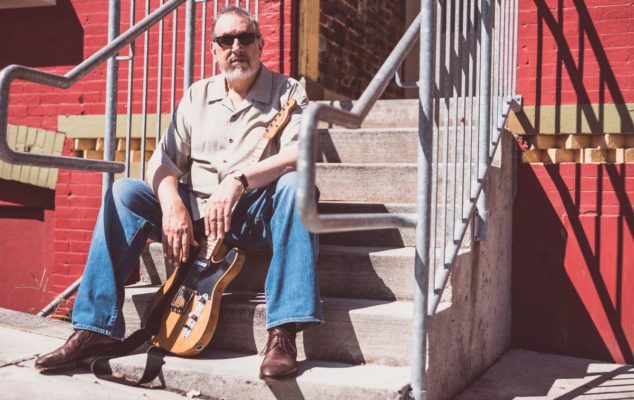
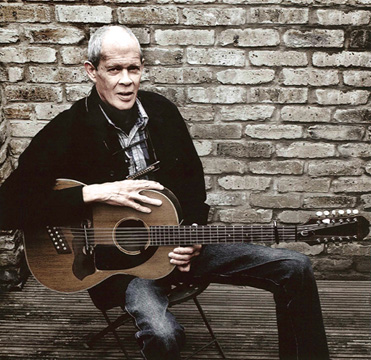
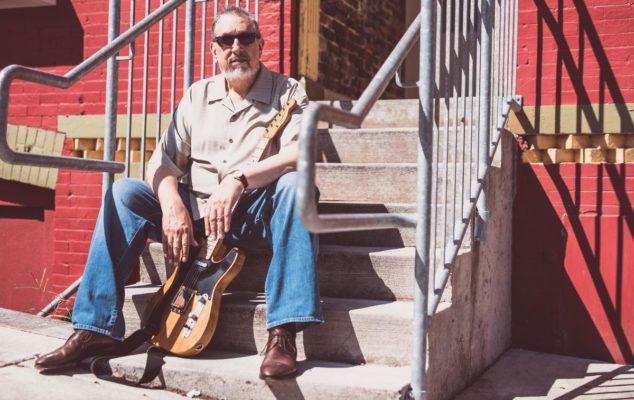
For Americana godfather David Bromberg, it all began with the blues.
His incredible journey spans five-and-a-half decades, and includes – but is not limited to – adventures with Bob Dylan, George Harrison, Jerry Garcia, and music and life lessons from seminal blues guitarist Reverend Gary Davis, who claimed the young Bromberg as a son. A musician’s musician, Bromberg’s mastery of several stringed instruments (guitar, fiddle, Dobro, mandolin), and multiple styles is legendary, leading Dr. John to declare him an American icon. In producing John Hartford’s hugely influential Aereo-Plain LP, Bromberg even co-invented a genre: Newgrass.
Add in a period of self-imposed exile from his passion (1980-2002), during which he became a renowned violin expert, and Wilmington, Delaware’s cultural ambassador; top that off with a triumphant return to music-making, and you have an amazing tale leading back to one place: the blues.
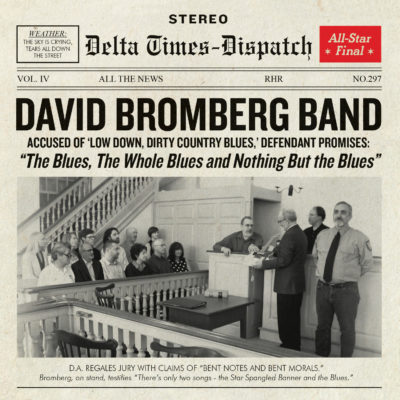
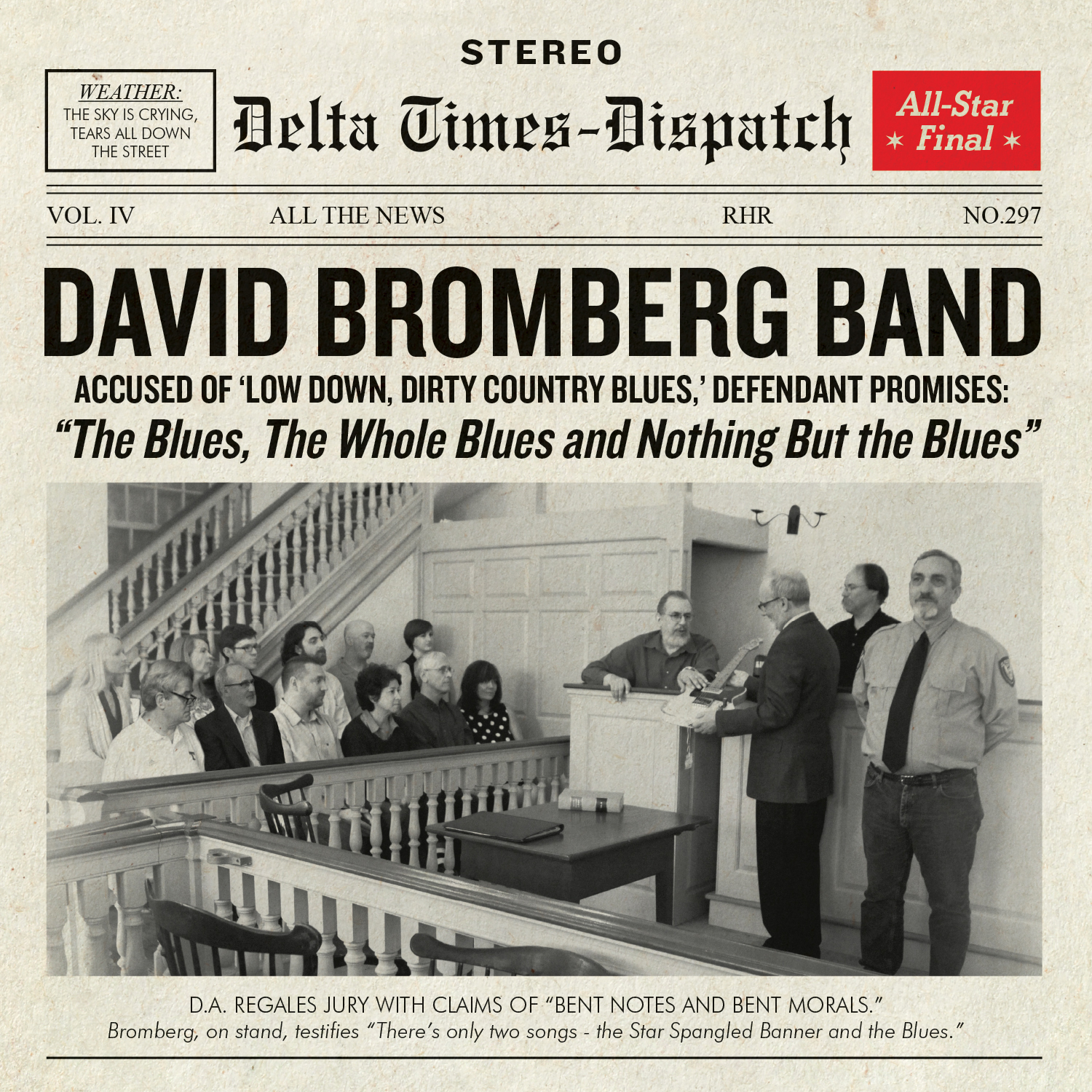
Now, with The Blues, the Whole Blues, and Nothing But the Blues, his first release for Red House Records, Bromberg and multi-Grammy-winning producer/accompanist Larry Campbell (Dylan, Levon Helm, Paul Simon) focus on the music David discovered in high school, when, circa late 50s, he was introduced to a friend’s dad’s collection of blues 78s. He’d only just taken up guitar as a means to pass the time while in bed with the measles.
“I loved those 78s so much,” says David, “I taped them on a portable reel-to-reel, so I could listen at home and learn.”
That love is evident in The Blues, the Whole Blues and Nothing But the Blues. The album is both blues primer and an opportunity to witness a master embracing this distinctly American music with passion and grace.
“There’s a lot of different types of blues on there,” Bromberg notes. “We decided to start it off with a dyed-in-the-wool blues [Robert Johnson’s “Walkin’ Blues”], but there’s also country blues [“Kentucky Blues”], and gospel-influenced blues [“Yield Not”].”
Bromberg, a onetime sideman himself, is quick to give props to his long-running road-and-studio cohorts: Butch Amiot (bass), Josh Kanusky (drums), Mark Cosgrove (guitar), Nate Grower (fiddle), and Peter Ecklund (cornet). Of producer, arranger, multi-instrumentalist, fellow Reverend Gary Davis acolyte, and old friend Larry Campbell, he says, “To use a baseball analogy, Larry is like a star at any position in the infield, because he can play them all.”
Since meeting in the early 80’s, Campbell and Bromberg had crossed paths many times. They finally worked together in Levon Helm’s studio for David’s 2013 return-to-form Only Slightly Mad. “He wanted to do a Chicago blues album then,” Larry says. “But we decided to remind folks of what he does better than anyone: the whole gamut of Americana, the full Brombergian. And we got some new fans. For this one, we went back to the blues, and made use of David’s great vocabulary in all veins of the genre.”
Bromberg’s guitar work remains a marvel; amped electric lead – both slide and fretted – and delicately powerful acoustic fingerpicking propel these songs with the same force that made him the go-to guy for acts ranging from the Eagles to Link Wray to Phoebe Snow. This is a man who can go full-on Chicago gutbucket with “You Don’t Have to Go” (a Bromberg original), then slay with the jazz inflections of Ray Charles’ “A Fool for You,” rendered here intimately solo. Although Bromberg points out he’s not the same guitarist he was before his two decades away from performing and recording. “I play differently,” he says. “I can’t play as fast, but playing slower gives me more time to think about what I’m doing.”
“He’s always able to plug into the emotion of a song,” Campbell says. “He’s incredibly inventive as a player. Sometimes restrictions can be good.”
Listeners can actually hear what the years have given Bromberg in the spartan, acoustic “Delia.” Bromberg originally covered this traditional nugget on his 1972 self-titled debut – a live, solo rendition with a spoken-word break. The new version features Campbell and Bromberg in the studio, revisiting Bromberg’s live arrangement from their occasional duo tours. It is mesmerizing, with gravitas only experience can bring. “Larry and I have played ‘Delia’ a lot,” Bromberg says. “I love what he does on it.”
Longtime fans will notice another difference: Bromberg’s voice; he’s really singing. The vocals cover a broad range: impassioned, vibrato-laden testifying; pew-jumping soul shouts; soft, confident, crooning; and, of course, his peerless raconteur chops (particularly in “You Been A Good Old Wagon”).
“When I first started,” Bromberg says, “singing was something I did between guitar solos. But during the period I did so little performing, I took some voice lessons, and now, I know more what I’m doing. I love singing now. Love it.”
Larry Campbell was impressed at the newfound vocal chops, too. “He is a better vocalist than ever,” he says. “He’s strong, and present. None of the songs took more than three takes. And he was able to take the old folk song ‘900 Miles’ [a “railroad song” made famous by Odetta and Woody Guthrie], and turn it into an electric blues that’s a real high point of the album for me.”
Although he remains the proprietor of the beloved David Bromberg Fine Violins in Wilmington, Delaware – “I love my shop,” he says – Bromberg makes time to tour with his quintet, and he’s already included every song in his live repertoire (save “Yield Not,” which requires a choir), from The Blues, the Whole Blues and Nothing But the Blues. As ever, he brings his characteristic devotional intensity to the music, invigorating his surprise third act with the same passion he felt as a teen, spinning those blues 78s, just before the road called.
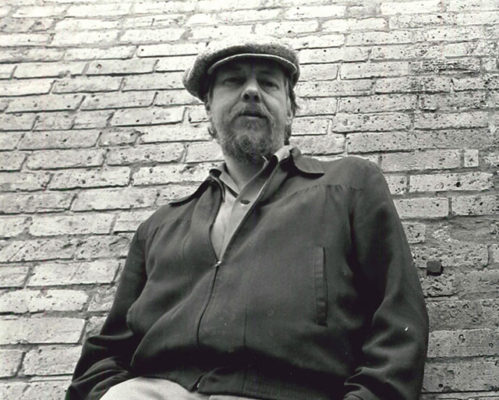
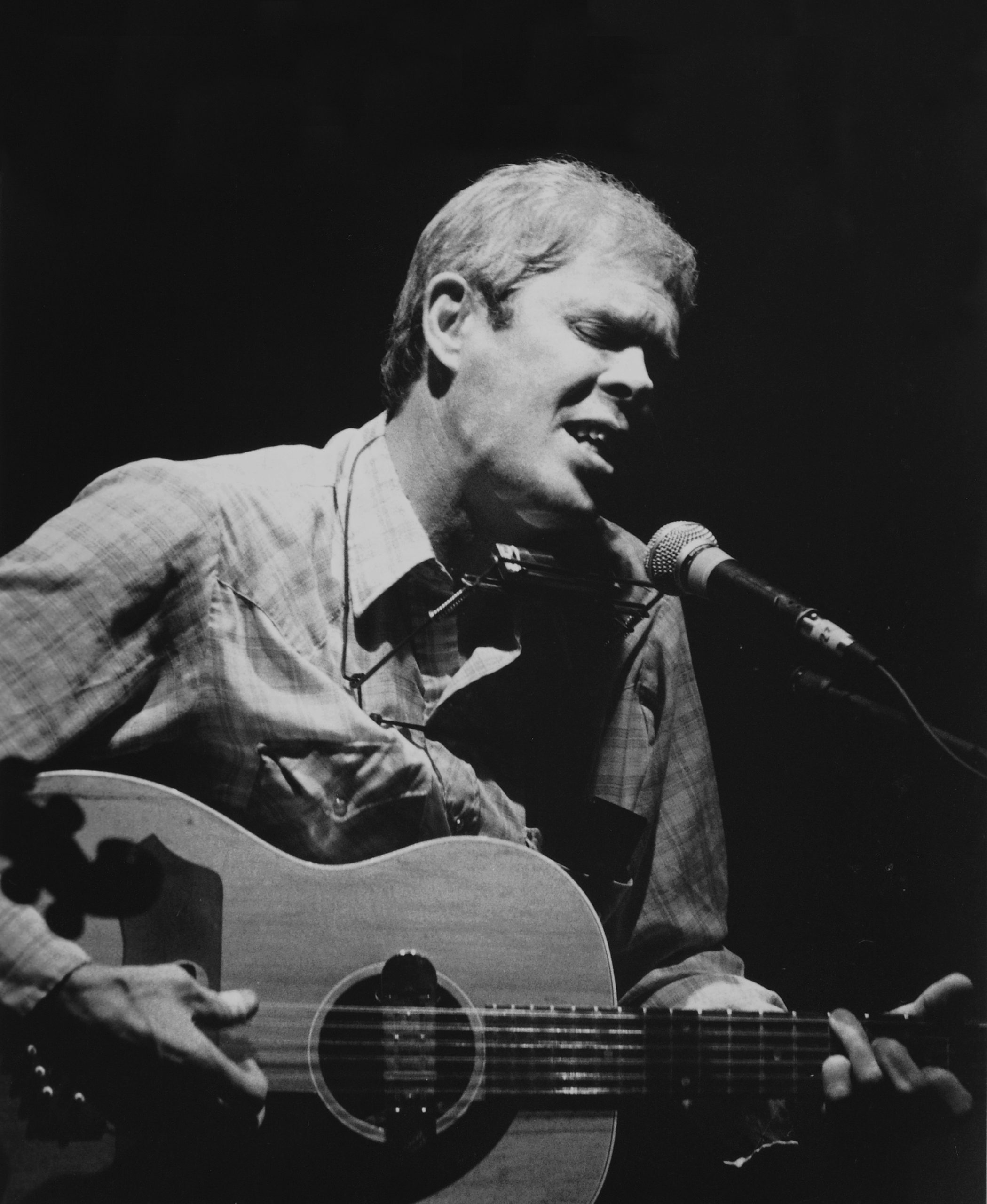
Dave “Snaker” Ray. One of the first white artists to study and learn the then little-known blues tunes from the 20s, 30s and 40s and part of the Minneapolis folk and blues revival that spawned Bob Dylan. Ray brought an enthusiasm and raw, raunchy earthiness to his performance style which set the stage for artists that followed.
The 55 tracks included span his early career in the 1960s starting in Minneapolis, MN’s West Bank neighborhood with “Spider” John Koerner and Tony Glover (Koerner, Ray & Glover) through his subsequent collaborations, solo albums, untimely death on Thanksgiving, 2002.
Koerner, Ray & Glover’s recordings were enormously influential among their fellow musicians, with artists from David Bowie and John Lennon to Bonnie Raitt, Lucinda Williams and Beck citing them as an influence.
Along with live recordings and rarities, Legacy includes selections from out-of-print recordings including “Ashes in My Whiskey” (Rough Trade) and “One Foot in the Groove” (Tim /Kerr Records). Unless noted, the tracks on Legacy are previously unreleased and include performances taken from a wide variety of mediums including reel-to-reel analog tapes, old sound board mix cassettes and live broadcasts.
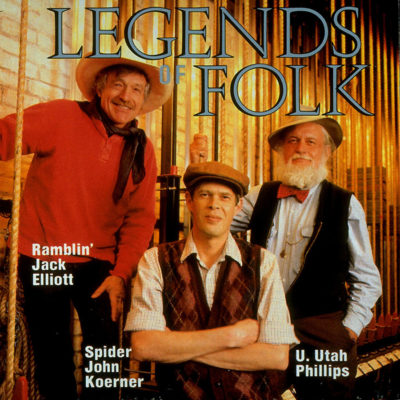
Three authentic folk legends on the same stage: add Utah’s infamous humor, Spider John’s foot-tapping synchopation and Ramblin’ Jack’s Woody Guthrie-inspired folksongs and you have a mini-folk festival and celebration of the living history of folk!

Ain’t somebody gonna tell me what I’m doing here?
Ain’t somebody gonna tell me where I’m going?
Ain’t somebody gonna spend a blank minute on me
And pray for an old hobo who’s gone wrong?
– “Hobo”
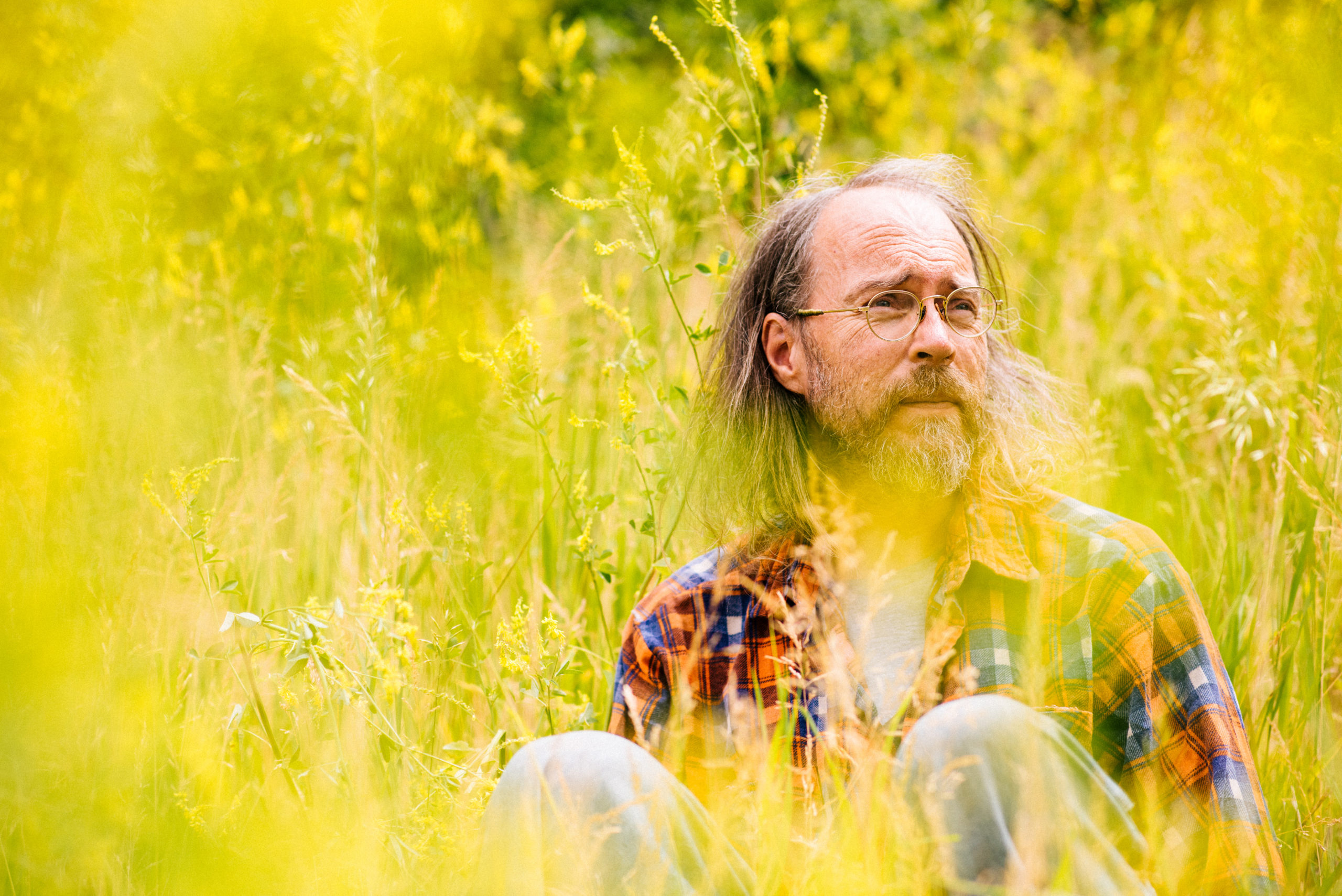
Fans who have been following Charlie Parr through his previous 13 full-length albums and decades of nonstop touring already know that the Duluth-based songwriter has a way of carving a path straight to the gut. On his newest record, Dog, however, he seems to be digging deeper and hitting those nerves quicker than ever before.
“I want my son to have this when I’m gone,” Charlie sings not 10 seconds into the opening song on Dog, “Hobo.” His voice sounds weary but insistent, his accompaniment sparse and sorrowful. By the second line, the listener has no choice but to be transported on a journey through the burrows of his troubled mind, following him through shadowy twists and turns as he searches for a way out.
It turns out Charlie’s been grappling with quite a bit over these past few years. As he prepares to release his new album on Red House Records this fall, he’s just as candid about discussing his experiences in person as he is while singing on the heat-rending Dog.
“I had some really, really bad depression problems over the last couple years,” Charlie explains. “I’ve been trying to get fit, trying not to drink so much, trying not to do the rock ‘n’ roll guy thing. And then I got depressed. Really depressed. And to me, depression feels like there’s me, and then there’s this kind of hazy fog of rancid jello all around me, that you can’t feel your way out of. And then there’s this really, really horrible third thing, this impulsive thing, that doesn’t feel like it’s me or my depression. It feels like it’s coming from outside somewhere. And it’s the thing that comes on you all of a sudden, and it’s the voice of suicide, it’s the voice of ‘quit.’”
“These songs have all kind of come out of that. Especially songs like ‘Salt Water’ and ‘Dog,’ they really came heavily out of just being depressed, and having to say something about it.”
Sometimes I’m alright
Other times it’s hard to tell
“Like finding light in the bottom of the darkest well
— “Sometimes I’m Alright”
In the album’s quieter moments, Charlie confronts these issues head-on, using only an acoustic guitar or banjo to light the way. But the incredible thing about Dog is that it digs into dark matter and contemplates serious topics like mental illness and mortality while embracing a pulse of persistence and forward motion; throughout the album, more and more musicians seem to be joining in the fray as the tempo builds, keeping the overall vibe upbeat.
“I was going to do it completely solo,” Charlie says. “I was going to go to this barn in Wisconsin, sit there and play my songs. And I was practicing them and I thought, this is devastating. These songs are hard to hear in this format. I would never be able to listen to them again. And then my friend Tom Herbers, he saw something was wrong. We talked, booked time at Creation” Audio, and made a plan to flesh out the album with a backing band.
So Charlie called on some longtime friends who he’s collaborated with throughout his career: the experimental folk artist Jeff Mitchell, percussionist Mikkel Beckman, harmonica player Dave Hundreiser, and bassist Liz Draper, who traded her typical upright bass in for an electric at Charlie’s request. The group found an instant chemistry in the studio, capturing some of the tracks on the first take.
“I wrote all the lyrics on these giant pieces of paper, and I had highlighters, and I assigned them each a color. I was going to be super organized,” Charlie remembers. “And then we started playing, and all of a sudden none of that even mattered. These stupid highlighters, the pieces of paper — I should have just trusted in the beginning that these friends would know how to take care of my songs.”
You claim the bed lifted up off the floor
Well, how do you know I’m not as good as you are?
A soul is a soul is a soul is a soul
— “Dog”
In the album’s more raucous moments, Charlie turns from contemplating his inner struggles to examining his connection to other living creatures. The album’s title track, “Dog,” and the blistering “Another Dog” were inspired by some of the lessons he’s learned from his own pet, and wondering about the way dogs interact with humans and the outside world.
“I have a dog, her name is Ruby but I call her Ruben, and we go for these long, crazy, chaotic walks,” Charlie says. “Because I decided a long time ago that I get along really well with this dog, and I was taking her for walks, and she wanted to go this way, and I wanted to go that way. And then I thought, why are we going to go this way and not that way? Maybe I should be the one getting walked. Maybe I’ll learn something. So I follow the dog.”
Despite the album’s darker moments, the listener is left hearing Charlie in a more optimistic and defiant headspace, reflecting on how far he’s come — and how content he is to accept that some things are simply unknowable.

Willie Murphy is not just a bluesman. He is a soul,R&B, blues and rock legend who once challenged the Rolling Stones to a pool tournament. In Willie’s words, “The Stones chickened out.” As a charter member of the Minnesota Music Hall of Fame along with Bob Dylan and Prince, Willie is a musical force to reckoned with.
His life plays out like a history of modern music, born out of roaming, rebellion, drugs and a boundless energy to create. He’s performed with everyone from Jefferson Airplane, James Taylor and Joan Baez to Muddy Waters, Carl Perkins and Son House. Willie is a songwriter and producer, but most of all, he is a performer whose music is larger than life.
Born in Minneapolis, Willie started playing the piano at age four and in 5th grade, became a charter member of the Little Richard Fan Club. His formative years coincided with the beatnik era of the 1950’s and 60’s and found him cruising the streets of South Minneapolis in hot cars, learning how to play guitar, pick up girls and jam with R&B and jazz groups. An avid reader, he was also busy writing poems and crafting his own songs. As the beatnik scene progressed to the counter-culture movement, he grew his hair, partook in alcohol and drug experimentation and frequented wild parties.
While becoming an integral part of the Minneapolis West Bank music scene (that churned out such musical legends as Bob Dylan and Koerner, Ray & Glover), Willie met “Spider” John Koerner, and the two began to write together and tour the country. What came from this musical partnership was a wild month-long party in the Sierra Nevada Mountains that resulted in the iconic 1967 release Running, Jumping, Standing Still (re-issued on Red House in 1994), which to this day, is considered one of Elektra Records’ best releases. The duo toured the US club and festival circuit, playing with the biggest names in music, enjoying a spectacular slot at the 1969 Newport Folk Festival, where Willie met Muddy Waters and hung out with Don Everly and Carl Perkins.
Jac Holzman, head of Elektra, was Willie’s biggest fan and wanted a second album from Koerner and Murphy. He also offered Murphy a house producer job if he would relocate to LA or New York. Although he had enjoyed playing the folk clubs with Koerner, Willie was eager to return to his R&B roots. Excited by his new band The Bumble Bees, he turned down both of Jac Holzman’s offers so he could tour with them. He kept Minneapolis as his home base, thriving in the vibrant Midwest music scene.
It was in Minnesota in 1971 that he produced Bonnie Raitt’s first recording on Warner Bros. Recorded in “Snaker” Dave Ray’s studio, the album featured Willie and the Bees as her backing band. Following that, Willie’s band toured with Bonnie and went on to share the bill with such luminaries as James Brown, Dr. John and B.B. King. Willie and the Bees went on to enjoy much success, reeling in a who’s who of musicians to see their live shows, including Steve Miller and fellow Minneapolis native Prince.
After burning out on drugs and drinking, Willie quit both. He continued to tour, making folks across the country “dance their brains out” with the wild, soulful sounds of the Bees. Then, after 14 years of making music together, the Bees played their last gig together on New Year’s of 1984. Willie started playing solo blues and rock piano. He continued to write more songs and eventually started his own label, Atomic Theory, producing mostly local Minneapolis musicians like Becky Thompson, Boiled in Lead, The New International Trio, and Phil Heywood. Willie has continued to tour with his new band the Angel Headed Hipsters performing for large audiences in Europe and around the Midwest.
Now, Willie surprises his fans once again with his new genre-bending release on Red House Records. A 20-track, 2-CD album, A Shot of Love in a Time of Need is exactly that–a refreshingly joyful album that lifts you up and makes you dance. Featuring soul, jazz, funk, rock and folk, this wildly eccentric album embodies the best of Willie Murphy and is sure to be an instant classic.
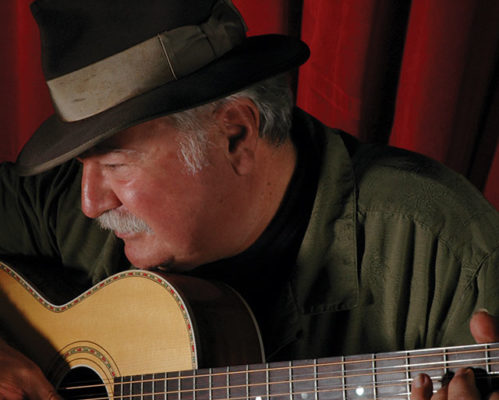
Paul Geremia is a guitar-picking veteran, a true blues scholar blending jazz and acoustic country styles for over 40 years. Called “one of the finest blues artists” by Rolling Stone, he is a husky, soulful singer and a master of both the six and twelve-string guitar as well as a first-rate harmonica and piano player. He has an innate sense of the humor and drama of the blues, delivering rollicking songs of loving and living with a wink and a smile.
Paul’s background isn’t typical for a bluesman. He is a third generation Italian American who, as he laughingly puts it, “was born in the Providence River Delta.” Growing up in Rhode Island, he bought blues albums at the Salvation Army and heard R&B and jazz from recently relocated African Americans who had moved up from the southeast coast. His first instrument was a harmonica, and in his teens he started fooling around on a friend’s electric guitar. Paul’s dad had an acoustic guitar (a plywood Stella) that he never played, and when he left for college, he took it from behind the couch where it had been gathering dust. It was in college that he really started to focus on the instrument, learning to play from fingerpicking friends who were fans of Chet Atkins.
During the early part of the Sixties folk revival, Paul got a taste for acoustic blues. At various folk festivals, he heard a lot of young white guys playing blues, guys like Tim Hardin and Tom Rush. Before long, he had the opportunity to hear the great black blues players, men who had recorded in the Twenties and Thirties and were being “rediscovered” by a new generation. Pretty soon Paul was living and playing in the middle of a thriving blues community and had the opportunity to meet some of the greatest players. As his style shows, he’s learned something from every musician he’s met, including Pink Anderson, Fred McDowell, Blind John Davis, Carl Johnson, Skip James, Son House, and Howlin’ Wolf.
Paul has recorded eleven solo albums, and has been featured on numerous anthologies, including Preachin’ the Blues: The Music of Mississippi Fred McDowell (Telarc), which earned a Grammy nomination in 2002. His superb recordings have made him a critical favorite and place him firmly among the legends who inspired and influenced him over the past three decades. Two of his Red House releases, Gamblin’ Woman Blues and Self Portrait in Blues, were both nominated for W.C. Handy Awards. His new live collection Love My Stuff captures Paul at his best—on a stage in front of an audience, giving powerful and soulful performances.
Paul’s performances are a smooth blend of blues styles and traditions. “The whole thing, in a nutshell, is you just absorb as much as you can,” he explained in Acoustic Guitar. He is remarkably well-versed in the music of the great players: the Delta slide of Robert Johnson, the ragtime style of Willie McTell and Blind Blake, Leadbelly and Lemon Jefferson’s Texas sound, the uptown blues of Scrapper Blackwell, and Lonnie Johnson and Teddy Blum’s jazz. In his interpretations as well as original pieces, Paul incorporates the techniques of these legends into a distinctive style that is very much his own. It is no wonder that his list of admirers includes such guitar legends as Bonnie Raitt and John Hammond.
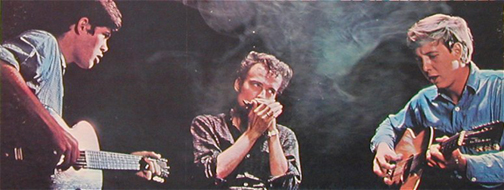
“Spider” John Koerner. Dave “Snaker” Ray. Tony “Little Sun” Glover. The names are legendary, and the seminal country-blues trio they formed in the early Sixties influenced a musical era with its passionate treatments of rare blues stylings. A self-described fun-loving trio of misfits, they turned audiences on their heads with foot-stomping performances throughout the U.S., and their series of Elektra recordings, commencing with Blues, Rags and Hollers, are considered the cornerstone of the Sixties folk/blues revival. Though based in Minneapolis, Koerner, Ray and Glover first connected in New York City in the spring of 1962. Glover was visiting his pal Ray when Koerner dropped in from Upstate. Amidst the bar hopping and jamming, the three clicked, and the trio was born. By that fall, they were back in the Twin Cities, jamming and playing clubs and parties. In 1963, with the help of the editors of the Little Sandy Review, Koerner, Ray & Glover hooked up with Audiophile records in Milwaukee and in one twelve hour session, recorded Blues, Rags & Hollers. They sold several hundred records at gigs and put copies into the hands of a few influential people, including Jac Holzman at Elektra Records. When Holzman got around to listening to it he was blown away, and signed them to a recording contract. Elektra also bought the Blues, Rags & Hollers masters from Audiophile, but found that the album’s significant length posed mastering problems, and deleted four songs before releasing it in November.
Eventually, Koerner, Ray & Glover cut five albums for Elektra, with an intriguing mix of string-band, ragtime and down-home blues styles. They performed at the Newport and Philadelphia Folk Festivals as well as on the club and college circuit. Their raucous enthusiasm and musical acumen breathed life into traditional material and they earned fans that included John Lennon and the Doors. During the Sixties, Koerner kept up his solo career and in 1969 recorded the classic Elektra album Running, Jumping, Standing Still with Willie Murphy.
In the Seventies, he turned to other interests and moved to Denmark for several years. In Denmark, Koerner immersed himself in traditional American folk music. Falling in love with this genre, he began to forgo original compositions for traditional songs into which he infused his own interpretation, style and energy. Back in Minnesota in 1980, Koerner went into the studio with an outstanding group of sidemen that included Peter Ostroushko, Butch Thompson, Willie Murphy, Tony Glover, Dakota Dave Hull, and the Boston area’s bones-rattling wizard Mr. Bones. In one night while a tornado raged outside, the group recorded what has been described as one of the great folk records of all time. In late 1986, Red House released the session under the title Nobody Knows the Trouble I’ve Been. The critical response was unanimous, with accolades like “Comeback of the Year” and “Leave it to Spider John Koerner – Minnesota’s premier blues picker – to salvage the soul of American folk music.” Today, Koerner is still exploring the range of folk traditions. There have been two more critically-acclaimed Red House recordings, Legends of Folk (with Utah Phillips and Ramblin’ Jack Elliott) and Raised By Humans. Red House also released a re-mastered, expanded CD version of the out-of-print Running, Jumping, Standing Still. Koerner’s rollicking treatments of traditional folk songs and self-penned classics seem to only get better and more seasoned with age.
During the Seventies and Eighties, Koerner, Ray & Glover reunited for special shows, including Folk Festivals in Winnipeg and Vancouver, and Sing Out! magazine’s thirtieth anniversary concert. One of their last trio shows in 1984 formed the foundation for Blues, Rags & Hollers: The Koerner, Ray & Glover Story, a two-hour performance documentary video produced by Glover. The Minnesota Music Awards named Koerner, Ray & Glover “Best Folk Group” and elected them to the Minnesota Music Hall of Fame along with Bob Dylan and Prince. Koerner and Ray & Glover’s recent recordings have only served to increase their legendary status, whetting the appetites of their long term fans and bringing a younger generation of music lovers on board. In response, Red House Records has secured the rights to Blues, Rags & Hollers for release on CD. In the process the four lost tracks that Elektra cut have been restored. The excitement generated by this release proves that the Little Sandy Review was remarkably prophetic when they predicted in 1963: “[Blues, Rags & Hollers] is a disc that will surely be a collector’s item in the future, as surely as the best blues of the 1930’s are collector’s items now.”
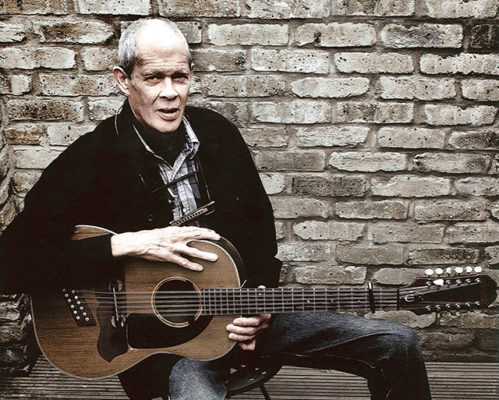
There are two Spider John Koerner legends. The first is the constantly evolving, rambling account of a young musical genius who influenced a generation of musicians. The second is the story of the contemporary artist who moves folk, blues, and rock audiences alike with his traditional songs and wry original compositions.
The first legend begins with a childhood in Rochester, NY, then winds its way to the University of Minnesota, where he studied engineering as an undergraduate, as well as a stint in the Marines before taking a permanent detour into the timeless realm of folk music. By 1959, inspired by the recordings of Sam Charters and Woody Guthrie, the gangly “Spider” John was exploring the range of folk traditions on Twin Cities stages as a solo act and as a duo with Bob Dylan, among others. Three years later, his interest in blues led him to form the seminal country blues trio Koerner, Ray, and Glover–a group that influenced a musical era with its passionate and raw treatments of rare blues stylings. A self-described “fun-loving trio of misfits,” they turned audiences on their heads with foot-stomping performances around the U.S. and Europe. Their series of Elektra recordings, commencing with Blues, Rags and Hollers, are considered the cornerstone of the Sixties’ folk-blues revival.
At the same time, Spider John kept up his solo career and in 1969 recorded the classic Elektra album Running, Jumping, Standing Still with Willie Murphy. Through it all, pop stars such as John Lennon, Ray Davies, Bonnie Raitt, and The Doors, regularly cited Koerner’s influences in their musical choices.
In the late Seventies and early Eighties, Koerner continued to perform, but other interests, including experimental film making, began to take up more of his time. He moved to Denmark for a couple years, and later back in Minnesota, where he frequently disappeared to a shack in the north woods. Finally in 1985, even as the glow of his musical legacy approached mythic proportions, he laid the guitar and performance career down to rest and spend more time with his home-made telescope and stars of a more cosmic sort.
The second Spider John Koerner legend begins while Koerner is still in Denmark. In a Copenhagen bookstore he came across a copy of Alan Lomax’s classic volume, American Folk Songs. From its old pages he began to glean folk songs, many as familiar as “Old Smoky” and “Shenandoah,” which he in turn infused with his own interpretation, style, and energy. Still a rhythmic, blues-inspired guitarist and singer, Koerner now began to forego original compositions for traditional music.
In the mid-Eighties Red House learned of a collection of unreleased tracks that Koerner had recorded in 1980. After returning to America, he had gone into the studio with an outstanding group of sidemen that included Peter Ostroushko, Butch Thompson, Willie Murphy, Tony Glover, Dakota Dave Hull, and the Boston area’s bones-rattling wizard Mr. Bones. In one night, while a tornado raged outside, the group recorded what has been described as one of the great folk records of all time. In late 1986, Red House released the session under the title Nobody Knows the Trouble I’ve Been. The critical response was unanimous with accolades like “Comeback of the Year” and “Leave it to Spider John Koerner–Minnesota’s premier blues picker–to salvage the soul of American Folk Music.”
John still does occasional tours, but when he’s not playing he can be found pursuing his passion for the stars. There have been several critically acclaimed Red House recordings; Legends of Folk with Utah Phillips and ‘Ramblin’ Jack Elliot, Raised by Humans, and StarGeezer. Red House has also released CD versions of two out-of-print Elektra classics: Blues, Rags, and Hollers (Koerner, Ray, & Glover), Running, Jumping, Standing Still with Willie Murphy. Koerner’s rollicking treatments of traditional folk songs and self-penned classics seem to only get better and more seasoned with age. His influence on generations of musicians proves that he is one of America’s true musical originals.

In a career that has already spanned a half-century, Jorma remains one of the most highly respected interpreters of American roots music, blues, and Americana with a history that influenced popular rock-and-roll. A member of the Rock & Roll Hall of Fame and a Grammy nominee as well as one of Rolling Stone’s “Top 100 Guitarists of All Time,” he is a founding member of two legendary bands, Jefferson Airplane and the still-touring Hot Tuna, and is recognized as one of the leading practitioners and teachers of finger-style guitar. Jorma’s renown goes far beyond his involvement creating psychedelic rock; he is a music legend and one of the finest singer-songwriters in music. He’s also an avid motorcyclist, a gallery owner (the Psylodelic Gallery, dedicated to the arts and culture of the 1960s arts) and co-owner of the Fur Peace Ranch, an Ohio-based concert venue and guitar center where Jorma conducts workshops, bringing in such guitar masters as G.E. Smith and Larry Campbell.
The 11 tracks on Ain’t In No Hurry show Jorma at the top of his game. Playing with a confidence and touch that come from a lifetime spent writing and performing, he delivers a batch of originals that already sound like classics, interspersed with soulful interpretations of songs by the Carter Family and more. He includes a weighty version of the Depression Era classic, “Brother, Can You Spare a Dime” and ends the album with a solo acoustic original number, “Seasons in the Field,” a look at the seasons of one’s life, the passing of time and the loss of youth. “You just can’t go backward. The arrow of time only goes in one direction,” says Jorma. “At this point in my life perhaps I should be in more of a hurry, but for me it’s more important that each piece fits in the right place at the right time. The songs you hear in this album cover a lot of ground for me. Some are very old, and some quite new. From where I came from to where I am today… it is all here. Music does not happen in a vacuum. The orbit of my life is constantly tangential to others and I am richer for it. I am surrounded by friends who help give voice to my dream.”
What comes through is Jorma’s ability to tell a story and the lifetime of experiences he brings to play. The DC native was a devotee of rock-and-roll in the Buddy Holly era but soon developed a love for the blues and bluegrass that were profuse in the clubs and concerts in the nation’s capitol and discovering albums by the Carter Family and the Louvin Brothers. This raw, American music inspired him to take up the guitar and make that kind of music himself. Soon he met fellow DC musician Jack Casady, the younger brother of a friend and a guitar player in his own right. Though they could not have known it, they were beginning a musical partnership that has continued for over 50 years. Jorma graduated from high school and headed off for Antioch College in Ohio, where he met Ian Buchanan, who introduced him to the elaborate fingerstyle fretwork of the Rev. Gary Davis. A work-study program in New York introduced the increasingly skilled guitarist to that city’s burgeoning folk-blues-bluegrass scene and many of its players. After a break from college and travel overseas, Jorma returned to the States and spent the summer of 1962 working in a service station. He spent his weekends going to the many Bluegrass festivals that existed in the area at the time, seeing Bill Monroe, Flatt and Scruggs, The Foggy Mountain Boys, The Country Gentlemen and more. That fall he enrolled at the University of Santa Clara, 50 miles south of San Francisco. “The first weekend I was there I played a hoot at the Folk Theater in San Jose. That night, I met Janis Joplin, Richmond Talbott, Jerry Garcia, Pig Pen, Paul Kantner and a host of others whose names would be more recognizable in the coming years,” Jorma recalls. “Paul would introduce me to the gaggle of characters who would become Jefferson Airplane, Jack Casady would join us from D.C. and the rest truly became history. I owe that cast of luminous characters a huge debt of gratitude for starting my train rolling in such a momentous way.”
While Jorma was in the Jefferson Airplane the band performed at three of the most famous American rock festivals of the 1960s: Monterey (1967), Woodstock (1969) and Altamont (1969) as well as headlining the first Isle of Wight Festival in the UK in 1968. Jorma left the band during their heyday, forming Hot Tuna with Jack Casady to play stripped down acoustic blues and folk music. “As a result, I have been more than a decently rewarded folk musician for more than half a century,” he says. In addition to his work with Hot Tuna, Jorma has recorded more than a dozen solo albums on major labels beginning with 1974’s Quah and continuing with his recent acoustic releases on Red House Records—2007’s Stars in My Crown and 2009’s River of Time, produced by Larry Campbell and featuring Levon Helm.
“I never really thought about it when I was younger, but my choice of songs was always an effort to tell my story,” he explains. “Sometimes they were about things that happened, and sometimes they were about things that never happened, sometimes they were about things I wanted to happen, sometimes they were about things I feared would happen… sometimes… there was always a sometimes. Learning to play guitar was the gift that enabled me to set the story to music.”
Jorma Kaukonen is constantly looking to take his musical horizons further still, always moving forward, always infusing his classic sound with fresh insights and the depth that comes with a lifetime as a performer.

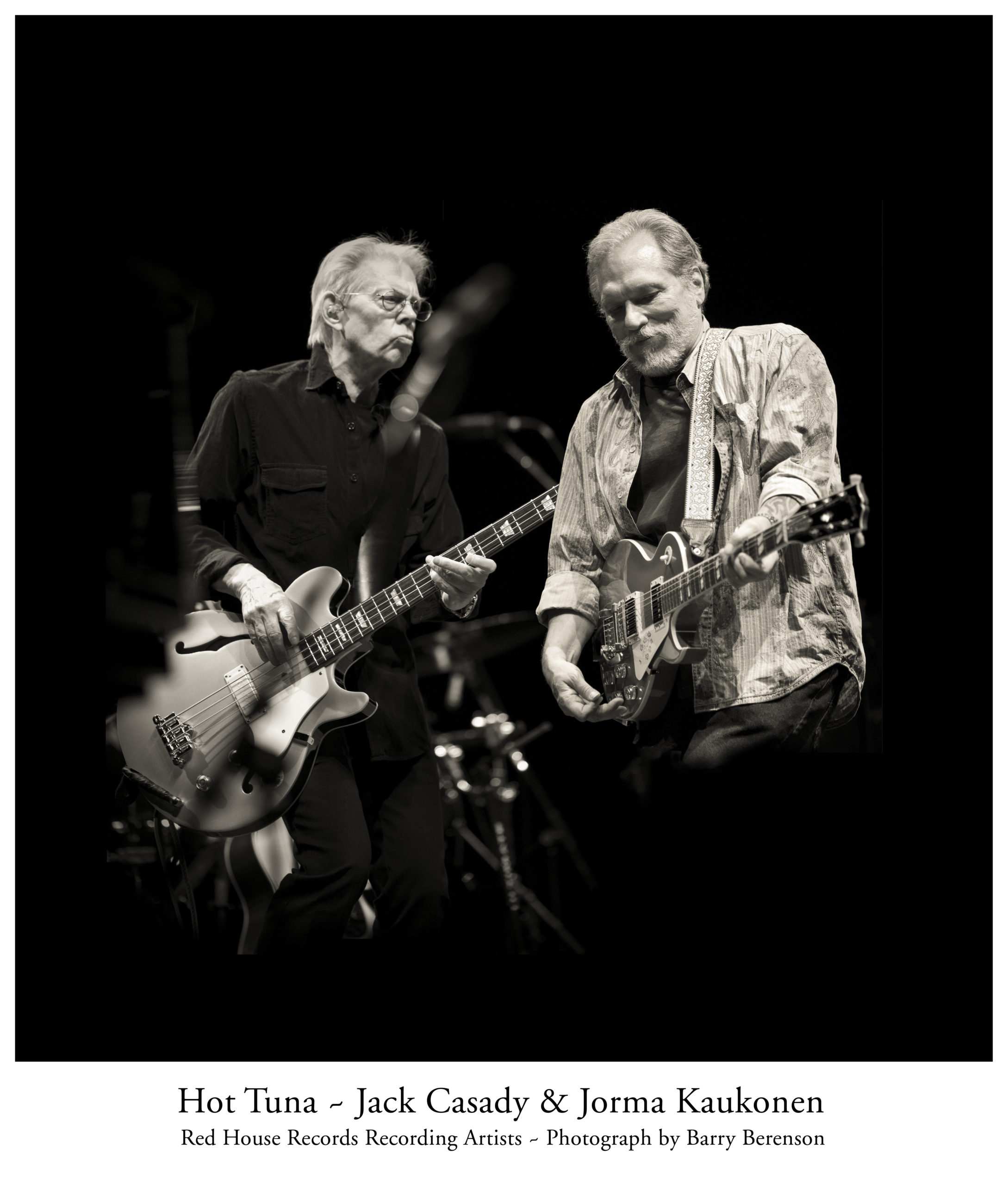
From their days playing together as teenagers to their current acoustic and electric blues, probably no one has more consistently led American music for the last 50 years than Jorma Kaukonen and Jack Casady, the founders and continuing core members of the iconic blues-roots band Hot Tuna.
Now members of the Rock & Roll Hall of Fame, the pair began playing together while growing up in the Washington D.C. area, where Jack’s father was a dentist and Jorma’s father a State Department official. While a junior and senior high student, Jack played professional gigs as lead guitarist at night before he was old enough to drive. Jorma, four years older than Jack, started college in Ohio, accompanied his family overseas and then returned to college, this time in California. Along the way, Jorma became enamored of the guitar playing of Rev. Gary Davis and became a master of his finger-picking style. Meanwhile, Jack took an interest in the electric bass–at the time a controversial instrument in blues, jazz, and folk circles.
In the mid 1960’s, Jorma was asked to audition to play guitar for a new band that was forming in San Francisco. Though an acoustic player at heart, he grew interested in the electronic gadgetry that was beginning to make an appearance in the popular music scene, particularly in a primitive processor brought to the audition by a fellow named Ken Kesey. Jorma decided to join the band and soon thereafter he summoned his young friend from Washington, who now played the bass. Thus was created the unique (then and now) sound that was The Jefferson Airplane. Jorma even contributed the band’s name, drawn from a nickname a friend had for the blues-playing Jorma. Jack’s experience as a lead guitarist led to a style of bass playing which took the instrument far beyond its traditional role.
While in The Jefferson Airplane, putting together the soundtrack of the sixties, Jorma and Jack remained loyal to the blues, jazz, bluegrass and folk influences of the small clubs and larger venues they had learned from years before. They would play together, working up a set of songs that they performed at clubs in the Bay Area, often after having played a set with the Airplane. This led to a record contract; in fact, they had an album recorded before they decided to name their band Hot Tuna. With it, they launched on an odyssey which has continued for more than four decades, always finding new and interesting turns in its path forward.
The first thing an early Hot Tuna fan discovered at their concerts of the early 1970’s was that the band was growing louder and louder. In an era in which volume often trumped musicianship, Hot Tuna provided both. The second thing a fan would discover was that Jack and Jorma really loved to play. “Look around for another band that plays uninterrupted three- to six-hour sets,” wrote reviewer Jerry Moore. What Moore could not have known was that had there been no audience at all, they would have played just as long and just as well, so devoted were they to making music. Of course, the audience wasn’t superfluous by any means; it energized their performances and continues to do so today.
Album followed album–more than two dozen in all, not counting solo efforts, side projects and appearances on the albums of other bands and performers. They continued to develop their interests and styles, both together and in individual pursuits. In an era in which old bands reunite for one last tour, Hot Tuna can’t because Hot Tuna never broke up.
Along the way, they have been joined by a succession of talented musicians: drummers, harmonica players, keyboardists, backup singers, violinists, mandolinists, and more, all fitting in to Jorma and Jack’s current place in the musical spectrum as two of America’s most important rock musicians. Rolling Stone has named Jorma one of the top guitarists of all time, while Jack is considered one of today’s most innovative electric bass players, having played with such legends as Ray Charles, Jimi Hendrix and the Grateful Dead.
After two decades of acoustic and electric concerts and albums, the 1990’s brought a new focus on acoustic music to Hot Tuna. They played more intimate venues with a more individual connection to the audience. Soon, the loud electric sound (and the semi trailer load of equipment) disappeared entirely from Hot Tuna tours. Maturity brought the desire to do things in addition to being a touring band. Both had become interested in teaching, passing along what they had learned and what they had uniquely developed to a new generation of players.
In 1998 Jorma and his wife Vanessa opened Fur Peace Ranch Guitar Camp in the beautiful rolling Appalachian foothills of southeastern Ohio. Here, on a sprawling, rustic, yet modern campus, musicians and would-be musicians come for intensive and enjoyable workshops taught by Jorma, Jack, and other extraordinary players, learning things that range from different styles of playing to songwriting, performing, storytelling and making a song one’s own. In addition, they started BreakDownWay.com, a unique interactive teaching site that brings their musical instruction to students all over the world.
In addition to their teaching, Jorma and Jack continue to tour as much as ever, both as a band and as solo performers. Jack released his first solo CD, Dream Factor, on Eagle Records in 2003. Jorma has released many solo albums over the years, including his legendary album Quah, his Grammy-nominated Blue Country Heart and two highly acclaimed releases on Red House Records.
For the last few years, Jorma and Jack have been joined in most of their Hot Tuna performances by the mandolin virtuoso Barry Mitterhoff. A veteran of bluegrass, Celtic, folk, and rock-influenced bands including Tony Trischka and Skyline, Hazel Dickens and Bottle Hill, Barry has found a new voice in working with Hot Tuna, and the fit has been good. Watching them play together, it’s as if he’s been there from the beginning. In addition to rounding out their acoustic sound, Barry brings out a wide array of electric mandolins and similar instruments that most people have probably never seen or heard before.
The newest member of Hot Tuna is the brilliant and exciting young drummer Skoota Warner, who already had a career few would dare aspire to when he joined the band in 2009. Like many in the blues-inspired music world, his musical life began in church, in his hometown of Newnan, Georgia. From there he traveled to New York, where he studied with and/or worked with a virtual who’s who of rock, funk, blues, and jazz musicians, including Cyndi Lauper, Matisyahu, Mary J. Blige and Santana. Recent Hot Tuna concertgoers can attest that watching Skoota and Jack heading off into the wild blue musical yonder is worth the price of admission all by itself. Says Jorma, “I have never felt more at home with a drummer than I do now with Skoota.”
Jorma and Jack certainly could not have imagined, let alone predicted, where playing would take them. It’s been a long and fascinating road to numerous exciting destinations. Two things have never changed: They still love to play as much as they did as kids in Washington D.C., and there are still many, many exciting miles yet to travel on their musical odyssey.
For more about Hot Tuna and for their full tour schedules visit them online: www.hottunaband.com – www.jackcasady.com – www.jormakaukonen.com

About Pat Donohue
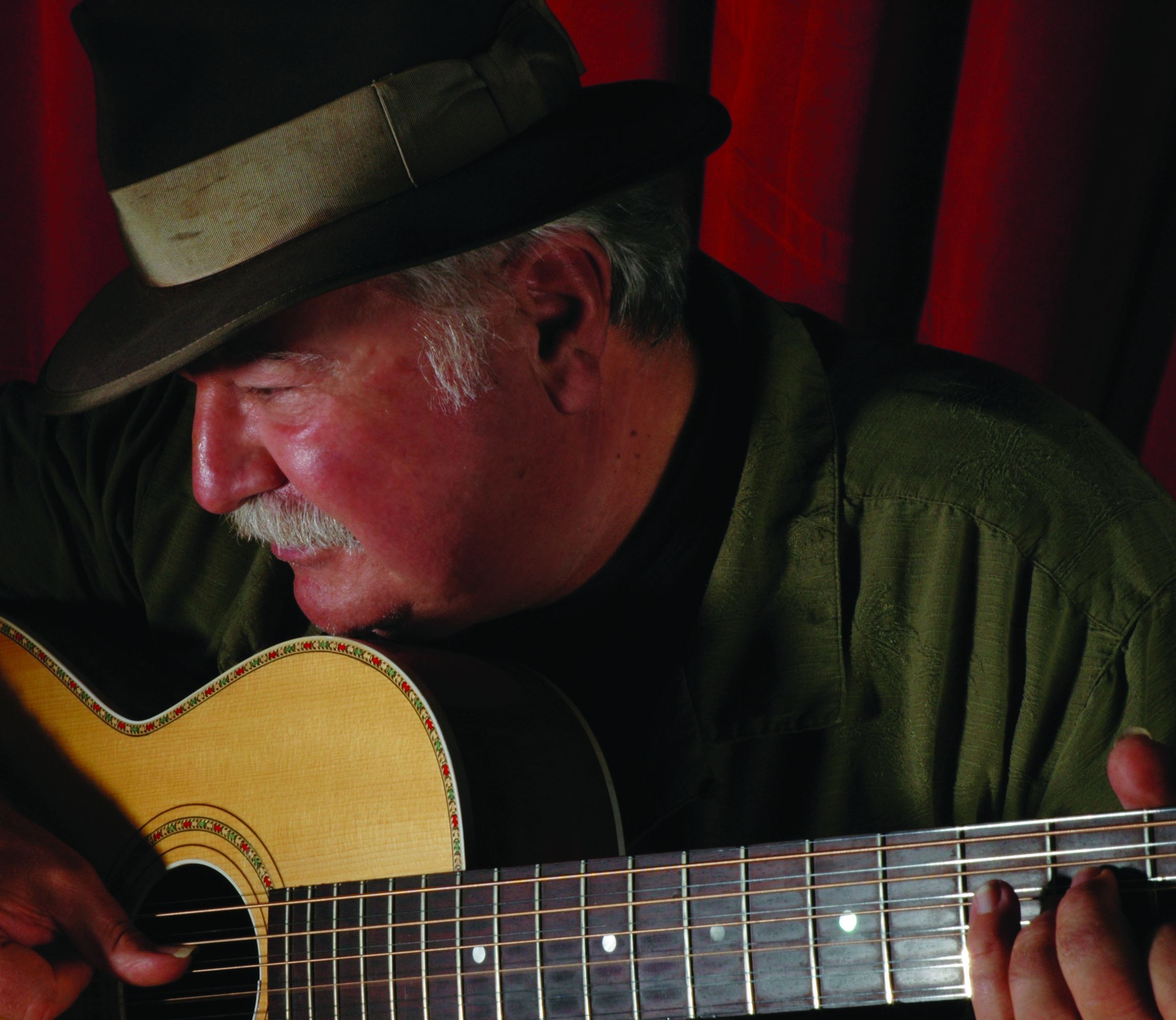
As the guitarist for the Guys All-Star Shoe Band of the national radio show A Prairie Home Companion, Pat Donohue is one of the most listened-to finger pickers in the world. In addition to traveling with the show and performing on the weekly radio broadcasts, Pat plays concerts and teaches workshops at the country’s most prestigious theaters and festivals, including the Newport, Telluride and Philadelphia Folk Festivals. He was the 1983 National Finger Picking Guitar Champion and has since gone on to win a Grammy and numerous Minnesota Music Awards. His original tunes have been recorded by Chet Atkins, Suzy Bogguss and Kenny Rogers.
Pat started out playing drums in a garage band, but at age 12 he picked up guitar, learning simple chords and melodies from a Pete Seeger instructional book. The St. Paul native immersed himself in the Minnesota coffeehouses and blue venues where he could hear the guitar legends.
“I was very lucky to see some of the old-timers that aren’t around anymore,” says Pat. “The University of Minnesota had summer concerts in the early 70s and I got to see Lightnin’ Hopkins, Big Joe Williams and Jesse Fuller. I wasn’t shy about going up to them and trying to befriend them and find out what I could about playing the blues. By and large, they were very accommodating. Big Joe Williams invited me to his hotel and we wound up playing guitar together.”
Taking what he learned from these blues guitar greats, Pat Donohue has gone on to make a name for himself, releasing many albums and instructional videos. He also has joined a legendary list of notables, getting his own signature guitar model made by Martin Guitars.
About Butch Thompson
In a career spanning over 40 years, pianist and clarinetist Butch Thompson has earned an international reputation as a traditional jazz and ragtime master. He has toured extensively, playing with the world’s major orchestras and with his own acclaimed ensembles, which include the Butch Thompson Trio, the eight-piece Jazz Originals band, the Butch Thompson Big Three and his unique chamber music duo with cellist Laura Sewell.
Born and raised in Marine-on-St. Croix, a small Minnesota river town, Butch got his start at age three, playing his mother’s upright piano. In high school, he went on to study clarinet and led his first professional jazz group. After he graduated, he joined the Hall Brothers New Orleans Jazz Band of Minneapolis and at age 18 became one of the few non-New Orleans natives to perform at the famed Preservation Hall in the 60s and 70s.
In 1974, Butch played on the first broadcasts of the national radio show A Prairie Home Companion, and by the time it was syndicated in 1980, the Butch Thompson Trio was the house band, a position the group held for the next six years. Since then Butch has become widely known as a leading authority on jazz. He served as a development consultant on the 1992 Broadway hit Jelly’s Last Jam, which starred Gregory Hines. He also joined the touring company of the off-Broadway show Jelly Roll! The Music and the Man, playing several runs with the show in New York and with its touring company through 1997.
As one of the most sought-after jazz and blues musicians, he has performed on many recordings, including the Grammy-winning Verve release Doc Cheatham and Nicholas Payton. He has also released 27 albums of his own, including his acclaimed 10-volume solo series and his highly anticipated new recording with Pat Donohue called Vicksburg Blues.
Butch Thompson also hosts a radio show called “Jazz Originals” that airs on Jazz88 FM in Minneapolis.

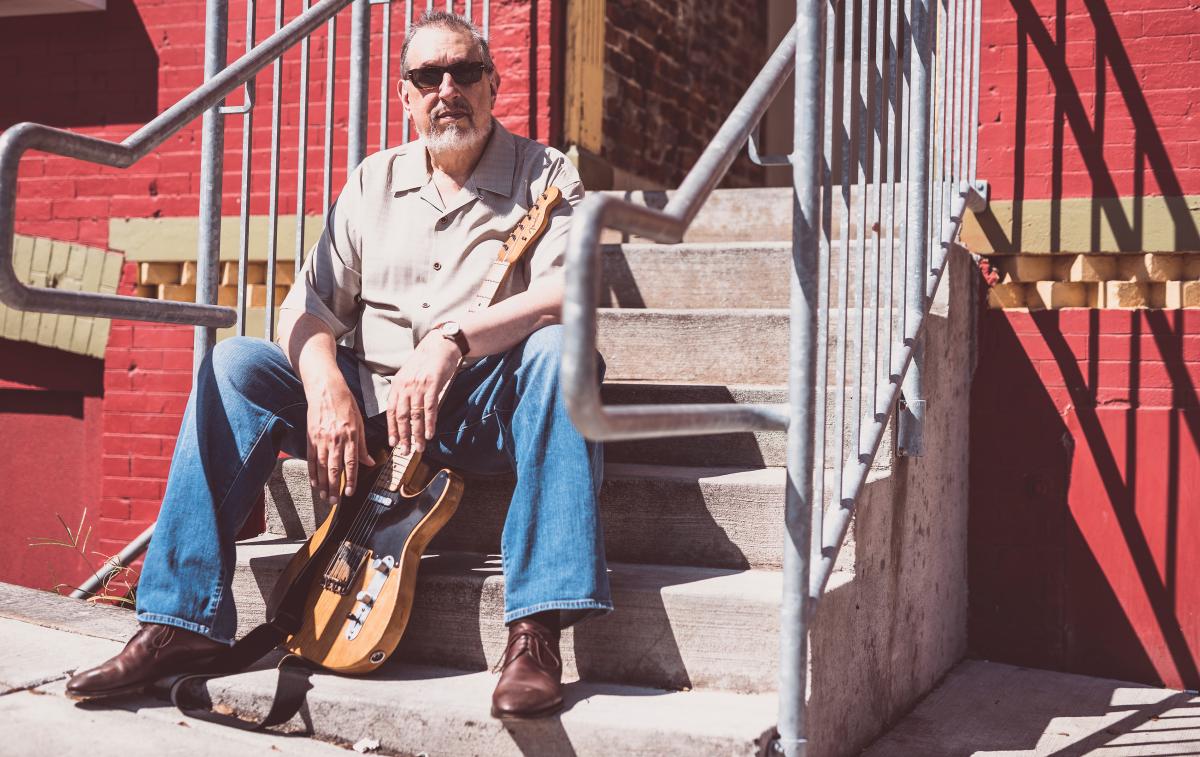
From swing to jazz to bottleneck blues to folk, Grammy-winning acoustic guitarist Pat Donohue plays it all with a flourish of artistry and melodic inspiration. Chet Atkins called Pat one of the greatest finger pickers in the world today; Leo Kottke called his playing “haunting.”
Pat is certainly one of the most listened to finger pickers in the world. As the guitarist for the Guys All-Star Shoe Band of Minnesota Public Radio’s A Prairie Home Companion, Pat gets to show off his savvy licks and distinctive original songs to millions of listeners each week.
His decade-long association with Garrison Keillor’s popular program has led to some unusual gigs: There was the after-show club date in Berlin, when Wynton Marsalis showed up to sit in with Pat and the Prairie Home band. Or playing music on camera for the Prairie Home Companion movie with director Robert Altman and stars Meryl Streep, Lily Tomlin, Kevin Kline, John C. Reilly, Woody Harrelson and Tommy Lee Jones.Besides the weekly radio broadcasts, Pat plays about 30 concerts a year nationwide and teaches at such popular music camps as Augusta Heritage Center and Rocky Mountain Fiddle Camp.
Pat’s musical tastes are eclectic. Though he considers himself foremost a folk guitarist, Pat’s influences are rooted in bluesmen Blind Blake, Robert Johnson, Charlie Parker, Duke Ellington, Muddy Waters and Miles Davis. He manages to blend jazz and blues with folk, and the mix is seamless. Over the years he has captivated audiences with his unique original compositions, dazzling instrumentals and humorous song parodies, including Sushi-Yucki and Would You Like to Play the Guitar?
Honors include a 2005 Grammy for his participation on Pink Guitar, a compilation of Henry Mancini tunes on acoustic guitar, several Minnesota Music Awards, and the title of 1983 National Finger Picking Guitar Champion. His original tunes have been recorded by Chet Atkins, Suzy Bogguss and Kenny Rogers. Pat has also been a featured performer at major music festivals including the Newport, Telluride and Philadelphia Folk Festivals. Pat joins a legendary list of notables, as The Martin Guitar Company recently introduced a Custom Signature Edition Series OM-30DB guitar designed to his specifications.
Pat has been obsessed with the guitar since he first picked one up at age 12 and began learning simple chords and melodies from a Pete Seeger instructional book. His background as a drummer in a garage rock band helped with the transition and he never looked back. As a youth, the St. Paul, Minnesota native pestered guitarists playing at Twin Cities coffee houses and blues venues, seeking tips on playing. Borrowing bits and pieces of the styles of finger picking pioneers he admired, he taught himself to play, building a repertoire flavored by Blind Blake, Django Reinhart and Chet Atkins.
-->