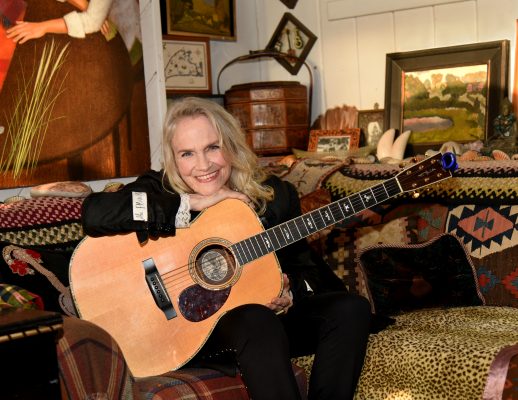
Kate Taylor, of the renowned Martha’s Vineyard via North Carolina musical clan that includes brothers James, Livingston, Alex and Hugh, arrives at Red House Records with a new studio album entitled: WHY WAIT! which reunites her with many of the key players, Russ Kunkel, Danny Kortchmar, and Leland Skar, who backed her on her 1971 debut, SISTER KATE. Produced by music veteran Peter Asher, who produced SISTER KATE, WHY WAIT! marks with its release the 50th anniversary of their original collaboration. WHY WAIT! was released on Red House Records in the late summer of 2021.
As on SISTER KATE, she covers some of her favorite songwriters and songs, including a version of her brother James’ “I Will Follow,” The Beatles’ “Good Day Sunshine” and Taj Mahal’s “He Caught the Katy,”. Kate, who loves singing R&B, contributes two self-penned songs: the upbeat title track, “Why Wait!” and the evocative “I Got a Message.”
She also does a version of Little Feat’s “Long Distance Love” and the 1963 girl group hit by The Exciters, “Tell Him.” She does versions of Tommy James’s “Crystal Blue Persuasion” and Nancy Wilson’s “How Glad I Am”.
The spark for this album was ignited at Kate’s birthday party when her agent (who also manages Asher), brought up the fact that the key players who appeared on Sister Kate are still around and very active (most recently as members of The Immediate Family). Asher loved the idea of recording with Kate again on their 50th anniversary, and Kate was instantly on board, writing the title track. Peter and Kate assembled a group of songs complemented by her bluesy voice.
James Taylor told Rolling Stone: “For Kate to be doing this with Peter, and that both of them have this life experience that brings them back together, it’s really a moving thing. I think it’s so great that Kate will have this next iteration, you know, this next chance for people to hear her and pick up on her.”

Roots powerhouse duo The Small Glories are Cara Luft & JD Edwards, a musical tour-de-force partnership planted on the Canadian Prairies. Thrown together purely by accident for an anniversary show at Winnipeg’s venerable West End Cultural Centre, The Small Glories could almost make you believe in fate.With a stage banter striking a unique balance between slapstick and sermon, these veteran singer-songwriters have a way of making time disappear, rooms shrink, and audiences feel as they are right there on the stage with the band — writing the songs, living the songs, performing the songs. It’s not uncommon for listeners to find themselves laughing, dancing, crying, or caught up in a good ol’ fashioned sing-along. “We’re folk singers, we try to write stuff that people can relate to,” says the multi-instrumentalist Edwards, whose looming stage presence and penetrating eyes find him the yin to Luft’s petite, snort-laughing yang. The material of a Small Glories concert is welcoming in terms of subject, folk-pop melody and instrumentation — songs of love, loss, and environment, delivered with soaring, interwoven vocals on various combinations of stomping clawhammer banjo, guitar and harmonica. However, a Small Glories performance is really about what happens in-between the songs. “The feedback we get from a lot of audiences is that it’s not just about the music for them,” Luft says. “It’s the whole package.”On record, The Small Glories take the musical synergy honed from hundreds of shows together, and expand it into a new soundscape amplified by pounding drums and other textural embellishments which only reinforce the magic of Luft and Edwards’ innate chemistry — a chemistry labeled the “Lennon-McCartney syndrome,” by Americana UK, writing, “Some things just work together… to witness a performance by The Small Glories is a rare opportunity to experience that indefinable quality that creates perfection.” But don’t just take a European reviewer’s word for it — the band’s debut album, 2016’s Wondrous Traveler was also praised in Pitchfork by legendary American rock critic Greil Marcus, who wrote, “…in moments (The Small Glories) find the darkening chord change the best bluegrass — from the Stanley Brothers to Be Good Tanyas — has always hidden in the sweet slide of the rhythm, the tiny shift where the person telling the story suddenly understands it.”It’s this yearning for understanding which finds the band often taking more time to introduce a song than it actually takes to play it. Luft, an original member of harmony sweethearts The Wailin’ Jennys and whose parents were folksingers influenced by the great activist Pete Seeger, knows that sometimes a song is all you need to bring people together. But often, it is more. “(Seeger) was the king of uniting people through singing,” Luft says. “There’s so much animosity and divisiveness in our world these days… as artists, part of our job is to somehow create unity.”The Small Glories duplicate and reinforce each others’ many strengths and yet allow their distinct personalities to shine through, resulting in a live show that is as heartwarming as it is hilarious, as finger-picking proficient as it is relatable, and as Canadian as, well… it’s very Canadian. But that hasn’t stopped them from winning over audiences from Nashville to the Australian outback. Their highly anticipated sophomore album “Assiniboine & the Red” comes out June 28 on Compass/Red House Records.
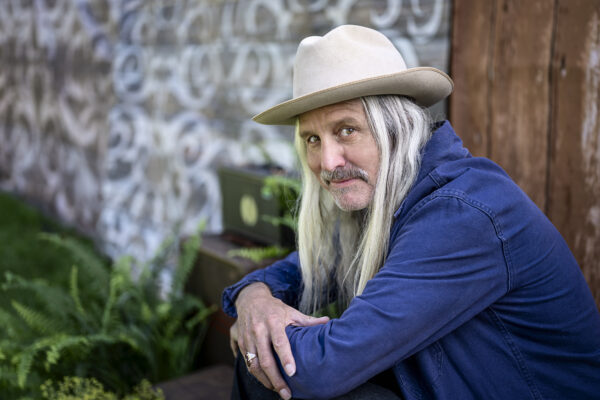
A dude named Steve Poltz (me) in East Nashville wakes up one morning and gets a call from another dude in East Nashville named Dex Green. Dex says, “Hey man, you live so close. You oughta come over and make some music. Maybe we’ll document it — who knows, maybe it’s a record.”
Capturing me in a studio is like convincing a whirling dervish to stop spinning long enough to sign a bill into law. It’s chaos, caffeine, and accidental poetry — art colliding with microphones and commerce in a glorious mess. That’s how JoyRide happened. No seatbelts, no helmets. Just unsaturated, unadulterated art. Real humans making real noise in real time.
JoyRide is my 14th solo album (not counting the Rugburns records, live things, and bootlegs floating around). I tour nonstop, so I usually have to be tricked into a studio under the guise of “just one song.”
The record opens with “If It Bleeds It Leads” — my kinda classic mischief: “I can never watch the news with you because you yell back — you scream like they can hear you in the television set.”
Then comes “Petrichor,” inspired by the beautiful smell after it rains. (I later discovered Phish has one too, but mine’s the barefoot cousin at brunch.)
“At It Again” follows, a cosmic co-write with my brother-from-another-meerkat, Jim Lauderdale, featuring Bryan Owings and Chris Donohue (Emmylou Harris’s rhythm section).
The title track “JoyRide” feels like a warm hug after a long road trip: “Free hugs, no shrugs, wrong drugs, bedbugs. Smiles, laughter, for here ever after.”
Side one ends with “The Son Of God.” A nutso magutso track of a conversation I may or may not have had with Jesus.“ I get to play both parts — Myself AND Jesus:
“The son of God contacted me about buying some Funk and Wagnalls encyclopedias. I said hello who’s this?”
“It’s Jesus”
“Jesus who?”
“Jesus H. Christ. God’s son.”
“How’d you get my number?”
“I have everyone’s number.”
“Even Liberace?”
“He’s on dead people’s speed dial.”
I will probably get crucified for this song, but hopefully it will be an AI video made by an angry man living in his mom’s basement.
Side two kicks off with “Love a Little Bigger” — a rowdy co-write with Vince Herman of Leftover Salmon. It opens with: “Jacob took a hammer and he went up a hill, built a nice house for his best friend Bill…” and ends with a sing-along reminder to forgive faster and swim more often.
“Fixin’ Up” (track seven) is my secret favorite — like a quarter from the Tooth Fairy you gotta dig around for.
“New Tattoo” follows — about a dude who got his lover’s face inked on his own face. (Bad plan, good song.)
“Brand New Liver” imagines swapping out your old one like a water pump instead of quitting drinking.
And then comes the closer: “Hairlift.” That one has my favorite line I’ve ever written: “I used to play ping pong with my old friend Mao Zedong. I thought he told me I was well hung, but he was speaking in the mother tongue.”
That’s JoyRide. Ten songs, no filter, no seatbelt, no map.
Big thanks to Dex Green for being the musical trickster who lured me into the studio.
Party on, weirdos.
According to Wikipedia, Steve Poltz (me) is a Canadian-American singer-songwriter and guitarist. He is a founding member of the indie-rock band the Rugburns and collaborated on several songs with singer Jewel, including the 1996 single “You Were Meant for Me”, which reached #2 in the US.
— Steve Poltz, East Nashville

THE LEGEND OF THE ACTUAL WOLF: There are outlaws, and there are outlaws. Some practice the pose and cultivate the image, though seldom dirty their soft, bourgeois hands with anything actually outside the law. When they do, it is often despicable, irresponsible or just plain mundane. The Actual Wolf (aka Eric Pollard), however, is a real outlaw and has pled guilty to it. Between the bust and before the trial AW recorded a pair of EPs, each showing ‘another side of the Wolf’. It is one of the most obvious statements of existence: everything takes time, and the truly good, well crafted things in life take more than the rest. If the world has had to wait a while for another full-length release from Actual Wolf, it is only due to craft and cure.
Faded Days has been cultivated, cut and cured with the same patience as that of the grower. Written over two years in a spectrum of locations that the artist has called home at one point or another– Duluth (Minnesota, not Georgia), Brooklyn, Nashville and currently Oakland—The rich oils and aromatics– resting in darkness and appropriately aged to bring them to a perfect state. the album is subtly informed by that breadth of different atmospheres as much as it is richly colored his array of collaborators (Al Church, Steve Garrington, Jake Hanson and Jeremy Hanson) in a year-long distillation by engineer Brad Bivens in Minneapolis.
After all of that time, Faded Days is ready. Its distinctly emotional alkaloids are blissfully intoxicating, palliative and healing. And now that it is finished, a sort of finely crafted goodbye to the Faded Days of all of those other places and those people and events, it will only be a matter of time before Actual Wolf cultivates and distills the more recent days of his current Oakland existence, though who knows how long this will take: you cannot put a timeline on true craft.
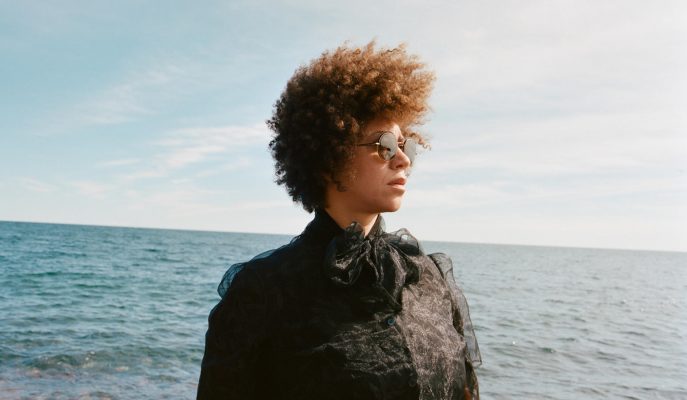
As the daughter of a blues musician, Chastity Brown was born with an innate ability to channel complex circumstances into beautiful, uplifting songs. But after surviving the isolation of the early pandemic and witnessing the global racial reckoning that manifested itself in the riots mere blocks from her South Minneapolis home, even she is surprised to hear the way her new album Sing To The Walls turned out.
“It’s a love album, in a way I didn’t plan on,” Chastity says.
Like so many artists who endured the uncertainty of the 2020 lockdown, Chastity’s instinct was to turn inward, at first out of self-preservation, and then because the new songs kept coming and coming. Since finishing her last album, 2017’s Silhouette Of Sirens, she estimates she’s written nearly 100 new songs, 10 of which found their way onto Sing To The Walls.
These songs unfold with Chastity’s expressive voice and expansive melodies, leading the listener through intertwining tendrils of atmospheric sounds. Even the titles hint at the album’s sense of optimistic yearning, from the dreamy opening track “Wonderment,” to her ode to healing a broken heart post-breakup “Curiosity,” to the pulsing promise of “Hope.”
With the exception of “Golden,” a searing indictment of white complacency and a cathartic release of post-uprising rage that comes halfway through the album (and was released in an earlier form in mid-2020), Sing To The Walls is ultimately an album about hope, connection, and love; an ode to the sweetness of life, even amidst a pandemic, even in a city that’s experienced so much pain.
“I think it’s an audacious response,” says Chastity. “Like how funk music came after Malcolm, Martin, and everybody got murdered in the ‘60s. Then the ‘70s popped off, and there was funk! This isn’t funk, but it’s rooted in that same kind of response. I just want to feel good. Straight up.”
The album was started in Stockholm, Sweden with revered session drummer and producer Brady Blade and completed at Chastity’s own home studio with her longtime drummer Greg Schutte. Additional production and mixing was done by Chris Bell in Austin, Texas.
For the first time, Chastity also served as the lead producer on some of the tracks, and co-producer on all of them. “I just was like, ‘why can’t I do it?’ It maybe meant that some things took longer, but it was like, ‘Where am I going now anyway?’ The way I’ve worked since the pandemic began, as far as songwriting and arranging and composing, I’ve never been so productive. Whatever touring life becomes going forward, I want to always carve out writing time. I’m addicted to it. And it’s such a cool high,” she says.
Sing To The Walls is a sonically expansive album; it mines the roots of Americana, folk, and soul music, but Chastity’s stories are delivered in a style that feels remarkably timely, modern, and forward-thinking. “I celebrate the emotional richness in the tradition, but in my music I’ve committed myself to moving forward and reflecting the experiences of those overlooked by tradition.”
In the same way, her lyrics seek to reach across a great divide. “I will sing to those walls, hope it gets through / And I will sing to your scars, they need healing too,” Chastity sings on the album’s title track, a pandemic love song about breaking through the physical, emotional, and social barriers that have been constructed around all of us in recent years. By the next track, “Like the Sun,” she breaks through into a melody that rises like a wide-open prairie sunrise—a heart-rending moment that demonstrates her talent for expressing big, beautiful ideas in her music, and to create songs that radiate bliss.
Even amid the chaos, while delivering the release-valve verses of “Golden,” she remains steadfast. “I’ve got joy even when I’m a target, if you think that’s political don’t get me started,” Chastity sings, demanding to know: “Why have I got to be angry?”
Between writing sessions she’s been vibing to chilled out, forward thinking artists like Leon Bridges, H.E.R., SZA, and Daniel Caesar, taking their cue to expand beyond genre and her folk/roots history to encompass her appreciation of all Black American musical art forms. “I also want to poke at what the blues is,” Chastity reflects. “It has a lot of stereotypes, like it’s mostly only played by blue-eyed white guys now. But what about Bessie Smith and Ma Rainey? I feel so closely connected, in a pure, undeviating lineage, to the heritage of being a Black, queer blues woman. I want to share this music with them, to say that I’ve listened, and I’ve done something new.”
“This album does not serve sorrow,” Chastity says bluntly. “And in that way, it’s my trying to emulate Zora Neale Hurston’s Their Eyes Were Watching God—seeking personal spiritual fulfillment while rejecting expectations. What matters to me is my survival—and for my survival, it’s been necessary to try to embrace some joy.”
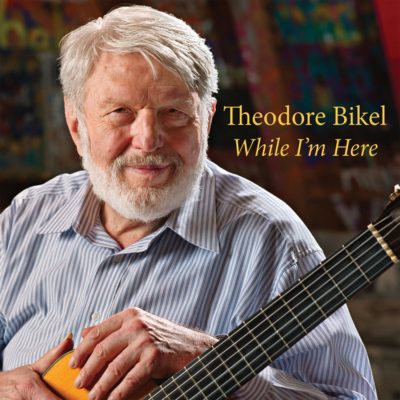
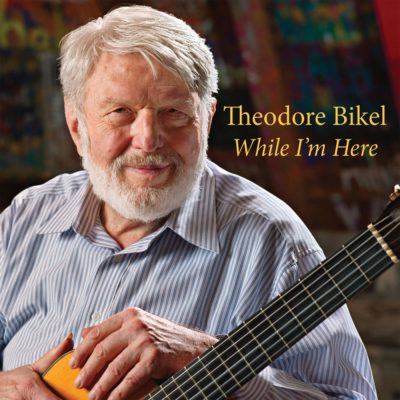
While I’m Here is a 2-CD celebration of the late Theodore Bikel, the legendary Austrian-born, American artist whose 70-plus-year career encompassed stage and film acting, songwriting and performance (folk and Broadway), with albums on Elektra, Reprise, and other labels. Known for his talent and stamina, he played Tevye in Fiddler On The Roof in over 2000 performances. Along with co-founding the Newport Folk Festival and mentoring generations of younger folk artists such as Judy Collins and Peter Yarrow, Bikel was a passionate human rights advocate, labor leader, Jewish activist and supporter of Israel.
Disc one is entirely spoken word and is dedicated to Bikel’s reflections and remembrances of his rich and eventful life. Disc two is a 17-song career musical retrospective spanning his early work through his last recordings made during his 90th birthday concert in 2014 at the Saban Theatre in Los Angeles. Most of the recordings are exclusive to this release with some songs previously unreleased, some newly recorded, and some obtained from obscure and long out-of-print sources. There are tracks in Yiddish, Hebrew, English and French, including the classic “Edelweiss,” written specifically for Bikel when he originated the Captain von Trapp role on Broadway in The Sound of Music.
Produced by Michael Stein, Cathy Fink, Marcy Marxer and Eric Peltoniemi, While I’m Here includes a lavish 22-page color booklet with extensive liner notes, interviews and photos. This collection, truly a labor of love, provides the latest, definitive recordings of the artist whom President Obama lauded, stating that Bikel “captivated audiences and (his) advocacy has brought people together.”
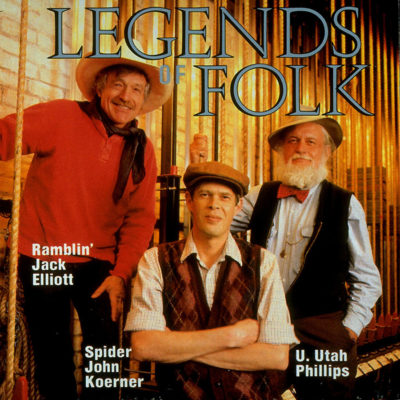
Three authentic folk legends on the same stage: add Utah’s infamous humor, Spider John’s foot-tapping synchopation and Ramblin’ Jack’s Woody Guthrie-inspired folksongs and you have a mini-folk festival and celebration of the living history of folk!
Ain’t somebody gonna tell me what I’m doing here?
Ain’t somebody gonna tell me where I’m going?
Ain’t somebody gonna spend a blank minute on me
And pray for an old hobo who’s gone wrong?
– “Hobo”
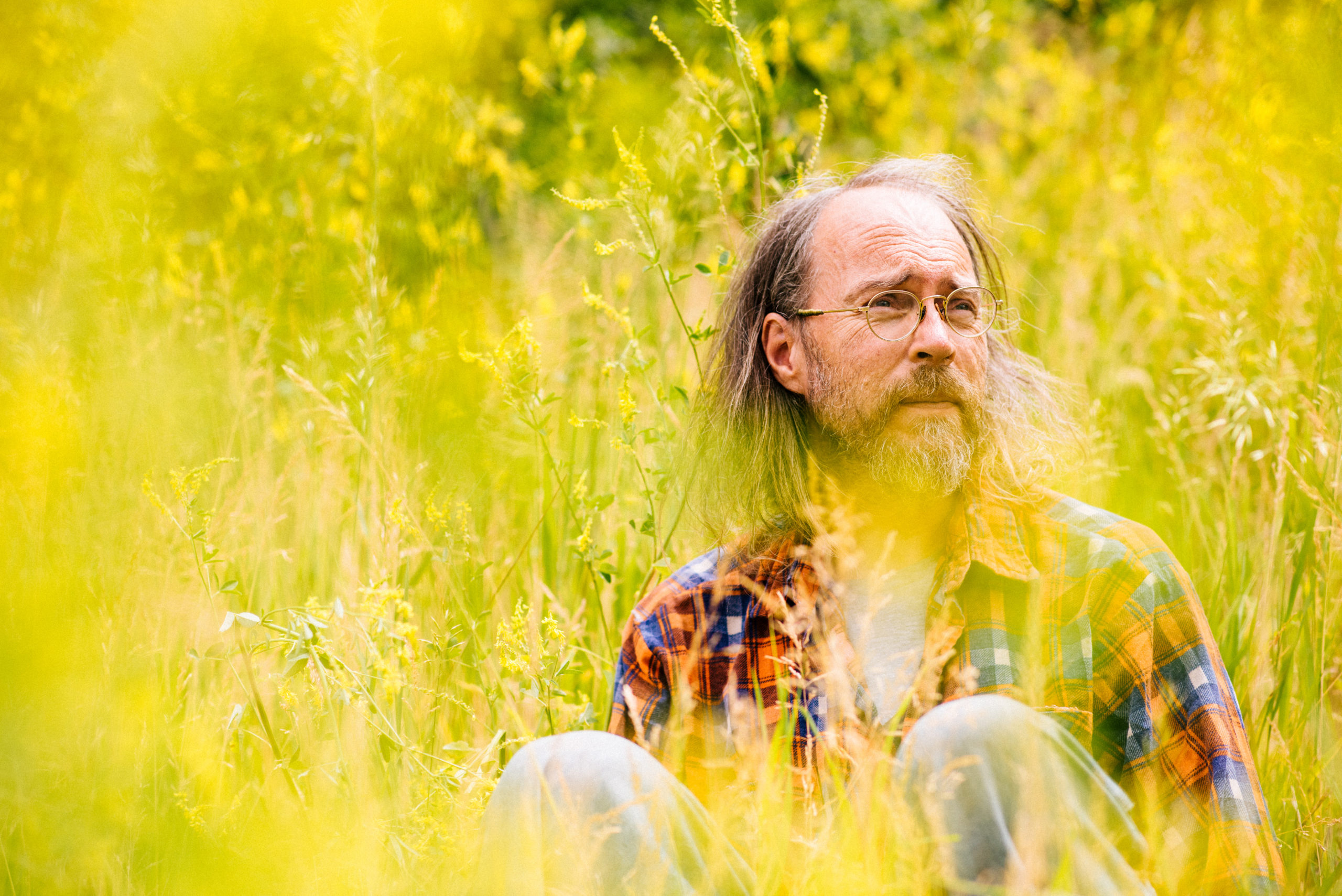
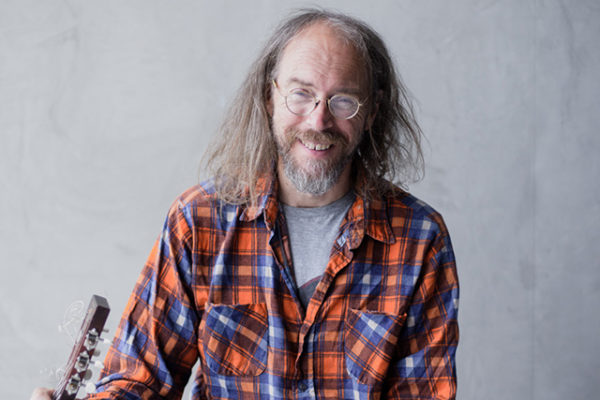
Fans who have been following Charlie Parr through his previous 13 full-length albums and decades of nonstop touring already know that the Duluth-based songwriter has a way of carving a path straight to the gut. On his newest record, Dog, however, he seems to be digging deeper and hitting those nerves quicker than ever before.
“I want my son to have this when I’m gone,” Charlie sings not 10 seconds into the opening song on Dog, “Hobo.” His voice sounds weary but insistent, his accompaniment sparse and sorrowful. By the second line, the listener has no choice but to be transported on a journey through the burrows of his troubled mind, following him through shadowy twists and turns as he searches for a way out.
It turns out Charlie’s been grappling with quite a bit over these past few years. As he prepares to release his new album on Red House Records this fall, he’s just as candid about discussing his experiences in person as he is while singing on the heat-rending Dog.
“I had some really, really bad depression problems over the last couple years,” Charlie explains. “I’ve been trying to get fit, trying not to drink so much, trying not to do the rock ‘n’ roll guy thing. And then I got depressed. Really depressed. And to me, depression feels like there’s me, and then there’s this kind of hazy fog of rancid jello all around me, that you can’t feel your way out of. And then there’s this really, really horrible third thing, this impulsive thing, that doesn’t feel like it’s me or my depression. It feels like it’s coming from outside somewhere. And it’s the thing that comes on you all of a sudden, and it’s the voice of suicide, it’s the voice of ‘quit.’”
“These songs have all kind of come out of that. Especially songs like ‘Salt Water’ and ‘Dog,’ they really came heavily out of just being depressed, and having to say something about it.”
Sometimes I’m alright
Other times it’s hard to tell
“Like finding light in the bottom of the darkest well
— “Sometimes I’m Alright”
In the album’s quieter moments, Charlie confronts these issues head-on, using only an acoustic guitar or banjo to light the way. But the incredible thing about Dog is that it digs into dark matter and contemplates serious topics like mental illness and mortality while embracing a pulse of persistence and forward motion; throughout the album, more and more musicians seem to be joining in the fray as the tempo builds, keeping the overall vibe upbeat.
“I was going to do it completely solo,” Charlie says. “I was going to go to this barn in Wisconsin, sit there and play my songs. And I was practicing them and I thought, this is devastating. These songs are hard to hear in this format. I would never be able to listen to them again. And then my friend Tom Herbers, he saw something was wrong. We talked, booked time at Creation” Audio, and made a plan to flesh out the album with a backing band.
So Charlie called on some longtime friends who he’s collaborated with throughout his career: the experimental folk artist Jeff Mitchell, percussionist Mikkel Beckman, harmonica player Dave Hundreiser, and bassist Liz Draper, who traded her typical upright bass in for an electric at Charlie’s request. The group found an instant chemistry in the studio, capturing some of the tracks on the first take.
“I wrote all the lyrics on these giant pieces of paper, and I had highlighters, and I assigned them each a color. I was going to be super organized,” Charlie remembers. “And then we started playing, and all of a sudden none of that even mattered. These stupid highlighters, the pieces of paper — I should have just trusted in the beginning that these friends would know how to take care of my songs.”
You claim the bed lifted up off the floor
Well, how do you know I’m not as good as you are?
A soul is a soul is a soul is a soul
— “Dog”
In the album’s more raucous moments, Charlie turns from contemplating his inner struggles to examining his connection to other living creatures. The album’s title track, “Dog,” and the blistering “Another Dog” were inspired by some of the lessons he’s learned from his own pet, and wondering about the way dogs interact with humans and the outside world.
“I have a dog, her name is Ruby but I call her Ruben, and we go for these long, crazy, chaotic walks,” Charlie says. “Because I decided a long time ago that I get along really well with this dog, and I was taking her for walks, and she wanted to go this way, and I wanted to go that way. And then I thought, why are we going to go this way and not that way? Maybe I should be the one getting walked. Maybe I’ll learn something. So I follow the dog.”
Despite the album’s darker moments, the listener is left hearing Charlie in a more optimistic and defiant headspace, reflecting on how far he’s come — and how content he is to accept that some things are simply unknowable.
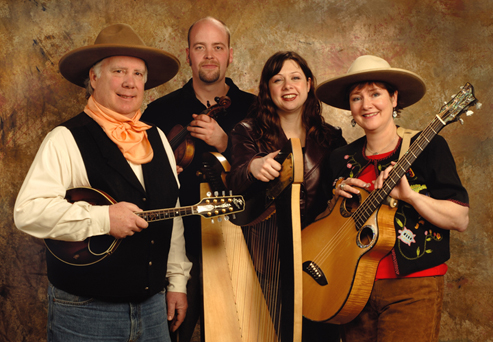
On the western plains of nineteenth century North America, intoxicating Gaelic melodies drifted through the evening air at many a cowboy campfire and during lonely shifts at night guard. These songs were brought over from the old country and often refitted with lyrics that reflect the men and women who made their way west.
David Wilkie and Cowboy Celtic bring to life this dazzling melding of Western traditionals and the Celtic styles of Scotland, Ireland, and Wales. Cowboy music has well documented origins in the Celtic tradition using many of the melodies as foundations for songs as they wandered the plains. Cowboy Celtic creates music that is both hauntingly beautiful and delightfully jovial with captivating melodies that keep your foot stomping.
Red House released two of Cowboy Celtic’s albums, Cowboy Celtic (1996) and Cowboy Ceilidh (1998), garnering praise from around the country. Wilkie received the Wrangler Award from the National Cowboy Hall of Fame in Oklahoma and his Cowboy Ceilidh was voted Outstanding Traditional Western Music Album in 1999.
David Wilkie and Cowboy Celtic continue to tour the western United States, Canada, and Scotland on occasion playing their unique blend of two traditions that have played such a vital role in shaping the country.
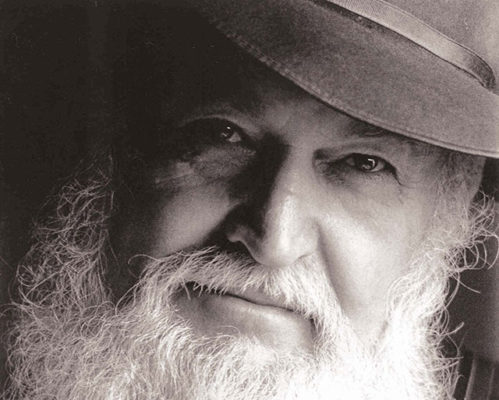
Bruce “Utah” Phillips was nothing less than an American folk legend whose music, poetry, and storytelling influenced countless musicians, poets, writers, workers, laborers and everyone in between. Throughout his iconic career, Utah was a figure who never tired of struggling for the workers, laborers, drifters and bums who had influenced his life so heavily.
Born on May 15, 1935 in Cleveland, Ohio, he was the son of labor organizers. Early in his life that was not always tranquil or easy, Phillips demonstrated a lifelong concern with the living conditions of working people by his early twenties. He was a proud member of the Industrial Workers of the World, popularly known as “the Wobblies,” an organizational artifact of early twentieth-century labor struggles that has seen renewed interest and growth in membership in the last decade, not in small part due to his efforts to popularize it. Phillips served as an Army private during the Korean War, an experience he would later refer to as the turning point of his life. Deeply affected by the devastation and human misery he had witnessed, upon his return to the United States he began drifting, riding freight trains around the country.
Destitute and drinking, Phillips got off a freight train in Salt Lake City and wound up at the Joe Hill House, a homeless shelter operated by the anarchist Ammon Hennacy, a member of the Catholic Worker movement and associate of Dorothy Day. Phillips credited Hennacy and other social reformers he referred to as his “elders” with having provided a philosophical framework around which he later constructed songs and stories he intended as a template his audiences could employ to understand their own political and working lives. They were often hilarious, sometimes sad, but never shallow.
In the creation of his performing persona and work, Phillips drew from influences as diverse as Borscht Belt comedian Myron Cohen, folksingers Woody Guthrie and Pete Seeger, and country stars Hank Williams and T. Texas Tyler. A stint as an archivist for the State of Utah in the 1960s taught Phillips the discipline of historical research; beneath the simplest and most folksy of his songs was a rigorous attention to detail and a strong and carefully-crafted narrative structure. He was a voracious reader in a surprising variety of fields. Meanwhile, Phillips was working at Hennacy’s Joe Hill house. In 1968 he ran for a seat in the U.S. Senate on the Peace and Freedom Party ticket. The race was won by a Republican candidate, and Phillips was seen by some Democrats as having split the vote. He subsequently lost his job with the State of Utah, a process he described as “blacklisting.” Phillips left Utah for Saratoga Springs, New York, where he was welcomed into a lively community of folk performers centered at the Caffé Lena. Over the span of the nearly four decades that followed, Phillips worked in what he referred to as “the Trade,” developing an audience of hundreds of thousands and performing in large and small cities throughout the United States, Canada, and Europe. His performing partners included Rosalie Sorrels, Kate Wolf, John McCutcheon and Ani DiFranco. “He was like an alchemist,” said Sorrels, “He took the stories of working people and railroad bums and he built them into work that was influenced by writers like Thomas Wolfe, but then he gave it back, he put it in language so the people whom the songs and stories were about still had them, still owned them. He didn’t believe in stealing culture from the people it was about.” A single from Phillips’s first record, “Moose Turd Pie,” a rollicking story about working on a railroad track gang, saw extensive airplay in 1973. From then on, Phillips had work on the road.
His extensive writing and recording career included several albums on Red House including Legends of Folk (1990) with ‘Ramblin” Jack Elliot and Spider ‘John’ Koerner, The Long Memory (1996) with Rosalie Sorrels as well as Loafer’s Glory (1997) and Moscow Hold (1999). Utah also recorded two albums with Ani DiFranco one of which earned a Grammy nomination. Phillips’s songs have been performed and recorded by Emmylou Harris, Waylon Jennings, Joan Baez, Tom Waits, Joe Ely and others and in 1997 he was awarded a Lifetime Achievement Award by the Folk Alliance.
Phillips, something of a perfectionist, claimed that he never lost his stage fright before performances. He didn’t want to lose it, he said; it kept him improving. Phillips began suffering from the effects of chronic heart disease in 2004, and as his illness kept him off the road at times, he started a nationally syndicated folk-music radio show, “Loafer’s Glory,” produced at KVMR-FM and started a homeless shelter in his rural home county, where down-on-their-luck men and women were sleeping under the manzanita brush at the edge of town. Hospitality House opened in 2005 and continues to house 25 to 30 guests a night. In this way, Phillips returned to the work of his mentor Hennacy in the last four years of his life.
On May 23rd, 2008 Bruce “Utah” Phillips passed away in his sleep from complications of heart disease.
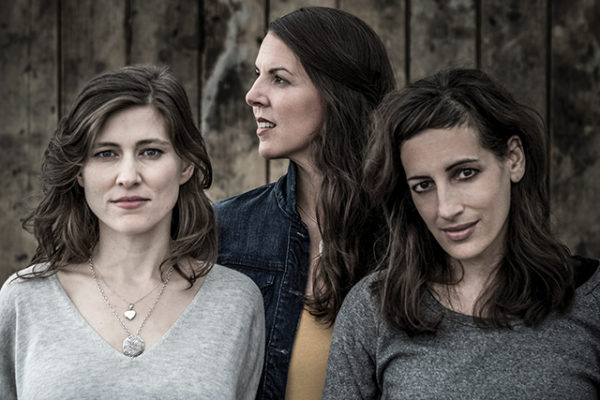
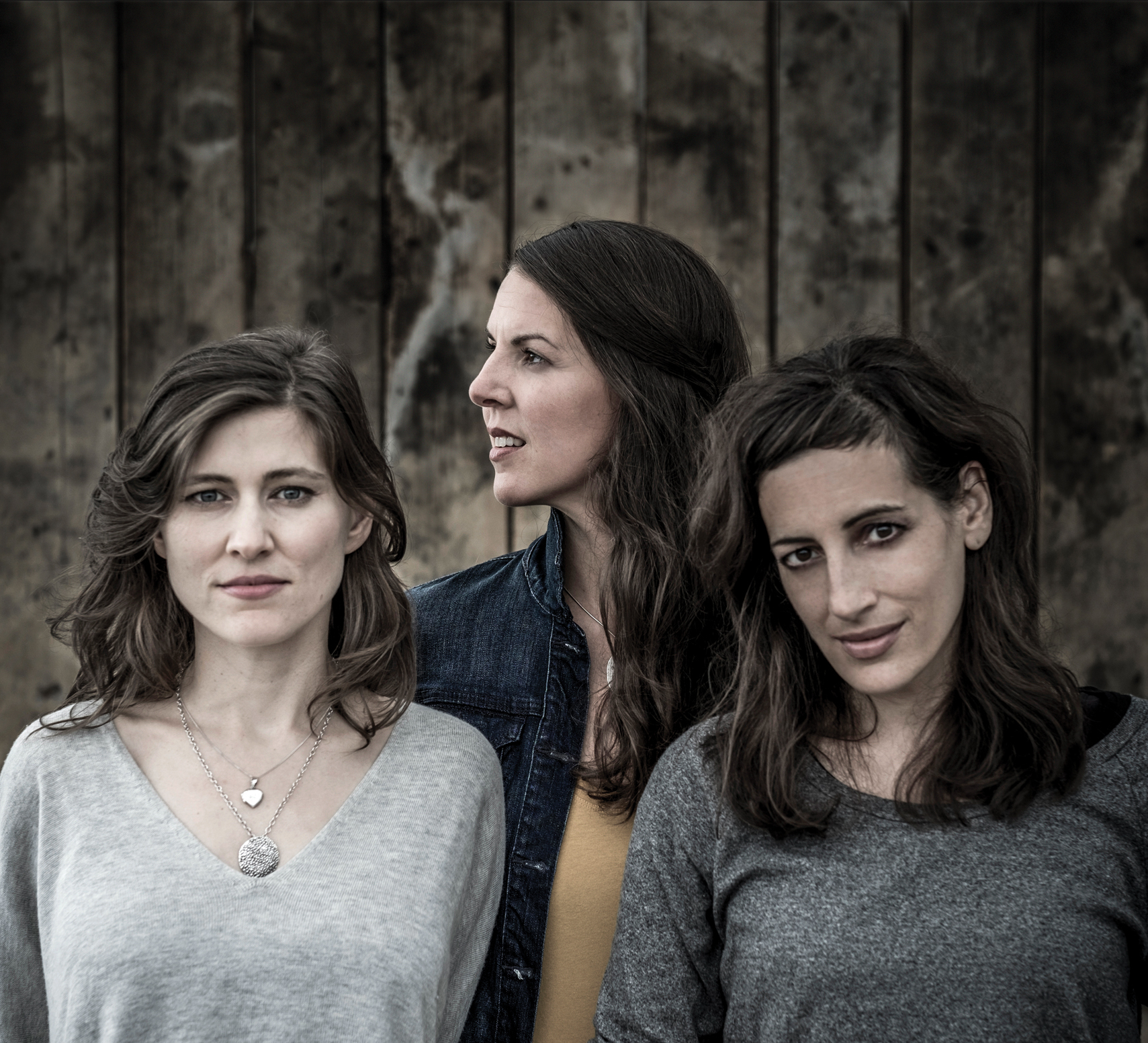
The Wailin’ Jennys are Nicky Mehta, Ruth Moody and Heather Masse—three distinct voices that together make an achingly perfect vocal sound.
Starting as a happy accident of solo singer-songwriters getting together for a one-time-only performance at a tiny guitar shop in Winnipeg, Manitoba, The Wailin’ Jennys have earned their place as one of today’s most beloved international folk groups. Founding members Ruth Moody and Nicky Mehta, along with New York-based Heather Masse, continue to create some of the most exciting and exquisite music on the folk-roots scene, stepping up their musical game with each critically-lauded recording and thrilling audiences with their renowned live performances.
In 2004, Red House Records released The Wailin’ Jennys’ first full-length album, 40 Days, in the U.S. to great critical acclaim, and in 2005 it won them a Juno Award (Canadian Grammy) for Roots & Traditional Album of the Year. Bolstered by their frequent appearances on Garrison Keillor’s public radio show A Prairie Home Companion, The Jennys exploded onto the roots music scene, performing at packed venues across the U.S. and throughout the world. Their next CD, Firecracker, was a powerful follow-up to their debut album and found The Jennys stepping out of the folk realm and into the world of alt-country, pop and rock. Garnering much attention, it was nominated for a Juno Award and won a 2007 Folk Alliance Award for “Contemporary Release of the Year.” It charted for over 56 weeks on the Billboard charts and was followed up by their 2009 release Live at the Mauch Chunk Opera House, which spent over a year on the Billboard bluegrass charts.
The Wailin’ Jennys joined the ranks of Lucinda Williams and Emmylou Harris by recording their 2011 studio album Bright Morning Stars with award-winning producer Mark Howard, co-produced by frequent Jennys collaborator and Juno Award-nominated David Travers-Smith.
Although known primarily as an acoustic outfit, The Wailin’ Jennys have a wide range of musical backgrounds that have formed their musical sensibilities. Soprano Ruth Moody (vocals, guitar, accordion, banjo, bodhrán) is a classically trained vocalist and pianist known as an accomplished, versatile singer of traditional and Celtic music and was the lead singer of Juno-nominated roots band Scruj MacDuhk. Red House Records released her first full-length solo album The Garden, whose title track was the #4 most played song of 2010 on folk radio followed by 2013’s These Wilder Things. She recently became a mother to a son, Woodson.
Mezzo Nicky Mehta (vocals, guitar, drums, ukulele) is a self-taught musician and classically trained dancer raised on ‘70s AM radio. She was nominated for a Canadian Indie Music Award for her solo album Weather Vane and is working on a follow-up while also preparing for the release of a new children’s book based on the lyrics of her song “Away But Never Gone” from Bright Morning Stars. When at home she splits her time between composing for contemporary dance and engaging in various social justice initiatives. With the Jennys, she spearheaded their ongoing relationship with the National Alliance on Mental Illness to raise awareness and funds for the cause. She is the proud mother of twin boys, Beck and Finn.
Alto Heather Masse (vocals, upright bass) is a Jazz Voice graduate of the New England Conservatory of Music and is a regular guest on A Prairie Home Companion. She has also toured with her own band, supporting her 2009 Red House release Bird Song. Masse has released two jazz collaborations with Red House: Lock My Heart, a collection of standards pairing her with keyboard legend Dick Hyman, and August Love Song, which found Masse united with free jazz trombonist Roswell Rudd. She is the mother of a son, August.
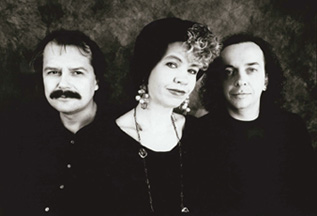
Trova was a trio comprised of Ruth MacKenzie (vocals), Jeffrey Willkomm (vocals, electric bas)] and Eric Peltoniemi (vocals, guitar, songwriter) who thrilled audiences for 4 short years from the US to Northern Europe. Critics branded their unique sound “powerfolk” and it combined the best elements of urban and contemporary folk, rock and jazz with superior songwriting, instrumentation and the dynamic voice of Ms. MacKenzie. First coming together in the music theater, their harmony-driven, percussive and rhythmic songs sounded quite innovative in the early 1990s, and in many ways foreshadowed styles that would appear a decade or two later.
-->