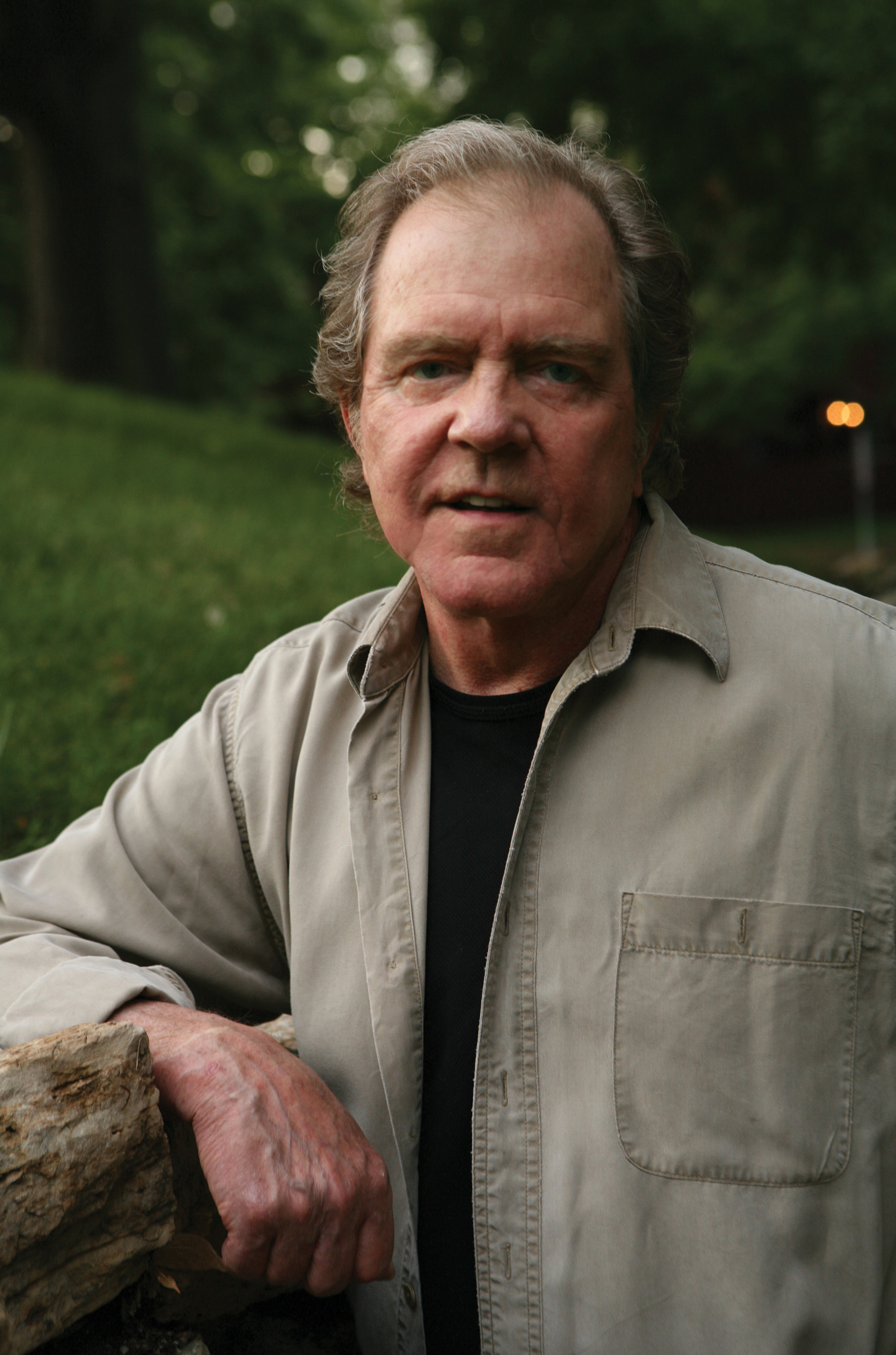
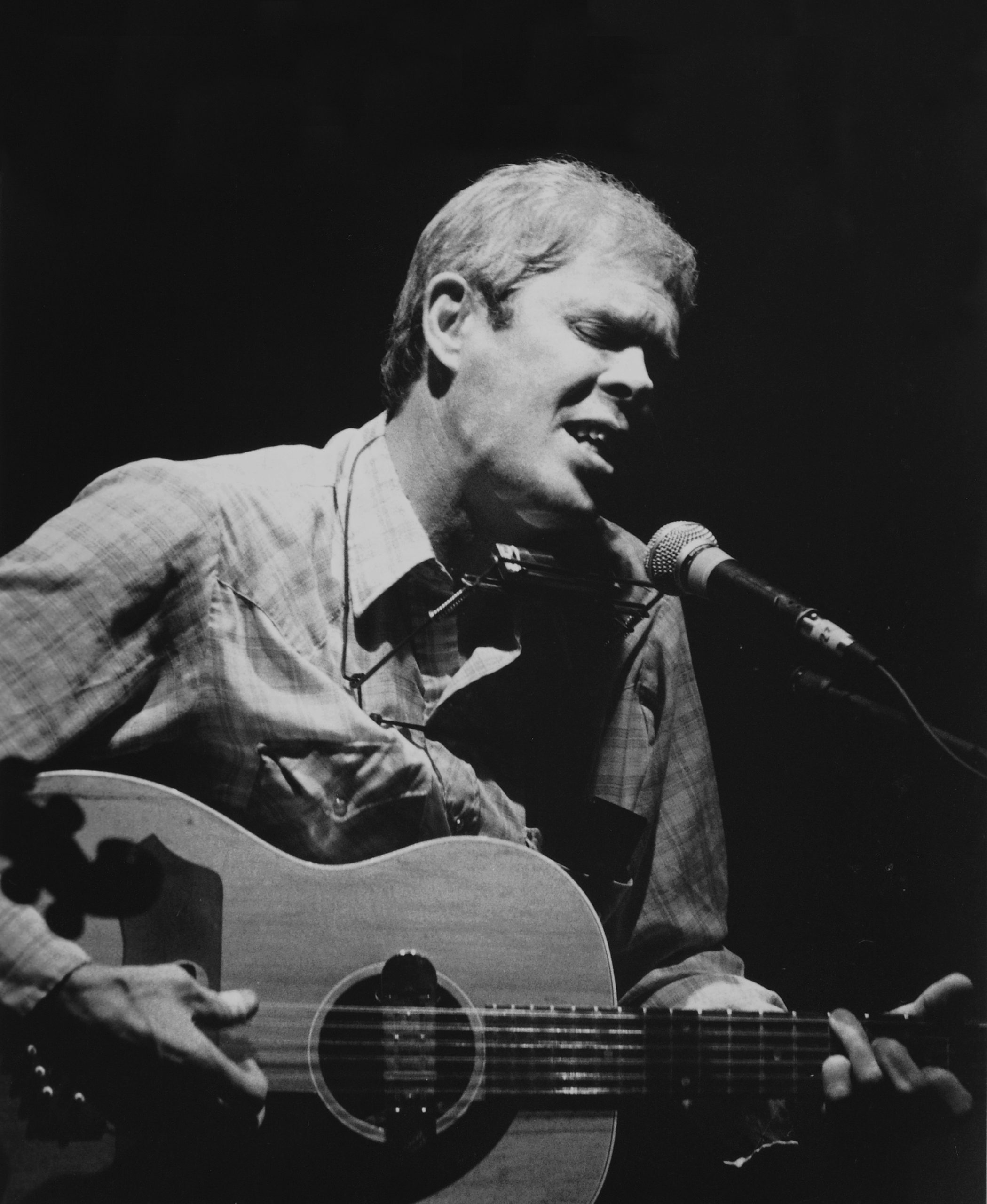
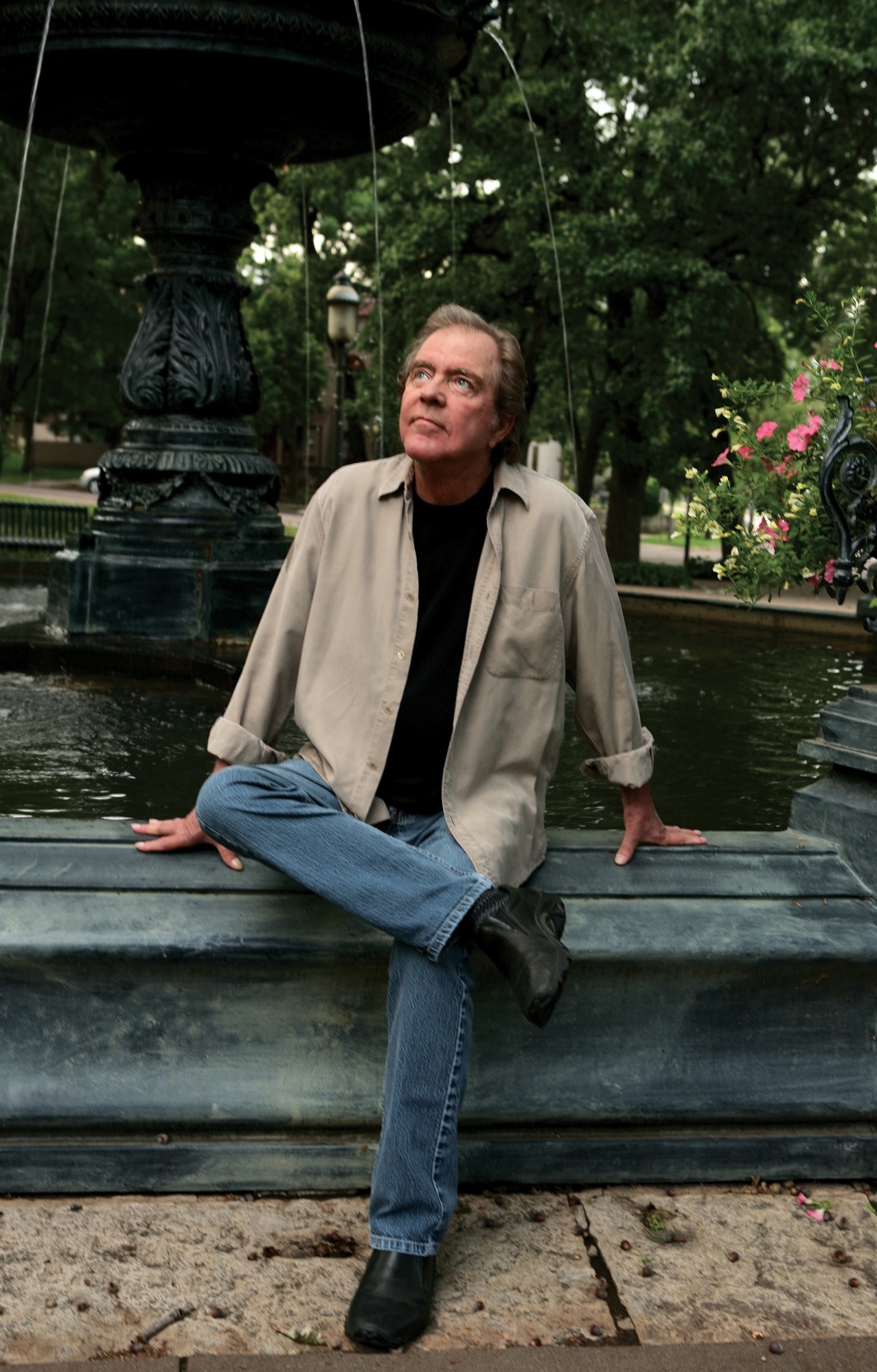
Tom Paxton has become a voice of his generation, addressing issues of injustice and inhumanity, laying bare the absurdities of modern culture, and celebrating the tenderest bonds of family, friends, and community.
In describing Tom Paxton’s influence on his fellow musicians, Pete Seeger has said: “Tom’s songs have a way of sneaking up on you. You find yourself humming them, whistling them, and singing a verse to a friend. Like the songs of Woody Guthrie, they’re becoming part of America.” Tom Paxton’s songs are reaching around the world more than he, or any of us, could have realized.
Paxton has been an integral part of the songwriting and folk music community since the early 60s Greenwich Village scene, and continues to be a primary influence on today’s “New Folk” performers. The Chicago native came to New York via Oklahoma, which he considers to be his home state and where he received a BFA in Drama from the University of Oklahoma in 1959.
Brought to New York courtesy of the US Army, Tom remained there following his discharge. His early success in Greenwich Village coffeehouses, such as The Gaslight and The Bitter End, led to an ever-increasing circle of work. Then in 1965 he made his first tour of the United Kingdom – the beginning of a career that has included at least one tour in each of the succeeding years.
Tom has performed thousands of concerts around the world in places including Australia, New Zealand, Japan, Hong Kong, Scandinavia, France, Italy, Belgium, Holland, England, Scotland, Ireland, and Canada. That these fans still enjoy his music is a testament to the quality of his recent work, and to the enduring power of modern standards like “The Last Thing On My Mind,” “Ramblin’ Boy,” “Bottle Of Wine,” “Whose Garden Was This?,” “Goin’ To The Zoo,” and “The Marvelous Toy.” Paxton’s song books, critically acclaimed children’s books (available from HarperCollins), award-winning children’s recordings, and a catalog of hundreds of songs (recorded by artists running the gamut from Willie Nelson to Placido Domingo to Johnny Cash), all serve to document Tom Paxton’s 45-year career.
Tom Paxton’s place in folk music is secured not just by hit records and awards, but by the admiration of three generations of fellow musicians. An internationally recognized and loved cultural figure, he has always chosen goodwill over commercial success. His generosity has taken shape through gestures like performing a benefit concert performance for a little girl fighting leukemia and writing a personal note of encouragement to an up-and-coming songwriter. This is the man who wrote and lives the words, “Peace will come, and let it begin with me.” He is one of the great songwriters of the last century and will be reckoned as one of the greats in this century, as well.
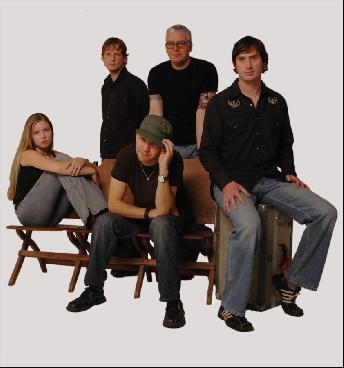
The Paperboys make music that is best described by founder Tom Landa as high energy music that is like a “Guinness with a tequilla chaser while listening to an Americana Jukebox.”
The Paperboys began in Vancouver in 1992. Landa, a young musician born in Mexico City, first got the taste for Celtic music when he heard Spirit of The West. Mixing his take on Celtic music with the music he had grown up with in Mexico seemed a natural direction for Tom to take.
By 1995, with a shifting group of players moving in and out of the band, a unique form of music was emerging–a mix of Celtic and latin folk with straightforward pop and a taste of bluegrass: Tom and his friends called it “stomp” and the first album, Late As Usual, was full of it. Their second album Molinos, however, was the breakthrough–and the title song, co-written with rocker Annette Ducharme, earned the band significant radio play.
Molinos not only won a Juno (Canadian Grammy) for “Roots and Traditional Album of the Year,” but it gave The Paperboys a strong following in the United States. Tom and the band have done more than 16 coast-to-coast tours in Canada, and have built huge followings in Seattle, Portland and other cities in the Northwest, throughout California, and in the North East. Along the way, the band racked up record sales and put more than 200,000 miles of interstate and back roads on dozens of rental cars.
In the fall of 2000 Red House released, Postcards and album full of irresistible grooves and the sights and sounds of seven years of nonstop touring that Landa called ” a soundtrack to the Global Village.”
On 2001’s A Nod to Bob The Paperboys rendition of “All Along the Watchtower” was a dizzying version that remains one of the cornerstones of the classic Dylan tribute record.
In 2006, Tom Landa and The Paperboys released The Road to Ellenside, an album recorded entirely at a country manor in rural England. The highly lauded album landed on Top Ten critics’ poll in The Village Voice.
The Paperboys continue an exhausting tour schedule playing nearly 150 shows a year around the world, selling out clubs at nearly every stop bringing their unique, high-energy music to their growing legions of fans.

Now officially retired from music, Neal and Leandra toured the country as a duo for more than twenty years with their laid back, easy going folk style that has earned them a loyal following. Their journey as musicians was a happy accident that led them to a career as one of the most respected folk duos in acoustic music.
Graduates of Gustavus Adolphus College in Minnesota, the two were on a completely different path. Leandra went off to graduate school for Spanish and Neal received a Masters in divinity. On his way to medical school and a lucrative career in international buisness, Neal dropped those plans and decided to hit the road as a musician with a handful of songs he had written. Somehow convincing Leandra to join him on tour, the two were well-received in the coffeehouses they played.
The simplicity and directness of their songs is disarming and elegant. The songs are layered with textures of everyday life and love. They have recorded eight albums indcluding four Red House releases: Hearts and Hammers (1994), Old Love (1995), Accidental Dreams (1996), and Stranger To My Kin (1998).

In 1986 The New Dylans arrived on the scene with a critically acclaimed debut EP which was placed on the Top 5 list of the Village Voice’s famed year-end “Pazz and Jop” poll. REM’s frontman Michael Stipe declared the record one of his top 3 of the year, and regular rotation on MTV. Jim Reilley (songwriter/guiarist/vocalist) and Reese Campbell (guitar/piano/songwriter/vocalist) were childhood friends who found themselves in the middle of a successful music career.
In order to facilitate their music, they inked a record deal with Red House in the early ’90s and went on to release two highly lauded records, The American Way and Warren Piece. They’re energetic folk-rock and knack for hooky lyrics took them to every corner of the country playing for a steady growing audience. The New Dylans found themselves sharing the stage with The Band, Townes Van Zandt, Shawn Colvin, The Fleshtones, Superdrag, and even their old friend The 10,000 Maniacs.
Both Red House releases garnered glowing reviews in Rolling Stone, Pulse, Spin, Mojo, and Dirty Linen as well as appearances on Nationally syndicated radio shows like The World Cafe, Acoustic Cafe, and National Public Radio’s All Things Considered.
Today The New Dylans co-founder Reese Campbell continues to play with his band The American People in the Northeast while Jim Reilly is an acomplished songwriter and performer in the Nasville area.
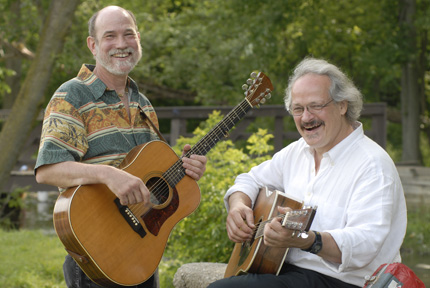
With a career spanning more than 30 years, Mustard’s Retreat (David Tamulevich, Michael Hough) are known throughout folk circles for their witty and thoughtful songwriting. Forming in Ann Arbor, MI in 1974, these two short-order cooks discovered a musical kinship between slinging hash and flying garbanzo beans and have been touring and playing together ever since.
Through the years, they have released six records, including an often hilarious live CD called 5 Miles or 50,000 Years, and a warmly reflective set of original songs called Wind and the Crickets, which offers convincing proof of Tom Paxton’s thesis that their stage antics work because they have the musical chops to go with them. They have released several albums on Red House Home By Winter(1985) and Midwinter’s Night (1985), both of which are compiled on their 1995 release Back to Back. The album brings together twenty-one tracks and over 72 minutes of superb acoustic music also featuring Peter Ostroushko, Claudia Schmidt and Pat Donohue.
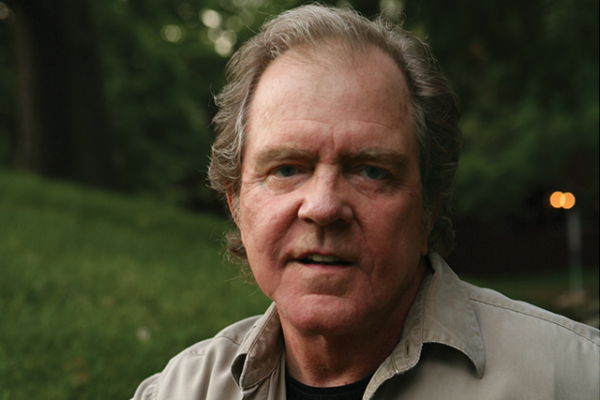
Michael Johnson is a masterful guitarist and songwriter who has had several Billboard-charting hits. Equally at home singing pop, country or classics from the American songbook, he remains one of the true authentic voices in contemporary music. His songs have been recorded by such artists as Alison Krauss, Suzy Bogguss, Chet Atkins and The Persuasions.
Born in Alamosa, Colorado and raised near Denver, he began playing guitar at age 13. He went to Colorado State College to study music but left after winning an international talent contest that landed him a deal with Epic Records. He then moved to Barcelona, where he attended the Liceu Conservatory to study with the classical guitar great Graciano Tarragó. Not long after returning to the States, he joined Randy Sparks in a group called the New Society, touring East Asia. After that he toured with the Chad Mitchell Trio and began co-writing and touring with John Denver, forming a trio called Denver, Boise & Johnson.
After spending some time as an actor, working in New York, Los Angeles and Chicago, he returned to music to release some of his biggest songs, including Top 40 hits like “Bluer Than Blue,” “This Night Won’t Last Forever” and “Almost Like Being in Love.” He then enjoyed equal success in Nashville, recording #1 country songs with singers like Juice Newton and Sylvia.
Always most at home on stage with just an acoustic guitar, Michael continued to tour solo, playing about half his shows in Minnesota, where he lived from 1969 to 1985. At one of his recent shows at the Dakota Jazz Club, he met up with singer-songwriter John Gorka. Michael talked about wanting to return to his acoustic roots, and John connected him with his manager and his St. Paul-based label Red House Records. Very familiar with Michael’s work, Red House president Eric Peltoniemi was delighted to meet Michael and hear his new material. “I was just stunned at how great his new songs were,” he says. “It thrilled me to hear a true artist still at the top of his game.” Michael signed with Red House and got to work recording his new songs at Minneapolis’ Wild Sound Recording Studio.
Ready to return to his roots, Michael moved to Minneapolis. “It just seemed that all roads were leading me back to Minnesota–signing with Red House, working on the new album and most especially, reconnecting with my daughter who lives here.” Michael adds, “And I’m just an old hippy, and I need to be up where my people are.”
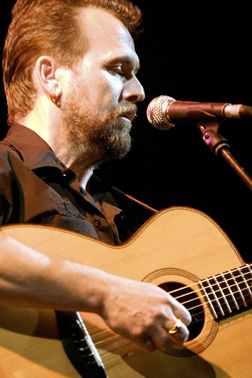
Martin Simpson is one of the world’s premiere acoustic guitarists, and a powerful songwriter with a rich, charactered voice. His playing, which in part defined the English steel string acoustic guitar sound, is idiosyncratic, instantly recognizable, and revered among guitar fans. His body of work is very diverse, encompassing all types of traditional and acoustic music, and he has toured with everyone from June Tabor to Steve Miller.
Martin was born in Scunthorpe, Lincolnshire, in northeastern England, and grew up with the benefit of rather diverse musical influences. His father enjoyed light opera and Victorian parlor ballads. From his older brothers he heard rock, jazz, R&B, and blues. He started playing the guitar when he was twelve and picked up the banjo shortly thereafter. As soon as he started playing music Martin knew that he wanted to be a professional musician, and started playing in public as soon as he could, learning as he went. He was fortunate to live in an area rich with great music. As a teenager he was hearing and working with performers like Dick Gaughan, the Watersons, Tim Hart and Maddy Prior of Steeleye Span, Stefan Grossman, Martin Carthy, Nick Jones and Christy Moore. There was a folk club near his home in Scunthorpe, and Martin started going there weekly from the age of twelve. He also hung out at blues festivals where he heard legendary blues performers and got to meet Big Joe Williams.
Martin was playing music professionally from the time he was fifteen. When he was twenty-two he recorded his first album, Golden Vanity, on the Leader Trailer label. The year the album came out (1976), Martin went on tour with Steeleye Span, opening for them in some of the biggest rock venues in England. The following year, June Tabor asked him to tour with her. It was a wonderful opportunity, and Martin ended up working with Tabor for a decade. They eventually recorded three albums together (A Cut Above, Abyssinians, and Aquaba). As his career progressed, Martin also worked with some of Britain’s best musicians, including Martin Carthy, Dave Mattacks, Ashley Hutchings, Simon Nicol and Richard Thompson.
In 1985, Martin married Jessica Ruby Simpson, an American singer-songwriter and poet. They stayed in England for a few years and recorded their first album, True Dare or Promise for Topic (1987). While living in England, Jessica put together the first of their wonderfully innovative ensembles – the Simpsons’ Flash Company – which Martin described to Sing Out! as an “insane five-piece band.” That year, they returned to the States, moving the family to Ithaca, New York (Martin had adopted Jessica’s three children). Stefan Grossman asked Martin to record an album for Shanachie and he made Leaves of Life, a solo guitar collection of Scottish, English and Irish tunes. He also made a second instrumental album for Shanachie, When I Was on Horseback. During these years they collaborated with a number of musicians in Ithaca to form the Martin Simpson Band.
In the early Nineties, Martin & Jessica moved to Santa Cruz, California. They recorded Red Roses, their second album together, and Martin released the blues album Smoke and Mirrors. Once again, in Santa Cruz, Jessica brought together a collection of very diverse musicians to form the Band of Angels. They recorded an extraordinary CD, Band of Angels, which was released by Red House Records in 1996. In recent projects, Martin has ventured into Eastern music, recording with Chinese pipa player Wu Man, and he has toured with guitarists Bob Brozman and Debashish Bhattacharya. In early 1997, he released his first live album, aptly titled Live. It was recorded in 1995 in England and received stunning reviews in the United States, Canada, and Britain.
Martin’s album, Cool & Unusual, drew on his love of traditional Celtic, American, and Afro-American music, and highlights his uncanny ability to blend with diverse musicians. The all-instrumental disc features David Lindley, Kelly Joe Phelps and members of Tarika Sammy, and it artfully brings home why the editors of Guitar Player called Martin one of the world’s finest acoustic players.
Martin’s Righteousness and Humidity continues his tradition of seamlessly blending a number of traditional styles. With his flawless instrumental work, soulful vocals, and the help of Steeleye Span’s Rick Kemp and The Radiators Dave Malone and Reggie Scanlan, this album is a sublime tribute to the music and people of the American South.

Meg Hutchinson is an award-winning songwriter who artfully documents the human condition. With a poet’s ease, she makes the personal universal, allowing people’s stories to come alive through her unique vocals and haunting melodies. Since the release of her Red House Records debut Come Up Full through 2010’s The Living Side, she has won high praise for her songwriting and has been featured nationally on NPR Music, XM/Sirius Radio and several times on the syndicated show Mountain Stage.
Growing up in the Berkshire Mountains of Western Massachusetts, the woods and ponds were her childhood muses, as were songwriters like Greg Brown and Joni Mitchell, and poets like Mary Oliver, William Stafford, William Butler Yeats, T. S. Eliot and Robert Frost. When Hutchinson inherited her grandmother’s 1957 Martin guitar at age eleven, her love of words found an inspiring instrument, and there was no turning back. “Songwriting is not something I chose, I’ve just somehow always known that this is what I love to do. This is what I can’t help but do,” she says.
After graduating from college with a degree in creative writing, Hutchinson quit her longtime job on an organic lettuce farm and settled in Boston. In between gigs at pubs, coffeehouses and train stations, she won a Kerrville New Folk Award (2000) and was nominated for a Boston Music Award for her first studio album Against the Grey. She went on to win awards at the Rocky Mountain Folks Fest, the Telluride Troubadour Songwriter’s Showcase in Colorado and The Chris Austin Songwriting Contest at Merlefest in North Carolina, all in the course of a year, causing national publications like Performing Songwriter to take notice, calling her “A master of introspective ballads filled with understated yearning and an exquisite sense of metaphor.”
She settled in Boston, where she quickly became an integral part of the vibrant songwriting community. Like every great performer who has come out of the Boston scene, Hutchinson took to the subway, performing in Park Street, Downtown Crossing and Davis Square stations — honing her chops in the same method of predecessors like Martin Sexton, John Mayer, Paula Cole and Tracy Chapman.
After recording her live CD Any Given Day in 2001, and continuing to build a fan base throughout the Northeast, she went into the studio with esteemed producer Crit Harmon (Lori McKenna, Martin Sexton, Mary Gauthier) to record The Crossing. Released in 2004, this album was enthusiastically received by critics and DJs across the country, catching the attention of renowned folk/roots label Red House Records. Label president and veteran producer Eric Peltoniemi knew there was something special in the young singer-songwriter, “Meg won me over with the profound yet easy depth of her lyrics—rich words married to melodies I just can’t get out of my head.” Knowing her songs could stand alongside those by Red House heavyweights Eliza Gilkyson and John Gorka, Peltoniemi signed Hutchinson to the label. Teaming up again with Crit Harmon, Hutchinson recorded her Red House debut Come Up Full over the course of more than a year in Boston. An instant folk hit, the album was one of the most played on folk and college radio and landed her on many “best of the year” lists.
Meg Hutchinson went on to tour with such artists as Lori McKenna, Martin Sexton, Susan Werner, Luka Bloom and Joe Pug, handily winning over new fans on both sides of the Atlantic. She was also a favorite at South By Southwest (SXSW) and the International Folk Alliance Conference, showing that this was a young talent to be reckoned with.
In fall of 2009, Meg Hutchinson joined fellow songwriters Antje Duvekot, Anne Heaton and Natalia Zukerman to record the holiday EP Winterbloom: Traditions Rearranged. A collection of eclectic holiday and wintertime tunes, the CD features original tunes and songs from a variety of traditions–from a German hymn to a Yiddish folk song to a Midwinter Greg Brown ballad. Touring in support of the album, the four women performed concerts in 12 cities, making appearances on such popular stations as WFUV, WUMB and FolkAlley.com.
In 2010 Hutchinson released her second album on Red House Records, The Living Side, showing that she was a songwriter who had fully arrived. With this album the lens grew larger as Hutchinson tackled some of the big issues of the time, all while maintaining that intimate and relatable voice which makes her songs resonate deeply.
As a result of the messages inherent in her earlier albums Come Up Full and The Living Side, Hutchinson has been invited to speak and perform as a mental health advocate across the country at prestigious conferences and teaching hospitals including Johns Hopkins University.
Her own personal journey has led her to study meditation at the Sakya Institute in Cambridge, Ma since 2009. In 2011 she discovered the power of yoga and as a result of the positive changes she experienced she decided to complete a 200 hour Pranavayu yoga teacher training program in 2012 with founder David Magone.
About two years ago, Meg participated in the filming of an award-winning documentary entitled, “For The Love Of The Music: The Club 47 Folk Revival.” Club 47 was the predecessor of Club Passim, a key venue for her performances located in Cambridge, Massachusetts. The film was produced by Ezzie films. Ezzie was created by Todd Kwait with the mission of documenting the positive contributions of music to society. Todd has made films with such musical icons as Joan Baez, John Sebastian, Bob Weir, Judy Collins, Taj Mahal and Tom Rush. Meg is now working with Todd and Ezzie films to bring you a feature length documentary film that will explore many of the topics nearest and dearest to her heart; music, mental health, wellness, healing, spirituality, and how those elements converge in making the world a better place. This is an ambitious project that will be filmed throughout 2014.
With Beyond That, Hutchinson delivers a collection of celebratory hymns from a woman who has made it out the other side of some difficult years and who is inviting us to go “Beyond That” with her now.

Lucy Kaplansky is a rare vocal talent, “a truly gifted performer…full of enchanting songs” (New York Times). Blending country, folk and pop styles, she has the unique ability to make every song sound fresh, whether singing her own sweet originals, covering country classics by June Carter Cash and Gram Parsons or singing pop favorites by Lennon/McCartney and Nick Lowe. Lucy’s iconic voice has has been featured in film and on television, including commercials like Chevrolet’s iconic “Heartbeat of America” jingle. A Billboard-charting singer and one of the top-selling artists on Red House Records, she has topped the folk and Americana radio charts and has been featured on shows throughout the world from NPR’s Weekend and Morning Editions to BBC Radio to CBS Sunday Morning. One of the most in-demand harmony singers, Lucy has sung on countless records, performing with Suzanne Vega, Bryan Ferry, Nanci Griffith and Shawn Colvin.
Raised by a piano-playing mathematician and a homemaker in Chicago, Lucy began singing in bars when she was still a teenager, even traveling to Norway to perform as a country singer. When she was just out of high school, she took off for New York City, where she became part of the renaissance of the Greenwich Village folk scene centered around Folk City and the Fast Folk recordings. Her compatriots included Suzanne Vega, The Roches, Steve Forbert and John Gorka as well as her frequent duo partner Shawn Colvin. The New York Times said it was “easy to predict stardom for her,” but instead, Lucy got a doctorate in psychology and started a private practice.
Eventually Shawn Colvin lured Lucy back to music, producing her debut album The Tide (1994). Red House founder Bob Feldman was blown away by the release and signed her right away. Since then, she has released six solo albums with Red House and released radio-charting albums with the folk supergroups Red Horse (with Eliza Gilkyson and John Gorka) and Cry Cry Cry (with Dar Williams and Richard Shindell).
Lucy continues to perform all over the world. When not performing, she lives in New York City, where she enjoys spending time with her husband and daughter.
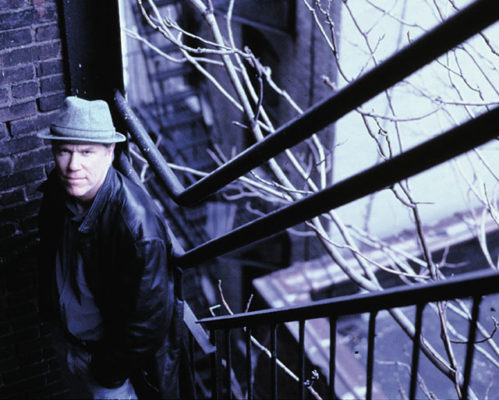
Loudon Wainwright III is one of the quintessential voices in American music. A prolific songwriter and accomplished actor, Wainwright’s albums accumulate like treasures in the attic, masterfully painting personal experiences as everyday human condition with compelling wit and wry humor. His 2001 release on Red House, Last Man on Earth was greeted with glowing reviews and he debuted the title track on “Late Night with Conan O’Brien.” The album is one of the strongest of his career and features songs that are more personal–a departure from the light, humorous, nature of previous albums.
Loudon grew up in Westchester, NY where he attended St. Andrews School for Boys from 1961-1965. He enrolled at Carnegie Mellon University, but after a year and a half, dropped out and moved to California in 1967. A year later he was writing his own songs, eventually cutting his first record for Atlantic in 1970. Since then, Loudon has gone on to record 20 albums, receive two Grammy nominations and have his songs covered by some of the legends of music like Johnny Cash, Earle Scruggs, Kate and Anna McGarrigle, and his son Rufus.
Not only is Loudon a prolific songsmith, but his year and a half studying acting at Carnegie Mellon paid off. He has gone on to numerous roles in film (Knocked Up, The 40 Year Old Virgin, Big Fish) and TV (Grounded for Life, Ally McBeal, Undeclared).
A songwriter who geniusly laces personal confessions with humorous poignancy, Loudon is one of the “greatest lyricists of our time.”
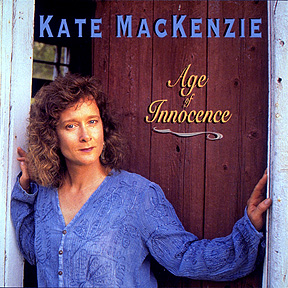
Kate MacKenzie is a Grammy-nominated vocalist with an expressive, honeyed voice and eloquent phrasing that has influenced vocalist for years. It’s a voice that’s as much at home in an amphitheater as it is in an intimate club. Her Grammy-nominated album Age of Innocence is a quintessential album for the folk connoisseur with its fresh original songs, creative covers, and skin-tingling takes on traditional tunes. The songs have a depth and a richness that shows her strength as a songwriter, as well as a vocalist. The playing on the record is crisp, clear, hot and sweet. Exactly the kind of instrumental prowess you’d expect from such an accomplished group of musicians.
Kate emerged as a solo performer, but her roots in bluegrass go back more than twenty years. For fifteen years Kate sang lead vocals with the upper Midwest’s premier bluegrass band Stoney Lonesome, with whom she recorded six albums. She has also been a favorite guest on Garrison Keillor’s A Prairie Home Companion since the program’s early days. She started on the show with Stoney Lonesome and eventually became one-fourth of the Hopeful Gospel Quartet with Keillor and Robin and Linda Williams. Kate has appeared on the show as a solo artist and on a couple occasions has served as co-host. Kate’s work with Keillor not only brought her before a radio audience of several million, it has also taken her to the stages of Austin City Limits, Carnegie Hall, Radio City Music Hall, Nashville’s Ryman Auditorium, the Universal Amphitheater, and the Hollywood Bowl.
Kate’s performances bring an uncommon bluesy edge to bluegrass. She describes it best: “I feel like I’m staking out my own territory, my own version of bluegrass, mixed with country blues and honky-tonk, and filtered through a kind of rootsy swampy beat. I call it ‘swamp grass.'”
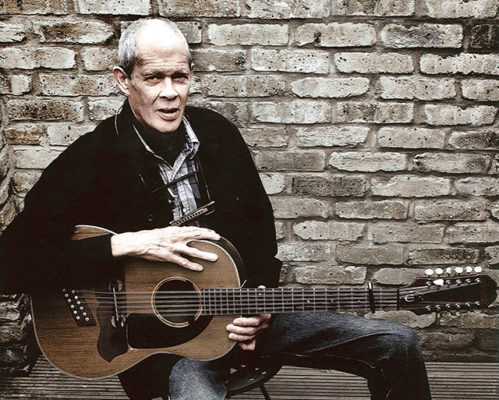
There are two Spider John Koerner legends. The first is the constantly evolving, rambling account of a young musical genius who influenced a generation of musicians. The second is the story of the contemporary artist who moves folk, blues, and rock audiences alike with his traditional songs and wry original compositions.
The first legend begins with a childhood in Rochester, NY, then winds its way to the University of Minnesota, where he studied engineering as an undergraduate, as well as a stint in the Marines before taking a permanent detour into the timeless realm of folk music. By 1959, inspired by the recordings of Sam Charters and Woody Guthrie, the gangly “Spider” John was exploring the range of folk traditions on Twin Cities stages as a solo act and as a duo with Bob Dylan, among others. Three years later, his interest in blues led him to form the seminal country blues trio Koerner, Ray, and Glover–a group that influenced a musical era with its passionate and raw treatments of rare blues stylings. A self-described “fun-loving trio of misfits,” they turned audiences on their heads with foot-stomping performances around the U.S. and Europe. Their series of Elektra recordings, commencing with Blues, Rags and Hollers, are considered the cornerstone of the Sixties’ folk-blues revival.
At the same time, Spider John kept up his solo career and in 1969 recorded the classic Elektra album Running, Jumping, Standing Still with Willie Murphy. Through it all, pop stars such as John Lennon, Ray Davies, Bonnie Raitt, and The Doors, regularly cited Koerner’s influences in their musical choices.
In the late Seventies and early Eighties, Koerner continued to perform, but other interests, including experimental film making, began to take up more of his time. He moved to Denmark for a couple years, and later back in Minnesota, where he frequently disappeared to a shack in the north woods. Finally in 1985, even as the glow of his musical legacy approached mythic proportions, he laid the guitar and performance career down to rest and spend more time with his home-made telescope and stars of a more cosmic sort.
The second Spider John Koerner legend begins while Koerner is still in Denmark. In a Copenhagen bookstore he came across a copy of Alan Lomax’s classic volume, American Folk Songs. From its old pages he began to glean folk songs, many as familiar as “Old Smoky” and “Shenandoah,” which he in turn infused with his own interpretation, style, and energy. Still a rhythmic, blues-inspired guitarist and singer, Koerner now began to forego original compositions for traditional music.
In the mid-Eighties Red House learned of a collection of unreleased tracks that Koerner had recorded in 1980. After returning to America, he had gone into the studio with an outstanding group of sidemen that included Peter Ostroushko, Butch Thompson, Willie Murphy, Tony Glover, Dakota Dave Hull, and the Boston area’s bones-rattling wizard Mr. Bones. In one night, while a tornado raged outside, the group recorded what has been described as one of the great folk records of all time. In late 1986, Red House released the session under the title Nobody Knows the Trouble I’ve Been. The critical response was unanimous with accolades like “Comeback of the Year” and “Leave it to Spider John Koerner–Minnesota’s premier blues picker–to salvage the soul of American Folk Music.”
John still does occasional tours, but when he’s not playing he can be found pursuing his passion for the stars. There have been several critically acclaimed Red House recordings; Legends of Folk with Utah Phillips and ‘Ramblin’ Jack Elliot, Raised by Humans, and StarGeezer. Red House has also released CD versions of two out-of-print Elektra classics: Blues, Rags, and Hollers (Koerner, Ray, & Glover), Running, Jumping, Standing Still with Willie Murphy. Koerner’s rollicking treatments of traditional folk songs and self-penned classics seem to only get better and more seasoned with age. His influence on generations of musicians proves that he is one of America’s true musical originals.
-->