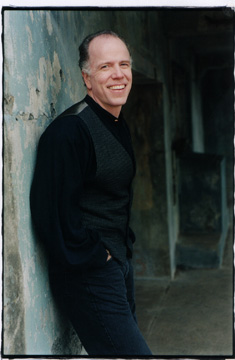
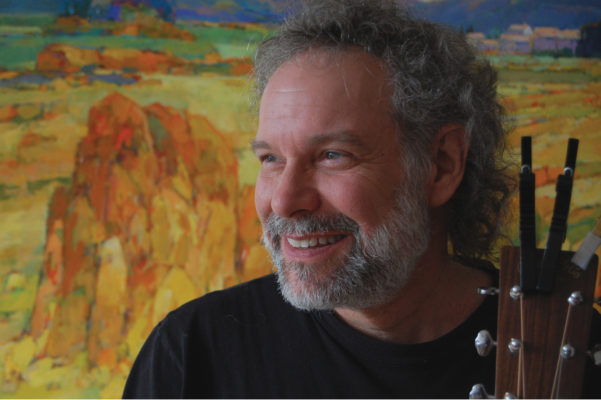
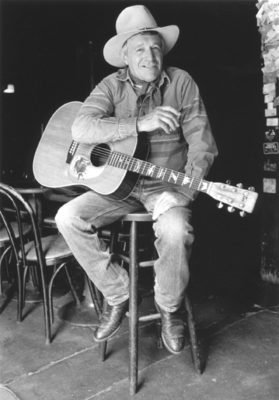
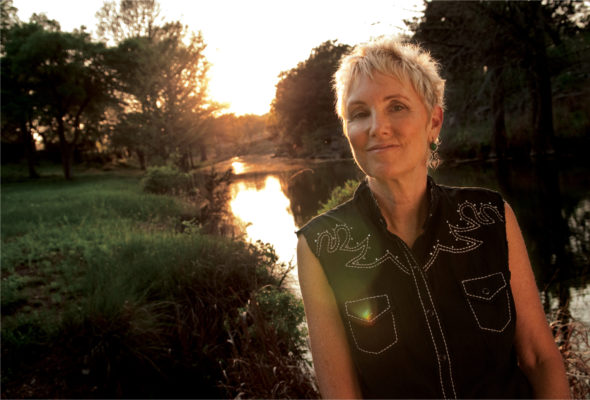
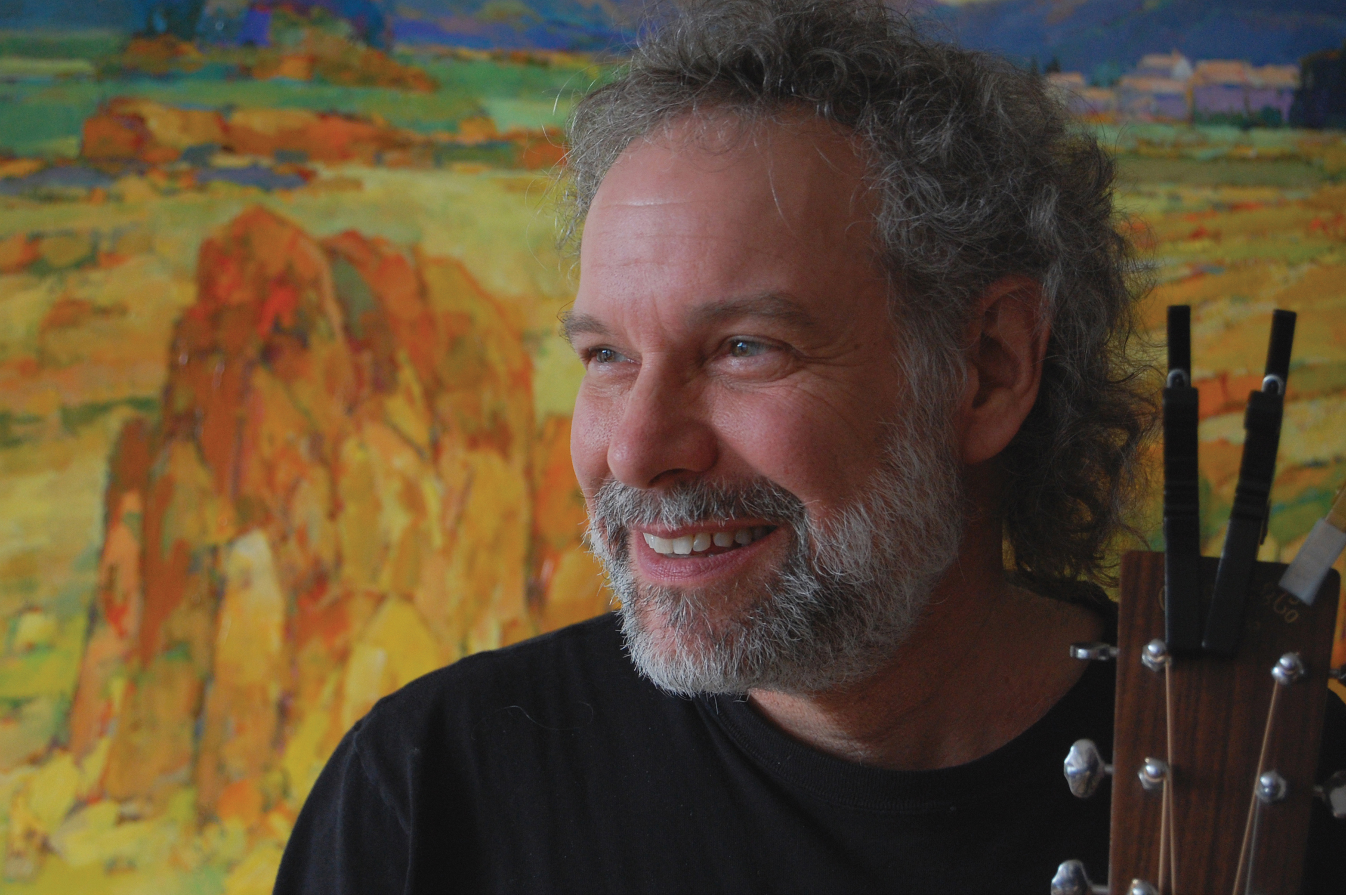
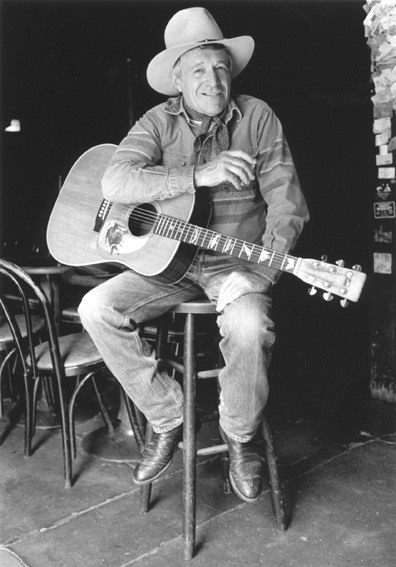
In a career that has already spanned a half-century, Jorma remains one of the most highly respected interpreters of American roots music, blues, and Americana with a history that influenced popular rock-and-roll. A member of the Rock & Roll Hall of Fame and a Grammy nominee as well as one of Rolling Stone’s “Top 100 Guitarists of All Time,” he is a founding member of two legendary bands, Jefferson Airplane and the still-touring Hot Tuna, and is recognized as one of the leading practitioners and teachers of finger-style guitar. Jorma’s renown goes far beyond his involvement creating psychedelic rock; he is a music legend and one of the finest singer-songwriters in music. He’s also an avid motorcyclist, a gallery owner (the Psylodelic Gallery, dedicated to the arts and culture of the 1960s arts) and co-owner of the Fur Peace Ranch, an Ohio-based concert venue and guitar center where Jorma conducts workshops, bringing in such guitar masters as G.E. Smith and Larry Campbell.
The 11 tracks on Ain’t In No Hurry show Jorma at the top of his game. Playing with a confidence and touch that come from a lifetime spent writing and performing, he delivers a batch of originals that already sound like classics, interspersed with soulful interpretations of songs by the Carter Family and more. He includes a weighty version of the Depression Era classic, “Brother, Can You Spare a Dime” and ends the album with a solo acoustic original number, “Seasons in the Field,” a look at the seasons of one’s life, the passing of time and the loss of youth. “You just can’t go backward. The arrow of time only goes in one direction,” says Jorma. “At this point in my life perhaps I should be in more of a hurry, but for me it’s more important that each piece fits in the right place at the right time. The songs you hear in this album cover a lot of ground for me. Some are very old, and some quite new. From where I came from to where I am today… it is all here. Music does not happen in a vacuum. The orbit of my life is constantly tangential to others and I am richer for it. I am surrounded by friends who help give voice to my dream.”
What comes through is Jorma’s ability to tell a story and the lifetime of experiences he brings to play. The DC native was a devotee of rock-and-roll in the Buddy Holly era but soon developed a love for the blues and bluegrass that were profuse in the clubs and concerts in the nation’s capitol and discovering albums by the Carter Family and the Louvin Brothers. This raw, American music inspired him to take up the guitar and make that kind of music himself. Soon he met fellow DC musician Jack Casady, the younger brother of a friend and a guitar player in his own right. Though they could not have known it, they were beginning a musical partnership that has continued for over 50 years. Jorma graduated from high school and headed off for Antioch College in Ohio, where he met Ian Buchanan, who introduced him to the elaborate fingerstyle fretwork of the Rev. Gary Davis. A work-study program in New York introduced the increasingly skilled guitarist to that city’s burgeoning folk-blues-bluegrass scene and many of its players. After a break from college and travel overseas, Jorma returned to the States and spent the summer of 1962 working in a service station. He spent his weekends going to the many Bluegrass festivals that existed in the area at the time, seeing Bill Monroe, Flatt and Scruggs, The Foggy Mountain Boys, The Country Gentlemen and more. That fall he enrolled at the University of Santa Clara, 50 miles south of San Francisco. “The first weekend I was there I played a hoot at the Folk Theater in San Jose. That night, I met Janis Joplin, Richmond Talbott, Jerry Garcia, Pig Pen, Paul Kantner and a host of others whose names would be more recognizable in the coming years,” Jorma recalls. “Paul would introduce me to the gaggle of characters who would become Jefferson Airplane, Jack Casady would join us from D.C. and the rest truly became history. I owe that cast of luminous characters a huge debt of gratitude for starting my train rolling in such a momentous way.”
While Jorma was in the Jefferson Airplane the band performed at three of the most famous American rock festivals of the 1960s: Monterey (1967), Woodstock (1969) and Altamont (1969) as well as headlining the first Isle of Wight Festival in the UK in 1968. Jorma left the band during their heyday, forming Hot Tuna with Jack Casady to play stripped down acoustic blues and folk music. “As a result, I have been more than a decently rewarded folk musician for more than half a century,” he says. In addition to his work with Hot Tuna, Jorma has recorded more than a dozen solo albums on major labels beginning with 1974’s Quah and continuing with his recent acoustic releases on Red House Records—2007’s Stars in My Crown and 2009’s River of Time, produced by Larry Campbell and featuring Levon Helm.
“I never really thought about it when I was younger, but my choice of songs was always an effort to tell my story,” he explains. “Sometimes they were about things that happened, and sometimes they were about things that never happened, sometimes they were about things I wanted to happen, sometimes they were about things I feared would happen… sometimes… there was always a sometimes. Learning to play guitar was the gift that enabled me to set the story to music.”
Jorma Kaukonen is constantly looking to take his musical horizons further still, always moving forward, always infusing his classic sound with fresh insights and the depth that comes with a lifetime as a performer.
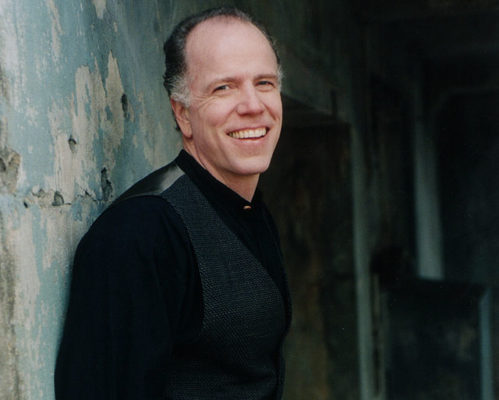
No one remembers when the neighbors started calling the McCutcheons to complain about the loud singing from young John’s bedroom. It didn’t seem to do much good, though. For, after a shaky, lopsided battle between piano lessons and baseball (he was a mediocre pianist and an all-star catcher), he had “found his voice” thanks to a cheap mail-order guitar and a used book of chords.
From such inauspicious beginnings, John McCutcheon has emerged as one of our most respected and loved folksingers. As an instrumentalist, he is a master of a dozen different traditional instruments, most notably the rare and beautiful hammer dulcimer. Critics and singers around the globe have hailed his songwriting. His recordings have garnered every imaginable honor, including five Grammy nominations. He has produced over twenty albums of other artists, from traditional fiddlers to contemporary singer-songwriters to educational and documentary works. His books and instructional materials have introduced budding players to the joys of their own musicality. And his commitment to grassroots political organizations has put him on the front lines of many of the issues important to communities and workers.
Even before graduating summa cum laude from Minnesota’s St. John’s University, this Wisconsin native literally “headed for the hills,” forgoing a college lecture hall for the classroom of the eastern Kentucky coal camps, union halls, country churches, and square dance halls. His apprenticeship to many of the legendary figures of Appalachian music imbedded not only a love of homemade music, but also a sense of community and rootedness. The result is music – whether traditional or from his huge catalog of original songs – with the profound mark of place, family, and strength. It also created a storytelling style that has been compared to Will Rogers and Garrison Keillor.
The Washington Post described John as “Virginia’s Rustic Renaissance Man,” a moniker flawed only by its understatement. “Calling John McCutcheon a ‘folksinger’ is like saying Deion Sanders is just a football player…” (Dallas Morning News). Besides his usual circuit of major concert halls and theaters, John is equally at home in an elementary school auditorium, a festival stage or at a farm rally. He launched the first-ever joint tour of a Russian and an American folksinger with 1991’s US-USSR Friendship Tour, playing to packed houses in both countries. The past several years have seen him headline five different festivals in Australia, tour Nicaragua on behalf of a children’s literacy program, record four albums of songs and music, perform in the first-ever children’s concert on the Nashville Network, give a featured concert at the AFL/CIO Convention, author a second songbook and a children’s book, score four videos, talk about songwriting with children on National Public Radio’s All Things Considered, produce three recordings to benefit a community organizing group, garner five Grammy nominations, and debut his work with symphony orchestras.
But it is in live performance that John feels most at home. It is what has brought his music into the lives and homes of one of the broadest audiences any folk musician has ever enjoyed. People of every generation and background seem to feel at home in a concert hall when John McCutcheon takes the stage, with what critics describe as “little feats of magic,” “breathtaking in their ease and grace. . .,” and “like a conversation with an illuminating old friend.” After sharing the bill with him at several shows, Johnny Cash was so impressed with McCutcheon live performances that he had John perform at his daughter Roseanne’s wedding. While introducing McCutcheon to a wedding group including people like Ricky Skaggs and Chet Atkins Cash commented, “This is just the most impressive instrumentalist I’ve ever heard.”
John released The Greatest Story Never Told on Red House in 2002 to rave reviews. The album reflects on the past and recognizes that we can no longer live there, and that each one of us must strive to live up to the legacy left by preceding generations.
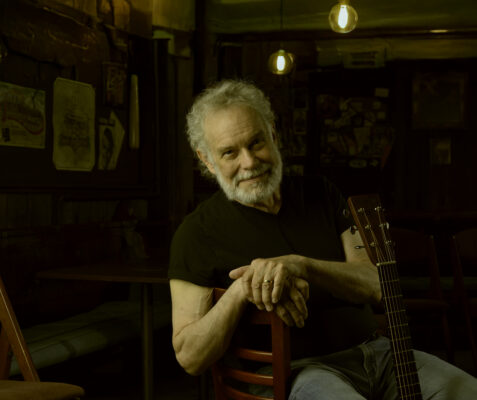
John Gorka is one of the most well-loved singer/songwriters in the folk community. With a career spanning 40 years and a discography of 17 solo releases, he embodies the best of folk music with his eclectic blend of folk, blues and bluegrass influences, insightful lyrics and engaging delivery. unentitled marks Gorka’s 10th album for the Red House Records imprint and furthers his legacy as a folk icon through the power of his songs and the quiet strength of his authenticity.
The album opens with “Favorite Place,” an upbeat reflection on the songwriter’s life and the creative process. As John says: “I am happiest when I’m working on a song, or better yet, in the middle of several songs. I love the place when the code is cracked and the song passes the point of inevitability. “A Light Exists in the Spring” is a setting of an Emily Dickinson poem brought to life by Gorka’s sparkling acoustic guitar and warm, rich baritone vocal.
The album’s first single is the track “Particle & Wave (Goodness in the World),” an anthem to the power of kindness and the better angels of human nature. The song was written on the day of the March for Our Lives event for the Parkland, FL High School students’ campaign against gun violence. Gorka delivers a stunning rendition of the well-loved Stan Rogers song “Harris and The Mare” (the sole cover on the album). Gorka lists Rogers as one his musical heroes and recalls meeting him, and requesting the song, at a Stan Rogers show he was MCing at Godfrey Daniel’s Coffeehouse in Bethlehem in December 1980. The album closes with Gorka’s voice and guitar front and center on a solo reprise of “Particle and Wave,”
John Gorka’s career was launched in the mid-80s when he won the prestigious New Folk award at the Kerrville Folk Festival in 1984. Several years later he signed to Red House records for the release of his debut album I Know. He migrated to Windham Hill/High Street for his subsequent three releases, earning extensive critical acclaim from a variety of publications including Rolling Stone which dubbed him the preeminent male singer-songwriter of the New Folk Movement. He returned to Red House in 1998 and has since released a string of albums that have achieved folk chart-topping success.

Jimmy LaFave was born in Wills Point, Texas, a small town 30 miles east of Dallas. He began school down the road in Mesquite and by Junior High was making music perched behind his Sears & Roebuck drum kit. It wasn’t long before his mother traded a drawer full of green stamps for his first guitar and the switch to singer-songwriter was in progress. His family later moved to Stillwater, Oklahoma, where he finished high school. Although he has lived in Austin for nearly 20 years, many people think of him as being from Oklahoma, because of his strong musical ties to the state and what he often refers to as its ‘red dirt music.’ It was in this landscape that he began to define his sound and soak up a combination of his experiences among authentic songwriters from the tradition of Woody Guthrie. Before leaving Oklahoma for Austin, Jimmy did some independent recording and toured the southwest with the first version of his band Night Tribe.
He moved to Austin in 1986, where he continued to write songs and to develop his musical ideas. Shortly after arriving he was asked to help launch the songwriter nights at the new performance venue Chicago House. In 1988 he recorded his self-produced tape, Highway Angels…Full Moon Rain, which won the Austin Chronicle Reader’s Poll Tape of the Year Award. This led to a recording contract with a small independent label and allowed LaFave the opportunity to work with Bob Johnston, producer of several of LaFave’s favorite albums including Bob Dylan’s Blonde on Blonde and Nashville Skyline. Although these recordings were never released, by 1990 LaFave had put together an Austin version of Night Tribe and had become, according to the Austin American-Statesman, “a perennial presence upon the Austin music scene.” In 1992 Jimmy released a self-produced CD, Austin Skyline, which drew international attention to his songwriting and vocal talents, and led to a publishing agreement with Polygram Music. Due to his growing popularity and radio play on more than 200 stations, Austin Skyline and its label, Bohemia Beat, received national distribution through the Rounder Record Group. His second album, Highway Trance was released in 1994 followed by his third CD, Buffalo Return to the Plains, in 1995.
The grass roots demand and critical acclaim for Jimmy’s music, which led to extensive touring in the United States and Europe, was recognized in 1996 when he was asked to tape a performance for the PBS musical series Austin City Limits, and was invited by Nora Guthrie to appear in Cleveland at the Rock and Roll Hall of Fame tribute to Woody Guthrie. That same year LaFave won his second consecutive Austin Music Award for Best Singer-Songwriter. His fourth CD, Road Novel, which was released in early 1997, received many glowing reviews. That year he was asked by Nora Guthrie to speak and perform at the induction of Woody Guthrie into the Oklahoma Hall of Fame. He traveled to Europe twice that year and also toured the USA and Canada and made multiple appearances on NPR’s Mountain Stage.
In the fall of 1998, Jimmy and record label President, Mark Shumate, began compiling a 15-year retrospective of bootleg tapes, live performances, radio shows and studio out takes. LaFave kicked off 1999 with the release of the CD entitled Trail. The double CD contains 31 tracks recorded in Texas and around the world. Including 12 Dylan songs, it answered the demand of fans for a ‘LaFave does Dylan’ CD. In the liner notes Dave Marsh noted:
“Jimmy LaFave has one of America’s greatest voices, and this album is the story of what he has learned to do with it. It’s a unique instrument, with startling range and its own peculiar sense of gravity, liable to swoop in and wreck your expectations at any instant.”
In 2001, Jimmy released Texoma, a celebration of the Americana spirit with a heartfelt valentine to the heartland. KGSR Program Director, Jody Denberg called it a “phenomenon.” Denberg said, ” the phones lit up immediately after it was added to the playlist, and they stayed lit.” Since the release of Texoma, Jimmy combined his solo dates with the Woody Guthrie tribute tour titled “The Ribbon of Highway – Endless Skyway,” featuring a rotating cast of Americana musicians that has included such notables as Eliza Gilkyson, Sarah Lee Guthrie & Johnny Irion, Tom Russell and Slaid Cleaves. The two-disc live album Ribbon of Highway Endless Skyway is a collection of the tour’s live performances that features some of Jimmy’s interpretations of Woody Guthrie classics.Encouraged by his friend, fellow Austin artist Eliza Gilkyson, Jimmy LaFave signed with indie label Red House Records, and in 2005 released Blue Nightfall. This stunningly soulful album was LaFave’s first in 4 years and won him much critical attention. LaFave’s album Cimarron Manifesto finds Jimmy taking a more country road, with sweet and mournful songs about life and loss and special guest appearances by Carrie Rodriguez, Ruthie Foster and Kacy Crowley.

Singer-songmaker Heather Masse is a rare artist with “lush velvety vocals, capable of melting butter in a Siberian winter” (All Music). She grew up in rural Maine and was trained at the New England Conservatory of Music as a jazz singer, she is steeped in the jazz tradition, which informs her distinct approach to singing folk, pop and bluegrass.
A member of the Billboard-charting folk group, The Wailin’ Jennys, she has performed at hundreds of venues across the world. She has been a frequent guest on Garrison Keillor’s A Prairie Home Companion, both as a solo performer and as a member of The Jennys. On the show, she has collaborated with artists such as Elvis Costello, Wynton Marsalis, Sheryl Crow, Renee Fleming, and Emmylou Harris.
Heather has performed with the contemporary bluegrass band The Wayfaring Strangers, fiddle virtuoso Mark O’Connor’s Hot Swing, and in 2006, recorded an album with Joy Kills Sorrow, a contemporary stringband. She also released Tell Me Tonight with the Brooklyn-based collaboration Heather & the Barbarians.
In 2008, Ms. Masse released Many Moons, an EP of jazz-inspired folk duets with pianist Jed Wilson. She followed that up with her first full-length solo album, Bird Song. Her solo debut on Grammy-winning indie label Red House Records, the album showcased her luscious alto voice and her superb songwriting. The title track “Bird Song” won her 1st prize at the International Acoustic Music Awards, and in 2012 she also won a prestigious Juno Award for Bright Morning Stars, her latest recording with The Wailin’ Jennys.
Masse returned to her jazz roots in 2013 with Lock My Heart, an album of standards she recorded with piano legend Dick Hyman.
In 2016, Heather teamed up with jazz trombone maverick Roswell Rudd for August Love Song, an unlikely collaboration between vocals and trombone. The album features masterfully reworked standards as well as originals from Rudd, his partner, composer Verna Gillis and Masse, including “Love Song for August” (August is Heather’s son) as well as improvised arrangements of mutual favorites by Gigi Gryce, the Gershwins, Duke Ellington and Dizzy Gillespie.
As one of the most versatile vocalists in roots music today, Masse continues to perform with The Wailin’ Jennys.
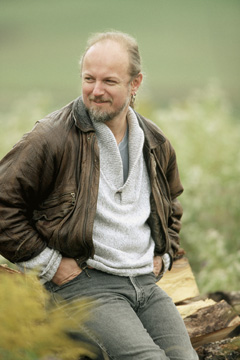
Born in Hamilton, Ontario to parents of Nova Scotian descent, Garnet spent many hours in front of the old floor model radio listening to Grand Ol’ Opry broadcasts and harmonizing with his brother, the late folk legend Stan Rogers. Two years later, Garnet was playing the definitive 8-year-old’s version of “Desolation Row” on his ukulele. He soon abandoned that instrument to teach himself the flute, violin and guitar.
At 18, Garnet Rogers was on the road as a full-time working musician with brother Stan. Together they formed what has come to be accepted as one of the most influential duos in the history of North American folk music. Garnet acted as producer and arranger for his late brother from 1973 to 1983, the year his older brother and best friend, Stan, died tragically in a plane crash.
Since then, Garnet Rogers has courageously established himself as a formidable solo artist. Hailed by the Boston Globe as a “charismatic performer and singer” and “one of the major talents of our time, ” Garnet’s vocal and instrumental talents are complimented by an undeniably powerful physical presence – close to six and a half feet tall – with the lungs to match. With his “smooth, dark baritone” (Washington Post) his incredible range, and thoughtful, dramatic phrasing, Garnet is widely considered by fans and critics alike to be one of the finest singers anywhere. His music, like the man himself, is literate, passionate, highly sensitive, and deeply purposeful. Cinematic in detail, his songs give expression to the unspoken language of the heart. An optimist at heart, Garnet sings extraordinary songs about people who are not obvious heroes and of the small everyday victories. As memorable as his songs, his over-the-top humor and lightning-quick wit move his audiences from tears to laughter and back again.
His 2002 Red House release, All That Is: The Songs of Garnet Rogers was the first definitive collection of songs selected from his critically acclaimed body of work. The passionate songs shed light on the ills of human nature while offering a hopeful and healing message that celebrates the power of love and life.
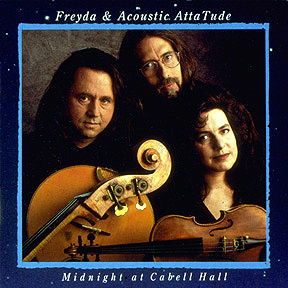
It was a meeting of musical minds the day Freyda Epstein, Ralph Gordon, and Bob Vasile launched the band Freyda & Acoustic AttaTude. Not since the days when Freyda and Ralph were members of Trapezoid had a sound so sparked their imaginations. That spark is igniting enthusiastic fans across the country with the band’s fresh approach to performing and recording acoustic music.
These three seasoned musicians join together to create beautifully crafted acoustic music. Freyda’s soaring lead vocals were described by Washington Post writer Richard Harrington as having a “…gem-like quality akin to an earthy ruby.” Her vocals and violin are matched with Ralph’s tasteful contrbass, and Bob’s intricate guitar and cittern accompaniment. Bob also adds harmony vocals that contour and blend with Freyda’s lead. Their music swings shamelessly between the gerenres of folk, jazz, blues and classical music and stretches the boundaries of acoustic music to emerge as a rare blend. The material ranges from heartfelt renditions of original songs, to sparkling instrumental odysseys. As Freyda describes it, “We’re just trying to let our thoughts and hopes and dreams for the future be honestly reflected by the songs we sing and the notes we play.”
Their performances The band made its debut in the summer of 1991 as Freyda and the Attaboys. Their first appearances at the Winnipeg Folk Festival and American Public Radio’s Mountain Stage, received the kind of warm welcome normally accorded long-time veterans of folk music. In fact, each member of the band has a venerable history in the acoustic music world that makes their collaboration well grounded in experience.
Their Red House release Midnight at Cabell Hall was recorded “live” at the Cabell Hall at the University of Virginia using the “Stereo Microphone technique.” By recording the album in this fashion they were able to capture the sound of the room, creating a warmer, richer sound.
In 2003, Freyda was tragically killed in a head-on car collision.
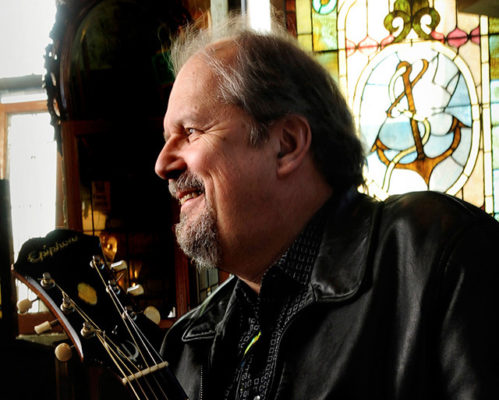
Better known perhaps as the President of Red House Records, Eric Peltoniemi has long been an acclaimed songwriter, composer and musician, as well. For over 4 decades he has worked several sides of the music industry: as a performing artist, songwriter, graphic designer, Grammy-winning producer and record label executive. (He assumed leadership of Red House in early 2006 upon the passing away of his long-time friend and colleague Bob Feldman, the label’s pioneering president and co-founder with Greg Brown.)
Eric’s long relationship with folk and country music began in a small farming town in the early 1960s when as a teenager he began performing on his grandma’s old guitar at county fairs, dances, township halls…and even boxing matches. Along the way he added Finnish songs to his act and spent several years performing across the US, Canada and northern Europe as a solo artist and with the folk-rock bands Trova, Suomi Orkesteri and Trova Ystavineen.
He has also spent several years in the music theatre where he has written music, lyrics and occasional book for eleven plays, including the regional hits TEN NOVEMBER (a collaboration with Pulitzer Prize-nominated playwright Steven Dietz) and PLAIN HEARTS (with playwright Lance Belville). Along with his collaborator Peter Glazer, he was awarded a grant from the National Endowment for the Arts, and together the two created HEART OF SPAIN, a musical about the International Brigades during the Spanish Civil War.
Eric’s original songs have been recorded by artists like Bok, Trickett & Muir; Robin & Linda Williams; Sally Rogers & Claudia Schmidt; Lisa Asher; Trova; Prudence Johnson, and the Finnish roots band Koinurit, among others.
His own recordings have been rare and few: two albums with Trova (Trova and Healing Zone), three Finnish language releases Kävelin Kerran/Velisurmajaa [single], Suomi [album] and K.A.U.S.T.I.N.E.N., [single with Trova Ystavineen], the mid-1990s’ Songs O’ Sad Laughter [album] and the more recent Gales of November…The Songs of ‘Ten November’ [album] with Prudence Johnson, Ruth MacKenzie, Claudia Schmidt, Peter Ostroushko, Dan Chouinard & Jeffrey Willkomm.
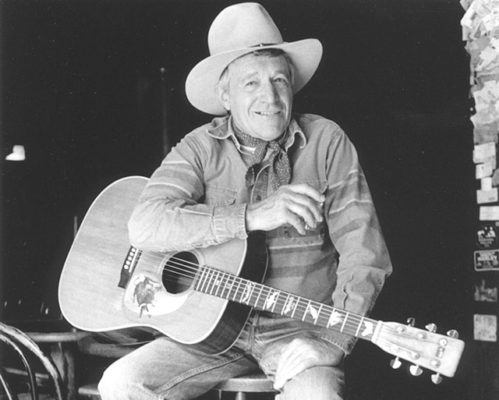
One of the last true links to the great folk traditions of this country, with over 40 albums under his belt, Ramblin’ Jack Elliott is considered one of the country’s legendary foundations of folk music.
Long before every kid in America wanted to play guitar — before Elvis, Dylan, the Beatles or Led Zeppelin — Ramblin’ Jack had picked it up and was passing it along. From Johnny Cash to Tom Waits, Beck to Bonnie Raitt, Ry Cooder to Bruce Springsteen, the Grateful Dead to The Rolling Stones, they all pay homage to Ramblin’ Jack Elliott.
In the tradition of roving troubadours Jack has carried the seeds and pollens of story and song for decades from one place to another, from one generation to the next. They are timeless songs that outlast whatever current musical fashion strikes today’s fancy.
“His tone of voice is sharp, focused and piercing. All that and he plays the guitar effortlessly in a fluid flat-picking perfected style. He was a brilliant entertainer…. Most folk musicians waited for you to come to them. Jack went out and grabbed you….. Jack was King of the Folksingers.” Bob Dylan, Chronicles: Volume One
There are no degrees of separation between Jack and the real thing. He is the guy who ran away from his Brooklyn home at fourteen to join the rodeo and learned his guitar from a cowboy. In 1950, he met Woody Guthrie, moved in with the Guthrie family and traveled with Woody to California and Florida, from the redwood forests to the Gulf Stream waters. Jack became so enthralled with the life and composer of “This Land Is Your Land”, “The Dust Bowl Ballads,” and a wealth of children’s songs that he completely absorbed the inflections and mannerisms, leading Guthrie to remark, “Jack sounds more like me than I do.”
In 1954, along with folksinging pals Frank Robinson and Guy Carawan, Jack journeyed south through Appalachia, Nashville and to New Orleans to hear authentic American country music. He later made this the basis for his talking song, 912 Greens.
In 1955 Jack married and traveled to Europe, bringing his genuine American folk, cowboy and blues repertoire and his guitar virtuosity, inspiring a new generation of budding British rockers, from Mick Jagger to Eric Clapton.
When he returned to America in 1961, he met another young folksinger, Bob Dylan at Woody Guthrie’s bedside, and mentored Bob. Jack has continued as an inspiration for every roots-inspired performer since.
Along the way he learned the blues first-hand from Leadbelly, Mississippi John Hurt, the Reverend Gary Davis, Big Bill Broonzy, Brownie Mcghee and Sonny Terry, Jesse Fuller and Champion Jack Dupree.
He has recorded forty albums; wrote one of the first trucking songs, “Cup of Coffee,” recorded by Johnny Cash; championed the works of new singer-songwriters, from Bob Dylan and Kris Kristofferson to Tim Hardin; became a founding member of Bob Dylan’s Rolling Thunder Revue; and continued the life of the traveling troubadour influencing Jerry Jeff Walker, Guy Clark, Tom Russell The Grateful Dead and countless others.
In 1995, Ramblin’ Jack received his first of four Grammy nominations and the Grammy Award for Best Traditional Folk Album, for South Coast (Red House Records).
In 1998, President Bill Clinton awarded Jack the National Medal of the Arts, proclaiming, “In giving new life to our most valuable musical traditions, Ramblin’ Jack has himself become an American treasure.”
In 2000, Jack’s daughter, filmmaker, Aiyana Elliott produced and directed The Ballad of Ramblin’ Jack, her take on Jack’s life and their fragile relationship, winning a Special Jury Prize from the Sundance Film Festival.
Through it all—though agents, managers, wives and recording companies have tried—Jack resisted being molded into a commercial commodity. He played his shows without a written set list or including any songs that did not ring with his gut feeling of what mattered to him.
Ramblin’ Jack’s life of travels, performances and recordings is a testament to the America of lore, a giant land of struggle, hard luck and sometimes even of good fortune. Ramblin’ Jack takes us to places that spur us on to the romance and passion of life in the tunes and voices of real people.
At seventy-seven, Ramblin’ Jack is still on the road, still seeking those people, places, songs and stories that are hand-crafted, wreaking of wood and canvas, cowhide and forged metal. You’ll find him in the sleek lines of a long haul semi-truck, in the rigging of an old sailing ship, in the smell of a fine leather saddle.
Better yet, find him in your local concert hall or on one of his many albums.
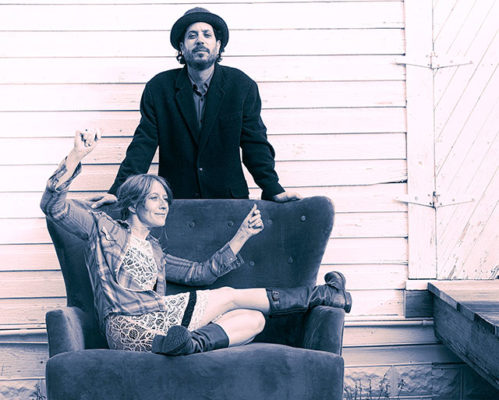
Award-winning Austin artists Carrie Elkin & Danny Schmidt are both songwriters who have performed on each other’s solo Red House recordings, but For Keeps marks the recording debut of their duo material, which has been enjoyed by thousands of fans at their live shows.
Carrie Elkin With her 2011 Red House Records release, Call it my Garden, Carrie Elkin has emerged as one of the defining new voices in the world of Texas singer-songwriters, being celebrated by Texas Music Magazine as one of their artists of the year. The voice, the stories, the images, the grace, it’s the complete package. But it’s the power of her live performances that really have been creating an incredible buzz around this young artist. Maverick Magazine said it best, after a recent festival performance: “I have never seen a performer so in love with the act of singing. That’s the gospel truth. Onstage, Elkin was simply a force of nature.”
Danny Schmidt Named to the Chicago Tribune’s “50 Most Significant Songwriters in the Last 50 Years,” Austin, TX-based singer/songwriter Danny Schmidt has been rapidly ascending from underground cult hero status to being recognized as an artist of generational significance. Danny is considered a preeminent writer, an artist whose earthy poetry manages to somehow conjure magic from the mundane, leading Sing Out Magazine to tag him: “The best new songwriter we’ve heard in the last 15 years.”

Eliza Gilkyson is a politically minded, poetically gifted singer-songwriter who has become one of the most respected musicians in folk and Americana music circles. The daughter of legendary songwriter Terry Gilkyson, Eliza entered the music world as a teenager, recording demos for her father. Since then she has released 20 recordings of her own, and her songs have been covered by such notables as Joan Baez, Bob Geldof, Tom Rush and Rosanne Cash.
The Grammy-nominated songwriter has appeared on NPR, Austin City Limits, Mountain Stage, etown, XM Radio, Air America Radio and has toured worldwide as a solo artist and in support of Richard Thompson, Patty Griffin, Mary Chapin Carpenter, Dan Fogelberg, as well as with the Woody Guthrie review, Ribbon of Highway-Endless Skyway, alongside the Guthrie Family, Jimmy Lafave, Slaid Cleaves, and special guests Pete Seeger, Jackson Browne and Kris Kristofferson. She has been inducted into the Austin Music Hall of Fame alongside such legends as Willie Nelson, Townes Van Zandt and Nanci Griffith and is an ongoing winner of the Austin Chronicle’s various music awards, as well as Folk Alliance awards for Best Artist, Best Songwriter and Record of the Year.
Her CD Land of Milk and Honey was nominated for a GRAMMY for Best Contemporary Folk Album. Eliza’s meditative “Requiem,” written as a prayer for those who lost their lives in the devastating tsunami in Southeast Asia, was recorded by the nationally recognized choral group Conspirare, whose version was nominated for a Grammy and won the prestigious Edison Award in Europe. The song has become a standard in choir repertory the world over. Two of her songs appeared on Joan Baez’s Grammy-nominated CD, Day After Tomorrow. In addition to touring in support of her previous release, Roses at the End of Time, in 2011 and 2012 Eliza and label-mates John Gorka and Lucy Kaplansky performed as “Folk Super Trio” Red Horse, a side project whose CD stayed for months at the top of the Folk Music Charts. Eliza recently was invited to contribute a track on the 2014 Jackson Browne tribute, Looking Into You, along with Bruce Springsteen, Don Henley, Sara Watkins, Bonnie Raitt, Shawn Colvin and others. She received her second GRAMMY folk nomination in 2015 for her album The Nocturne Diaries. In early 2018, Joan Baez covered Eliza’s song “The Great Correction” on her covers album Whistle Down the Wind. Eliza’s 20th album, Secularia, is set for a summer 2018 release.
Eliza is an active member of the Austin music and political community, including the environmental organization Save Our Springs (www.sosalliance.org), and she is a co-founder of www.5604manor.org, an Austin-based activist resource center that promotes political activism and community involvement around issues of race, patriarchy and global injustice.
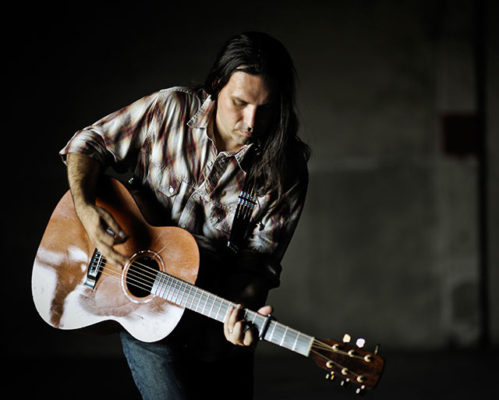
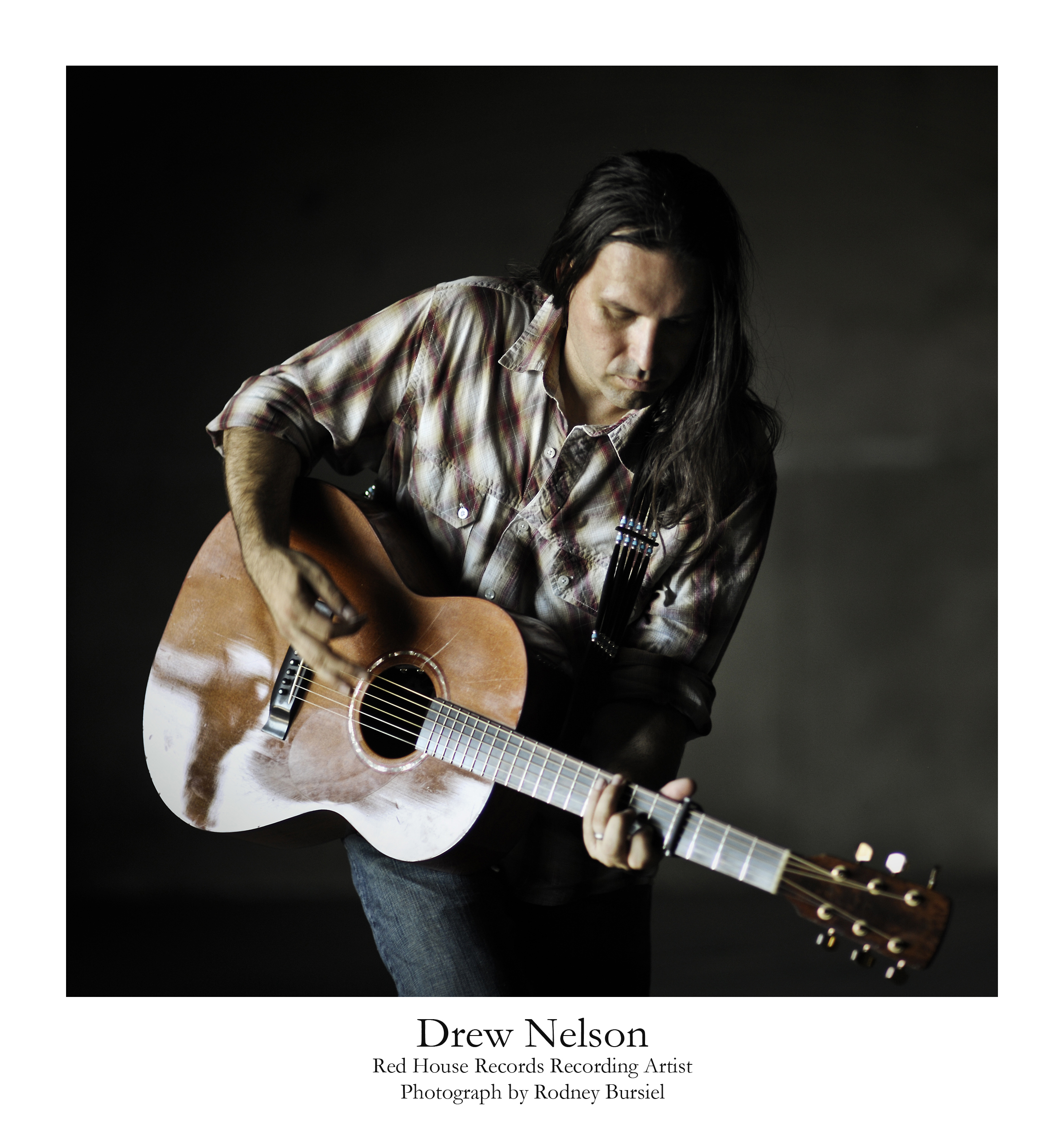
Michigan-born Navy veteran Drew Nelson is a storytelling songwriter and multi-instrumentalist. A fly fisherman and world traveler, he writes as a witness to the lives and journeys of those he has met along the way, mixing Americana and roots-rock with traditional folk styles.
Drew has toured across North America and Europe, performing solo and opening for popular rock artists like Melissa Etheridge and Edwin McCain as well as esteemed folk singers like Josh White Jr. and John Gorka.
He first met John Gorka in 2006, when Drew performed as part of Falcon Ridge Folk Festival’s prestigious songwriting contest. John found him backstage after his performance and told him how much his songs moved him. Since then, Drew has shared the stage with John several times, including at such big events as the Kerrville Folk Festival. “Drew Nelson is one of my favorite new artists,” John Gorka says. “His songs sound like the rest of us feel….dazed, angry amazed and climbing.”
Drew garnered further attention in 2009, when he released Dusty Road to Beulah Land (Waterbug Records), which topped the folk radio charts and caught the attention of the Grammy-winning indie label Red House Records.
“I love that Drew can rock out as well as write sensitive ballads,” Red House president Eric Peltoniemi says. “I admire his down-to-earth songwriting which portrays our world and ordinary people with such deep feeling and unflinching clarity. He has worked hard in life and hasn’t been afraid to get his hands dirty. He has 100% credibility in the subject matter he writes about, and I’m excited to get the chance to work with him.”
Drew’s Red House debut Tilt-A-Whirl comes out in early 2012. He can also be heard on the new album Dark River: Songs of the Civil War Era, along with Jon Dee Graham, Slaid Cleaves, James McMurtry and new label-mate Eliza Gilkyson.
When Drew is not on the road, he enjoys reading, rooting for the Detroit Tigers, doing hot yoga and working as an amateur luthier, building guitars and octave mandolins. He is also working on putting together a photography show.
-->