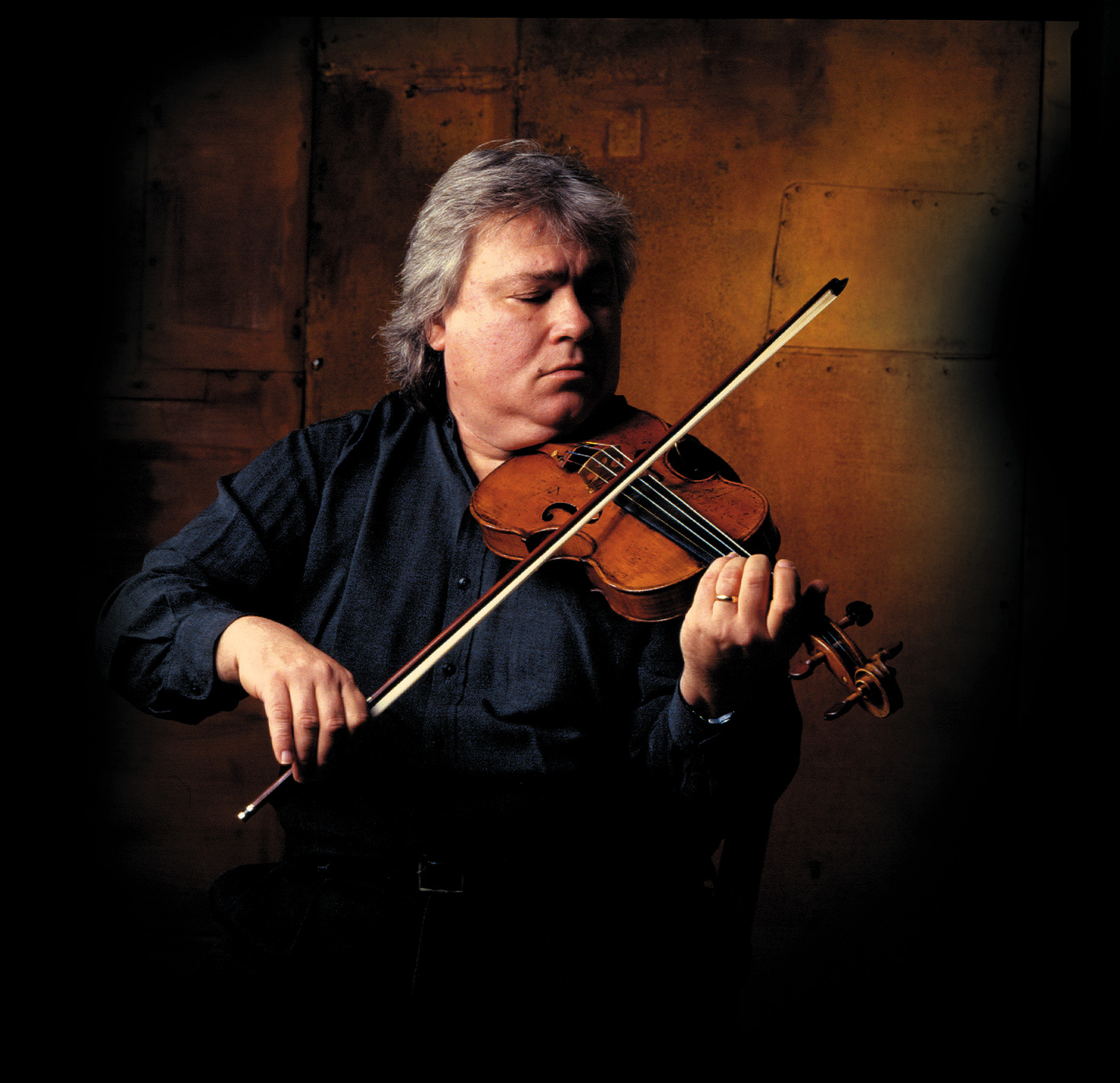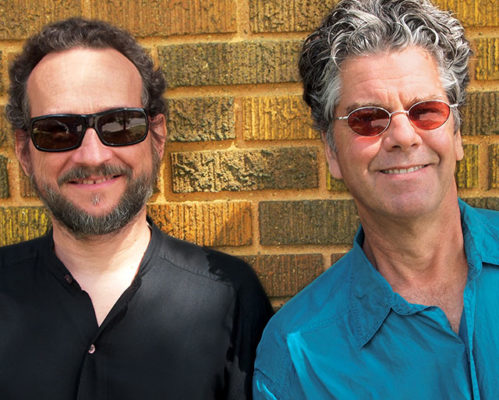
Dean Magraw – www.deanmagraw.com Dean Magraw is a consummate guitarist, playing with wit and soulful abandon. A performer like no other, he is part-comedian, part-philosopher and all-around musical genius. Transcending genre, he has performed with a cornucopia of collaborators from jazz organist Jack McDuff to folk icon Greg Brown, trad Irish supergroup Altan to classical violinist Nigel Kennedy.
Growing up in a musical household, Dean soaked in a smorgasbord of musical influences. His parents danced to big band swing; his sister listened to show tunes and his guitar and veena playing brother’s record collection was full of folk, jazz, rock, and classical Indian albums. But it was the opening riff to the Rolling Stones’ “19th Nervous Breakdown” that caused him to fall in love with the guitar.
In his formative years Dean quickly expanded his musical knowledge by incorporating his love of myriad musical styles into his playing and writing. With his eclectic background and musical versatility, he quickly evolved into one of the most innovative guitarists on the international scene as well as one of the most accomplished and original composers, arrangers and producers around. From playing on public radio’s A Prairie Home Companion to leading up his own experimental jam band Eight Head, Dean has literally generated a new world of music.
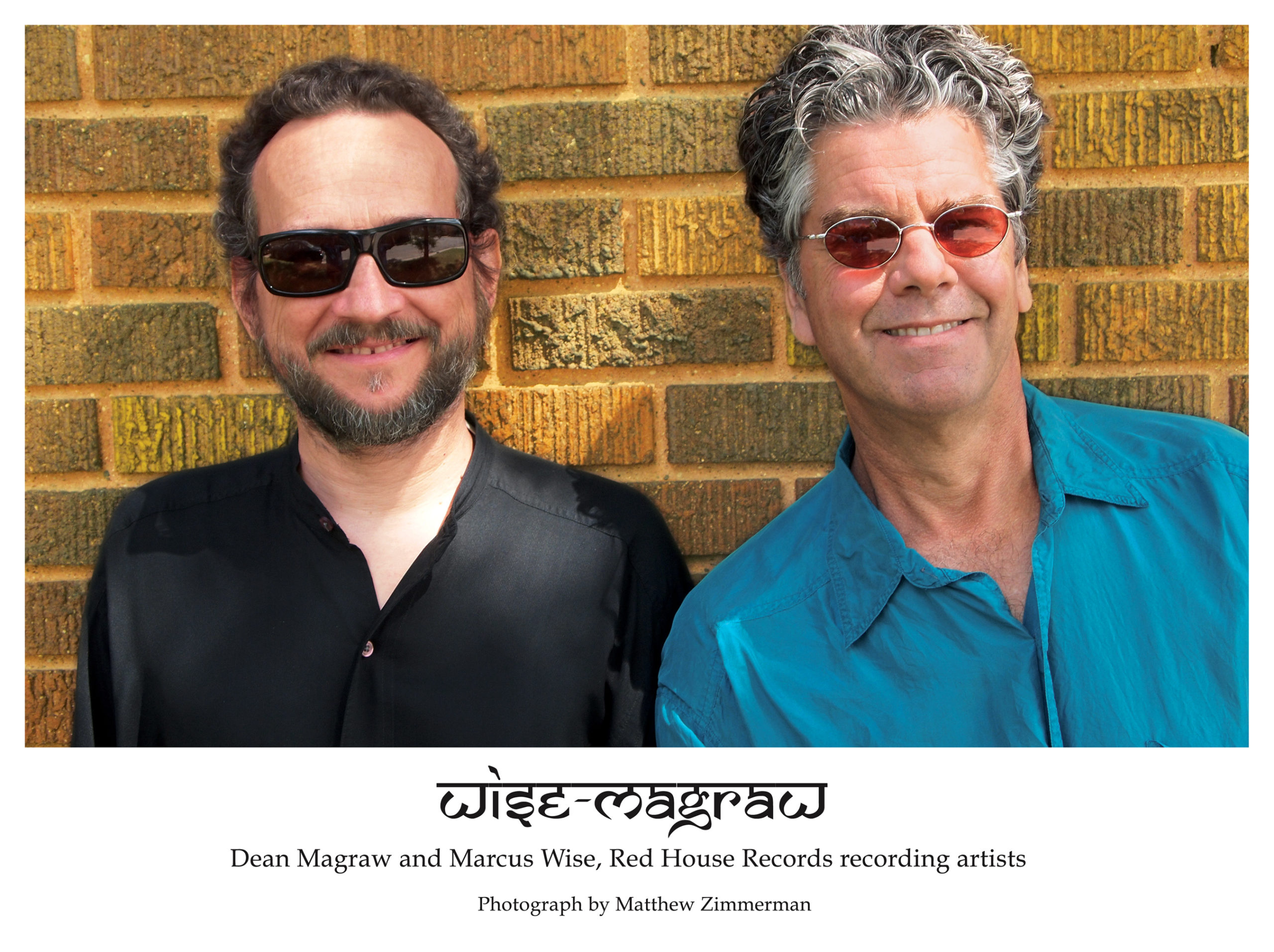
In addition to his role as an in-demand sideman on over a hundred recording projects, Dean has proven pivotal in creating more than a dozen albums, including four for Red House Records: Wise-Magraw (1985), Broken Silence (1994), Seventh One (1998) and Duo (1991), an album he recorded with Emmy Award winning multi-instrumentalist Peter Ostroushko.
Diagnosed with MDS in 2009, a new chapter has opened in Dean’s life perspective and artistic endeavors. A bone marrow transplant prevented him from performing…but not recording. During the early stages of his medical treatment, Dean went into the studio with his longtime friend and collaborator Marcus Wise. Proving the healing power of music, they are now releasing How the Light Gets In, an engaging collection of highly original compositions nurtured in a refreshingly distinctive soundscape. As is evident on this new album, Dean continues to radiate positive energy through his music. Playing with insight, passion and joy, he shows why he is one of the most ground-breaking musicians of our time.
Marcus Wise – www.marcuswise.net Marcus Wise is a top-tier tabla player, poetic and genre-bending. An ambassador of Eastern classical music, he makes Indian sounds accessible to American music fans, collaborating with folk, jazz, gospel and pop artists. He has performed and recorded with such artists as The Doors’ John Densmore, sitar player David Whetstone, R&B singer Alexander O’Neal, classical Indian musician Nirmala Rajasekar, jazz artist Anthony Cox, cellist David Darling, sarod player Bruce Hamm and pop producer Jimmy Jam (Janet Jackson, Chaka Khan, Mary J. Blige).
One of the first profesisonal tabla players in the United States, Marcus has been playing for over 35 years. Born and raised in Minnesota, Marcus left home at 19, following the death of his brother in Vietnam and his father a year later. He hitchhiked to New York City, flew to Paris and spent some time in Spain, where he learned how to play the conga drums. From there, he traveled to North Africa, Persia and India–an experience that changed his life. Marcus returned to India in 1975 to apprentice with tabla player Ustad Diam Ali Qadri. They had met when Ustad was a visiting artist at the University of Minnesota, and Marcus was invited to study and live at his home in Jaipur.
It has been 35 years since Marcus first went to India to learn to play the tablas and 37 since he first started studying percussion with Celso Maldonado in Minneapolis. Since then, he has toured around the world, performing in front of the Dalai Lama in 1989, when he received his Nobel Peace Prize, and making notable appearances on MTV (the 2000 reunion of The Doors) and VH1’s Storyteller Series. Marcus has made recordings with world-renowned guitarists Dean Magraw and Steve Tibbetts and has accompanied Minnesota Poet Laureate Robert Bly and Coleman Barks on their spoken word projects. Although there were no musicians in his family, Marcus’ father and brother were both writers. Sharing their affinity for the spoken word, Marcus has worked extensively with poets and playwrights. Strongly connected to the Minneapolis arts community, he has composed music for the Guthrie Theater’s 1991 production of Medea and played for the opening of the Walker Art Center in 2005.
Marcus still makes Minneapolis his home and continues to perform, record and teach tablas privately from his home.
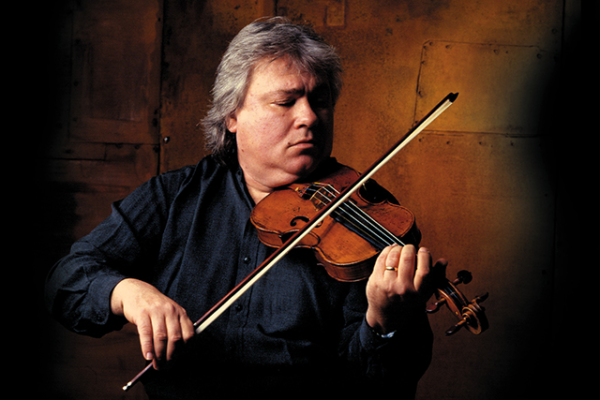
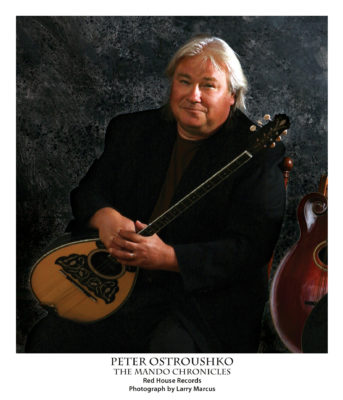
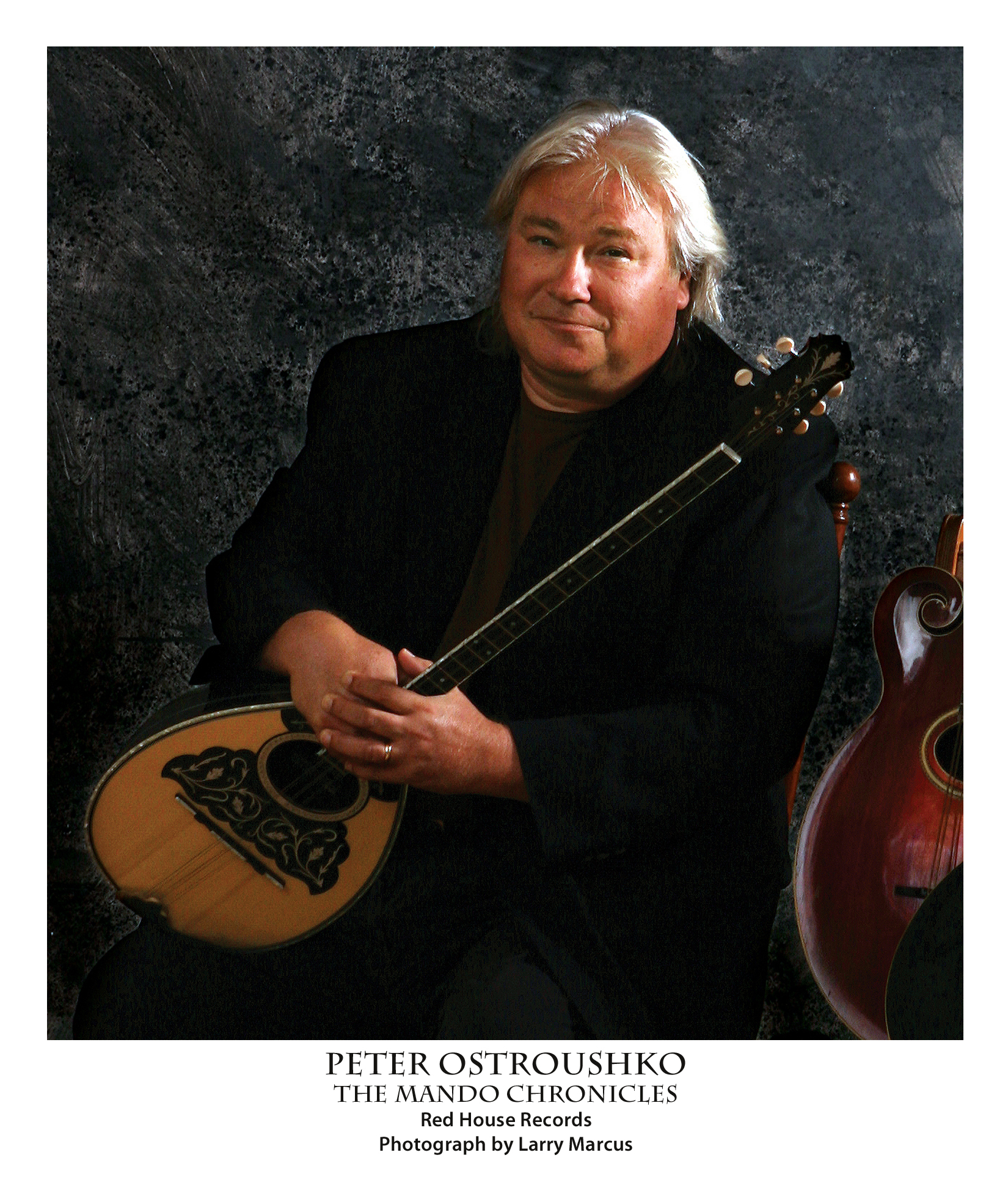
Peter Ostroushko is an Emmy Award winning composer and is regarded as one of the finest mandolin and fiddle players in acoustic music. He has toured all over North America and Europe, has played on over a thousand albums and has earned an international reputation as a versatile and dazzling musical master.
Peter’s recording contributions stand tall alongside the great Nashville session men of his generation, and he’s at home in virtually every style of music. His first recording session was an uncredited mandolin performance on Bob Dylan’s masterpiece Blood on the Tracks. Since then he’s played country (with Jethro Burns, Emmylou Harris, Willie Nelson, Chet Atkins and Johnny Gimble); bluegrass (with Norman and Nancy Blake, Tim O’Brien and Hot Rize); folk (with Greg Brown, John Hartford, Robin & Linda Williams and Taj Mahal); jazz; and most recently, classical—performing with the Saint Paul Paul Chamber Orchestra, Minnesota Symphony Orchestra and Kremlin Chamber Orchestra in Moscow.
He is at his best when he plays his own compositions – a rich musical stew of various ethnic influences. His family immigrated to the U.S. from the Ukraine after World War II and he was raised in Minneapolis’ Ukrainian neighborhood. As a child he listened as family members gathered on weekends to play traditional folk music. Ostroushko blends these roots with other Old World sounds (from Scandinavian schottisches to Irish hornpipes) and he mixes in classical, jazz, bluegrass, folk, swing, and old-time. He calls this gumbo of musical styles slüz düz, a phrase borrowed from his mother meaning, roughly, “over the edge” or “off his rocker.”
Ostroushko’s resumé is dizzying in its size and scope. He has played lead ukulele with the Minnesota Orchestra (under the direction of Sir Neville Mariner) and has toured with them under the direction of Edo DeWart, playing mandolin in a Mahler symphony at Carnegie Hall. With the Saint Paul Chamber Orchestra, he’s performed a number of his own scores and played with violin virtuoso Gil Shaham as a guest soloist. He’s barked like a dog on Late Night with David Letterman and appeared on Mr. Rogers’ Neighborhood (whose other rare musical guests have included Wynton Marsalis and Yo-Yo Ma). He’s composed and performed scores for a number of theater companies across the country, including The Children’s Theater Company in Minneapolis, Actors Theatre Company of St. Paul (with whom he traveled to Edinburgh’s famed Fringe Festival), The Alabama Shakespeare Festival, Madison Repertory Theater and ACT Theatre in Seattle. He’s appeared on radio and television shows including Mountain Stage, Good Evening, TNN, Lonesome Pine, Austin City Limits, and A Prairie Home Companion, where he was a regular performer and one of the show’s music directors.
Peter’s recordings reflect the breadth of his influences, eclecticism, and sheer talent. His highly acclaimed 1994 release, Heart of the Heartland, won a NAIRD (National Association of Independent Record Distributors) Indie Award for Acoustic Instrumental Album of the Year, and was used by filmmaker Ken Burns in his 1997 PBS documentary Lewis and Clark. Pilgrims on the Heart Road, the second release of the “Heartland” trilogy, also garnered heavy praise, earning a place on Pulse! Magazine’s Top Ten List for 1997. The album Sacred Heart completed the trilogy. Cinematic in nature, it has the ability to transport the listener across geographic space effortlessly. With its lush, spiritual instrumentation, the album virtually soars. In 2002, Peter released the critically acclaimed Meeting on Southern Soil with flat-picking legend Norman Blake following with Coming Down from Red Lodge in 2003. In 2005, Peter won an Emmy Award for his original score for the PBS series Minnesota: A History of the Land, which movingly conveyed the feeling of Minnesota’s epic landscapes and history, giving voice to places and people long gone. He followed that up with Postcards: Travels With a Great American Radio Show, taking his photographic style on the road, sending his impressions of America’s cities and small towns through his driving instrumental tunes. His 2010 release When the Last Morning Glory Blooms contained personal tunes he wrote for friends and family that seem universal in their ability to convey love, playfulness, and the yearning for home. Now Peter most recent album is the record of his career–a 3-CD box set called The Mando Chronicles, featuring 22 guest musicians and over three hours of music.

From swing to jazz to bottleneck blues to folk, Grammy-winning acoustic guitarist Pat Donohue plays it all with a flourish of artistry and melodic inspiration. Chet Atkins called Pat one of the greatest finger pickers in the world today; Leo Kottke called his playing “haunting.”
Pat is certainly one of the most listened to finger pickers in the world. As the guitarist for the Guys All-Star Shoe Band of Minnesota Public Radio’s A Prairie Home Companion, Pat gets to show off his savvy licks and distinctive original songs to millions of listeners each week.
His decade-long association with Garrison Keillor’s popular program has led to some unusual gigs: There was the after-show club date in Berlin, when Wynton Marsalis showed up to sit in with Pat and the Prairie Home band. Or playing music on camera for the Prairie Home Companion movie with director Robert Altman and stars Meryl Streep, Lily Tomlin, Kevin Kline, John C. Reilly, Woody Harrelson and Tommy Lee Jones.Besides the weekly radio broadcasts, Pat plays about 30 concerts a year nationwide and teaches at such popular music camps as Augusta Heritage Center and Rocky Mountain Fiddle Camp.
Pat’s musical tastes are eclectic. Though he considers himself foremost a folk guitarist, Pat’s influences are rooted in bluesmen Blind Blake, Robert Johnson, Charlie Parker, Duke Ellington, Muddy Waters and Miles Davis. He manages to blend jazz and blues with folk, and the mix is seamless. Over the years he has captivated audiences with his unique original compositions, dazzling instrumentals and humorous song parodies, including Sushi-Yucki and Would You Like to Play the Guitar?
Honors include a 2005 Grammy for his participation on Pink Guitar, a compilation of Henry Mancini tunes on acoustic guitar, several Minnesota Music Awards, and the title of 1983 National Finger Picking Guitar Champion. His original tunes have been recorded by Chet Atkins, Suzy Bogguss and Kenny Rogers. Pat has also been a featured performer at major music festivals including the Newport, Telluride and Philadelphia Folk Festivals. Pat joins a legendary list of notables, as The Martin Guitar Company recently introduced a Custom Signature Edition Series OM-30DB guitar designed to his specifications.
Pat has been obsessed with the guitar since he first picked one up at age 12 and began learning simple chords and melodies from a Pete Seeger instructional book. His background as a drummer in a garage rock band helped with the transition and he never looked back. As a youth, the St. Paul, Minnesota native pestered guitarists playing at Twin Cities coffee houses and blues venues, seeking tips on playing. Borrowing bits and pieces of the styles of finger picking pioneers he admired, he taught himself to play, building a repertoire flavored by Blind Blake, Django Reinhart and Chet Atkins.

Born in the Salvation Army Hospital in Hackney, London, Legg is a classic mongrel Londoner, with the long mixed East End blood of entrepreneurial Hugenot and Jewish refugees topped up from a sturdy line of East Anglian farmers; a fertile genetic stew mixed further with Welsh, West Indian and Philippino in his grandchildren.
While studying oboe under parental pressure (his own words), he began fashioning his own guitars, “or rather odd stringed instruments that at least could execute an acceptable twang” from pictures in newspapers, scraps from the school woodwork scrap bin, fret wire and with strings held on by head rest cover containers taken from the local bus station. While working at the airport in Liverpool, he met a young man who invited him to join a band and introduced him to country music.
After two years of working in Liverpool working men’s social clubs, he hitch-hiked back to London, where he played electric guitar in clubs and joined up with bands that eventually traveled outside the U.K. A demand from a band leader that he use an acoustic to play loud chords up against a mic for one number nudged him towards the acoustic as a separate instrument.
Since then Adrian Legg has gone on to become a guitar wizard who defies all categorization. His virtuostic playing can take you places you have never imagined. Legg’s unbounded creativity and grace, led him to be voted the “Best Fingerstylist” by the readers of Guitar Player magazine. Legg is, without exaggeration, one of the finest guitar players alive. Few artists can cover such a spectrum of music on one instrument. His albums showcase his intricate and elegant blending of country, jazz, folk, rock, and classical influences.
Beginning with Guitar and Other Cathedrals (released in 1990) he has displayed remarkable technique and intuition, great wit and humor, and a gift for composing lyrical melodies. Guitar for Mortals (1992) and Mrs. Crowe’s Blues Waltz (1993) were each named “Best Acoustic Album” in the Guitar Player polls, and in 1994 Wine, Women and Waltz was honored as “Best Overall Guitar Album,” a rare feat for a primarily acoustic work. The readers of Britain’s Guitarist Magazine topped them all, naming Legg the “Guitarist of the Decade” in their 10th Anniversary Poll.
Not only is Legg an instrumental genius he also has a reputation for his funny stage presence. His deadpan humor and hilarious stories have been as much of a concert draw for him as his music. He has been a commentator-at-large for National Public Radio’s All Things Considered. He has toured with such varied artists as Nanci Griffith, Tanita Tikarum, Joe Satriani, Eric Johnson, and Steve Vai – converting more “Leggheads” as he goes.
On his last Red House release, Fingers and Thumbs, Legg delivers plenty of classic flowing guitar eloquence as well as some quirky detours. Recorded with Eric Johnson, bassist Roscoe Beck and drummer Tom Brechtline, it’s a runaway train of guitar and rhythm. “Not Remotely Blue” was written in 1974 and promptly abandoned when he relized his “Englishness predisposed [him] to depression rather than any convincing blues.” He pulled it out again in 1998 when he “no longer cared”–much to our benefit. Not only is Adrian a world-class guitarist, but as an avid photographer his work highlights the packaging of Fingers and Thumbs. Adrian continues to keep a healthy tour schedule traveling the US and UK wowing crowds with his jaw-dropping style.
-->