Willie Murphy is not just a bluesman. He is a soul,R&B, blues and rock legend who once challenged the Rolling Stones to a pool tournament. In Willie’s words, “The Stones chickened out.” As a charter member of the Minnesota Music Hall of Fame along with Bob Dylan and Prince, Willie is a musical force to reckoned with.
His life plays out like a history of modern music, born out of roaming, rebellion, drugs and a boundless energy to create. He’s performed with everyone from Jefferson Airplane, James Taylor and Joan Baez to Muddy Waters, Carl Perkins and Son House. Willie is a songwriter and producer, but most of all, he is a performer whose music is larger than life.
Born in Minneapolis, Willie started playing the piano at age four and in 5th grade, became a charter member of the Little Richard Fan Club. His formative years coincided with the beatnik era of the 1950’s and 60’s and found him cruising the streets of South Minneapolis in hot cars, learning how to play guitar, pick up girls and jam with R&B and jazz groups. An avid reader, he was also busy writing poems and crafting his own songs. As the beatnik scene progressed to the counter-culture movement, he grew his hair, partook in alcohol and drug experimentation and frequented wild parties.
While becoming an integral part of the Minneapolis West Bank music scene (that churned out such musical legends as Bob Dylan and Koerner, Ray & Glover), Willie met “Spider” John Koerner, and the two began to write together and tour the country. What came from this musical partnership was a wild month-long party in the Sierra Nevada Mountains that resulted in the iconic 1967 release Running, Jumping, Standing Still (re-issued on Red House in 1994), which to this day, is considered one of Elektra Records’ best releases. The duo toured the US club and festival circuit, playing with the biggest names in music, enjoying a spectacular slot at the 1969 Newport Folk Festival, where Willie met Muddy Waters and hung out with Don Everly and Carl Perkins.
Jac Holzman, head of Elektra, was Willie’s biggest fan and wanted a second album from Koerner and Murphy. He also offered Murphy a house producer job if he would relocate to LA or New York. Although he had enjoyed playing the folk clubs with Koerner, Willie was eager to return to his R&B roots. Excited by his new band The Bumble Bees, he turned down both of Jac Holzman’s offers so he could tour with them. He kept Minneapolis as his home base, thriving in the vibrant Midwest music scene.
It was in Minnesota in 1971 that he produced Bonnie Raitt’s first recording on Warner Bros. Recorded in “Snaker” Dave Ray’s studio, the album featured Willie and the Bees as her backing band. Following that, Willie’s band toured with Bonnie and went on to share the bill with such luminaries as James Brown, Dr. John and B.B. King. Willie and the Bees went on to enjoy much success, reeling in a who’s who of musicians to see their live shows, including Steve Miller and fellow Minneapolis native Prince.
After burning out on drugs and drinking, Willie quit both. He continued to tour, making folks across the country “dance their brains out” with the wild, soulful sounds of the Bees. Then, after 14 years of making music together, the Bees played their last gig together on New Year’s of 1984. Willie started playing solo blues and rock piano. He continued to write more songs and eventually started his own label, Atomic Theory, producing mostly local Minneapolis musicians like Becky Thompson, Boiled in Lead, The New International Trio, and Phil Heywood. Willie has continued to tour with his new band the Angel Headed Hipsters performing for large audiences in Europe and around the Midwest.
Now, Willie surprises his fans once again with his new genre-bending release on Red House Records. A 20-track, 2-CD album, A Shot of Love in a Time of Need is exactly that–a refreshingly joyful album that lifts you up and makes you dance. Featuring soul, jazz, funk, rock and folk, this wildly eccentric album embodies the best of Willie Murphy and is sure to be an instant classic.
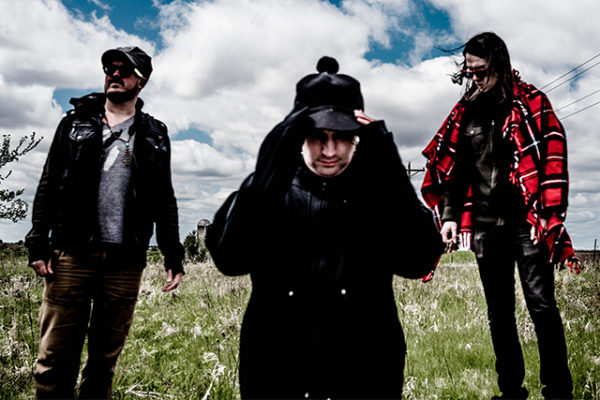
The Midwest is to The Pines what Monument Valley was to filmmaker John Ford. The flat, endless expanses of the band’s native Iowa are at once the settings of, characters in, and muse behind the songs on their new album, Above The Prairie. Songwriters David Huckfelt and Benson Ramsey—who along with Benson’s brother Alex form the band’s touring trio format—craft their music with a filmmaker’s keen eye for detail and framing, blending celestial, ethereal atmospherics with rich, warm vocals and earthy acoustic instruments. It’s a gripping brew that demands your total presence, transporting you into vividly painted musical and lyrical snapshots.
“Almost all of the songs on the album are somewhere between the first and third take,” says Huckfelt. “It was a matter of capturing raw performances and preserving that spirit, of not losing the energy of the songs in the recording of them.”
“It’s kind of a risky way to work,” adds Ramsey, “but we went back to Iowa and just did it in three days and that was pretty much it. It’s almost like a photograph.”
Much like the photograph on the album’s cover—which depicts a stunning nighttime landscape of wide-open grassland spotted with crumbling, abandoned cabins beneath an infinitely expansive galaxy of stars—the songs on Above The Prairie at once evoke the vastness of space, the ceaseless passage of time, the beauty of Earth, and the inescapable loneliness of inhabiting it.
In some ways, Above The Prairie may sound like an attempt to reconnect with the past, to capture the feel of the land and the communities of their youths, but the songs seem rather to reflect on the impossibility of such an endeavor in the modern age.
“People say you can’t step in the same river twice,” says Huckfelt, “but you can’t even step in the same river once, because change is the only constant. Home isn’t the same home you remember, and you don’t get a minute to catch your breath to think about it.”
It’s a sentiment that pervades the album and comes vividly to life on the record’s closing track, “Time Dreams,” a poem written and read by the famed Native American activist/poet John Trudell and set to music by The Pines.
“He articulates some profound truths that resonate throughout the record,” says Ramsey. “There’s just this kind of disconnection from the Earth that we experience. There’s this loneliness about it, and there’s this truth that’s sort of undeniable but that no one really wants to talk about.”
“We both grew up in Iowa in very sparse, rural communities,” adds Huckfelt, “and we watched our towns kind of dissipate and the vitality go away, but at the same time also remain in certain hidden, unexpected ways.”
Above The Prairie explores those hidden places, from “Lost Nation”—a synth-driven instrumental penned by Alex and named after an Iowa town with a population of less than 500—to “Villisca,” another soundscape featuring Uilleann pipes and titled for an Iowa community that lives under the ominous cloud of an infamous 1912 axe murder.
“There’s a remoteness to the record and the feelings,” says Huckfelt. “These communities are tiny, but they’re out there. There are homes with people and lives being lived there, and the towns we grew up in were not so different.”
Finding somewhere to feel at home is a recurring theme on the record. On “Where Something Wild Still Grows,” Huckfelt longs for a place “through the trees, past the city, beyond the glow” where he can be at ease, while “Sleepy Hollow” finds Ramsey contemplating our treatment of each other and our planet as he looks into the abyss of the night sky, and “Come What Is” (which features Ryan Young of Trampled By Turtles on fiddle) tries to find contentment in the present moment.
At the core of it all, though, is the realization that if this life is nothing more than a fleeting journey on a tiny speck of a planet floating among the stars of an infinite universe, then there’s no more important act than to love each other and the Earth. When Ramsey sings “hold, hold on to me” in opener “Aerial Ocean”—which brings together lush, sweeping slide guitar with gently plucked guitar and banjo—it’s repeated in the intimate, reverent tone of a prayer. The narrator might be singing to a person, or he might be singing to the prairie. In the case of The Pines, he’s probably singing to them both.
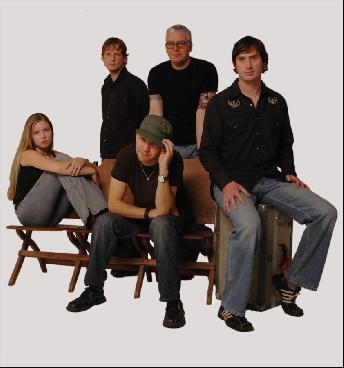
The Paperboys make music that is best described by founder Tom Landa as high energy music that is like a “Guinness with a tequilla chaser while listening to an Americana Jukebox.”
The Paperboys began in Vancouver in 1992. Landa, a young musician born in Mexico City, first got the taste for Celtic music when he heard Spirit of The West. Mixing his take on Celtic music with the music he had grown up with in Mexico seemed a natural direction for Tom to take.
By 1995, with a shifting group of players moving in and out of the band, a unique form of music was emerging–a mix of Celtic and latin folk with straightforward pop and a taste of bluegrass: Tom and his friends called it “stomp” and the first album, Late As Usual, was full of it. Their second album Molinos, however, was the breakthrough–and the title song, co-written with rocker Annette Ducharme, earned the band significant radio play.
Molinos not only won a Juno (Canadian Grammy) for “Roots and Traditional Album of the Year,” but it gave The Paperboys a strong following in the United States. Tom and the band have done more than 16 coast-to-coast tours in Canada, and have built huge followings in Seattle, Portland and other cities in the Northwest, throughout California, and in the North East. Along the way, the band racked up record sales and put more than 200,000 miles of interstate and back roads on dozens of rental cars.
In the fall of 2000 Red House released, Postcards and album full of irresistible grooves and the sights and sounds of seven years of nonstop touring that Landa called ” a soundtrack to the Global Village.”
On 2001’s A Nod to Bob The Paperboys rendition of “All Along the Watchtower” was a dizzying version that remains one of the cornerstones of the classic Dylan tribute record.
In 2006, Tom Landa and The Paperboys released The Road to Ellenside, an album recorded entirely at a country manor in rural England. The highly lauded album landed on Top Ten critics’ poll in The Village Voice.
The Paperboys continue an exhausting tour schedule playing nearly 150 shows a year around the world, selling out clubs at nearly every stop bringing their unique, high-energy music to their growing legions of fans.

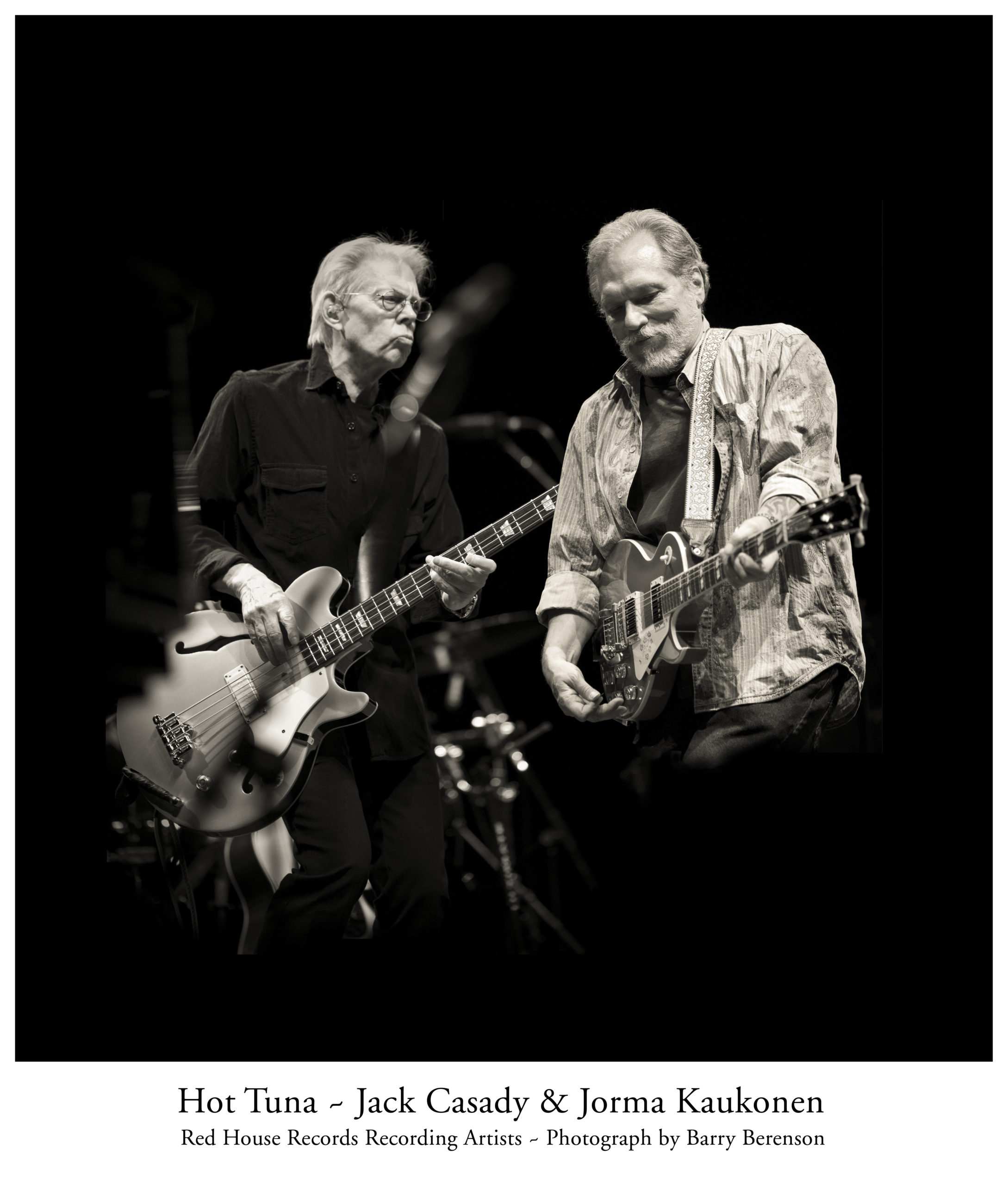
From their days playing together as teenagers to their current acoustic and electric blues, probably no one has more consistently led American music for the last 50 years than Jorma Kaukonen and Jack Casady, the founders and continuing core members of the iconic blues-roots band Hot Tuna.
Now members of the Rock & Roll Hall of Fame, the pair began playing together while growing up in the Washington D.C. area, where Jack’s father was a dentist and Jorma’s father a State Department official. While a junior and senior high student, Jack played professional gigs as lead guitarist at night before he was old enough to drive. Jorma, four years older than Jack, started college in Ohio, accompanied his family overseas and then returned to college, this time in California. Along the way, Jorma became enamored of the guitar playing of Rev. Gary Davis and became a master of his finger-picking style. Meanwhile, Jack took an interest in the electric bass–at the time a controversial instrument in blues, jazz, and folk circles.
In the mid 1960’s, Jorma was asked to audition to play guitar for a new band that was forming in San Francisco. Though an acoustic player at heart, he grew interested in the electronic gadgetry that was beginning to make an appearance in the popular music scene, particularly in a primitive processor brought to the audition by a fellow named Ken Kesey. Jorma decided to join the band and soon thereafter he summoned his young friend from Washington, who now played the bass. Thus was created the unique (then and now) sound that was The Jefferson Airplane. Jorma even contributed the band’s name, drawn from a nickname a friend had for the blues-playing Jorma. Jack’s experience as a lead guitarist led to a style of bass playing which took the instrument far beyond its traditional role.
While in The Jefferson Airplane, putting together the soundtrack of the sixties, Jorma and Jack remained loyal to the blues, jazz, bluegrass and folk influences of the small clubs and larger venues they had learned from years before. They would play together, working up a set of songs that they performed at clubs in the Bay Area, often after having played a set with the Airplane. This led to a record contract; in fact, they had an album recorded before they decided to name their band Hot Tuna. With it, they launched on an odyssey which has continued for more than four decades, always finding new and interesting turns in its path forward.
The first thing an early Hot Tuna fan discovered at their concerts of the early 1970’s was that the band was growing louder and louder. In an era in which volume often trumped musicianship, Hot Tuna provided both. The second thing a fan would discover was that Jack and Jorma really loved to play. “Look around for another band that plays uninterrupted three- to six-hour sets,” wrote reviewer Jerry Moore. What Moore could not have known was that had there been no audience at all, they would have played just as long and just as well, so devoted were they to making music. Of course, the audience wasn’t superfluous by any means; it energized their performances and continues to do so today.
Album followed album–more than two dozen in all, not counting solo efforts, side projects and appearances on the albums of other bands and performers. They continued to develop their interests and styles, both together and in individual pursuits. In an era in which old bands reunite for one last tour, Hot Tuna can’t because Hot Tuna never broke up.
Along the way, they have been joined by a succession of talented musicians: drummers, harmonica players, keyboardists, backup singers, violinists, mandolinists, and more, all fitting in to Jorma and Jack’s current place in the musical spectrum as two of America’s most important rock musicians. Rolling Stone has named Jorma one of the top guitarists of all time, while Jack is considered one of today’s most innovative electric bass players, having played with such legends as Ray Charles, Jimi Hendrix and the Grateful Dead.
After two decades of acoustic and electric concerts and albums, the 1990’s brought a new focus on acoustic music to Hot Tuna. They played more intimate venues with a more individual connection to the audience. Soon, the loud electric sound (and the semi trailer load of equipment) disappeared entirely from Hot Tuna tours. Maturity brought the desire to do things in addition to being a touring band. Both had become interested in teaching, passing along what they had learned and what they had uniquely developed to a new generation of players.
In 1998 Jorma and his wife Vanessa opened Fur Peace Ranch Guitar Camp in the beautiful rolling Appalachian foothills of southeastern Ohio. Here, on a sprawling, rustic, yet modern campus, musicians and would-be musicians come for intensive and enjoyable workshops taught by Jorma, Jack, and other extraordinary players, learning things that range from different styles of playing to songwriting, performing, storytelling and making a song one’s own. In addition, they started BreakDownWay.com, a unique interactive teaching site that brings their musical instruction to students all over the world.
In addition to their teaching, Jorma and Jack continue to tour as much as ever, both as a band and as solo performers. Jack released his first solo CD, Dream Factor, on Eagle Records in 2003. Jorma has released many solo albums over the years, including his legendary album Quah, his Grammy-nominated Blue Country Heart and two highly acclaimed releases on Red House Records.
For the last few years, Jorma and Jack have been joined in most of their Hot Tuna performances by the mandolin virtuoso Barry Mitterhoff. A veteran of bluegrass, Celtic, folk, and rock-influenced bands including Tony Trischka and Skyline, Hazel Dickens and Bottle Hill, Barry has found a new voice in working with Hot Tuna, and the fit has been good. Watching them play together, it’s as if he’s been there from the beginning. In addition to rounding out their acoustic sound, Barry brings out a wide array of electric mandolins and similar instruments that most people have probably never seen or heard before.
The newest member of Hot Tuna is the brilliant and exciting young drummer Skoota Warner, who already had a career few would dare aspire to when he joined the band in 2009. Like many in the blues-inspired music world, his musical life began in church, in his hometown of Newnan, Georgia. From there he traveled to New York, where he studied with and/or worked with a virtual who’s who of rock, funk, blues, and jazz musicians, including Cyndi Lauper, Matisyahu, Mary J. Blige and Santana. Recent Hot Tuna concertgoers can attest that watching Skoota and Jack heading off into the wild blue musical yonder is worth the price of admission all by itself. Says Jorma, “I have never felt more at home with a drummer than I do now with Skoota.”
Jorma and Jack certainly could not have imagined, let alone predicted, where playing would take them. It’s been a long and fascinating road to numerous exciting destinations. Two things have never changed: They still love to play as much as they did as kids in Washington D.C., and there are still many, many exciting miles yet to travel on their musical odyssey.
For more about Hot Tuna and for their full tour schedules visit them online: www.hottunaband.com – www.jackcasady.com – www.jormakaukonen.com

Colorblind James Experience were an alternative roots/pop/rock band founded in 1980 in San Francisco, California . Bandleader and singer/songwriter/guitarist “Colorblind” James Charles Cuminale was originally from Rochester, New York but assembled early versions of what would become the Experience in Oswego, New York before relocating to San Francisco. After a couple years of mixed results there, the band regrouped and moved again–back to Rochester, which remained its home base until Cuminale’s premature death in 2001.
The band enjoyed a brief flirtation with fame in the UK and Europe after BBC DJ John Peel gave the Experience some exposure, and their music has made a deep and lasting impression. Their “Dance Critters” single reached number 10 on the UK Indie Chart, while their albums Colorblind James Experience and “Why Should I Stand Up” reached numbers 5 and 13 respectively. Often humorous and parodic–and just as often laced with a profoundly questioning spirituality–their music blended elements of polka, country, cocktail jazz, blues, rockabilly, Tex-Mex, rock & roll and other genres. The band’s sound was to a large extent inspired by the “old, weird America” famously chased by Bob Dylan and The Band during their Basement Tapes period, but other prominent influences included Ray Charles, Randy Newman, and Van Morrison.
Colorblind James Experience Red House release, Solid! Behind the Times (1992) was a witch’s brew of jug band and Stax/volt-era rhythm and blues laced with country, jazz, and manic rock guitar leads. A profound and sometimes humorous album, Solid!… captured the human relationships and bedraggled American experience.
-->